President’s Health Scrutinized Amidst Global Tensions
Concerns about President Trump's health are growing, fueled by public statements and social media activity. Medical experts and critics question his cognitive state amidst international conflict and domestic healthcare challenges. The debate highlights national priorities and the need for healthcare access.

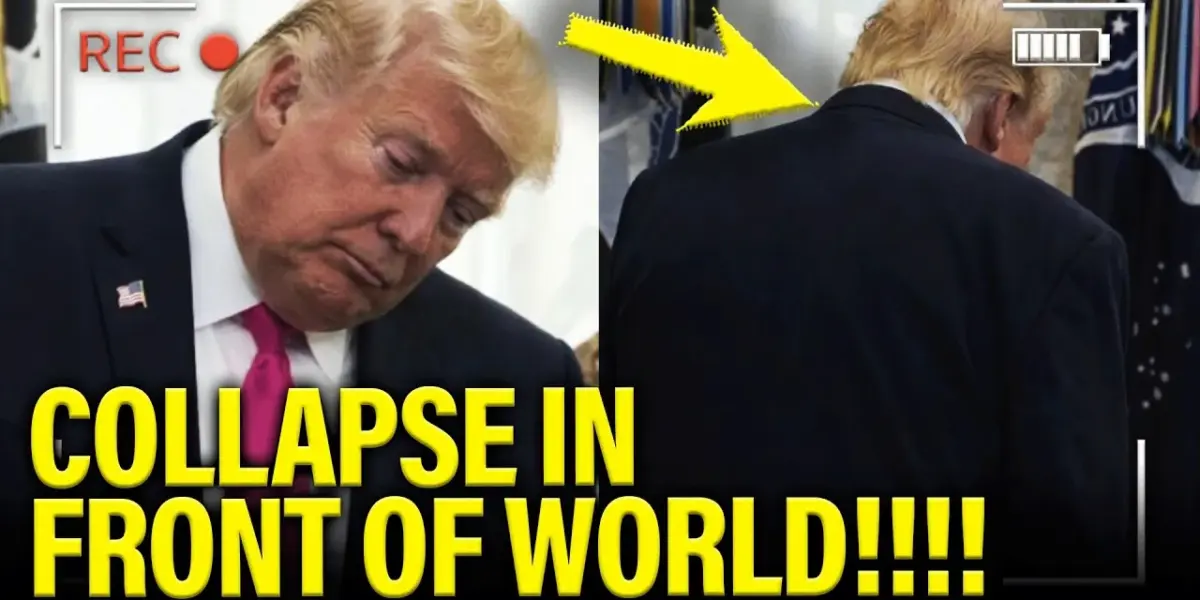
President’s Health Scrutinized Amidst Global Tensions
Recent events have brought renewed attention to the health of President Donald Trump, particularly his mental and physical well-being. Critics point to a series of public appearances and statements that have raised concerns, especially during a period of international conflict.
“A Gift From Iran” Sparks Confusion
One incident that baffled many occurred when President Trump announced at a press conference that he had received a significant “present” from Iran. He described it as a “big, beautiful present” that showed he was talking with the “right people.” This statement left his cabinet and top staffers confused, according to reports. In response, Iranian leadership reportedly mocked the President’s remarks, releasing a video that was seen as a taunt. This happened while the conflict in the region was escalating, adding to the unease surrounding the situation.
Social Media and Public Appearances Raise Questions
Beyond this specific event, concerns have been amplified by President Trump’s social media activity and public speaking patterns. He has been observed making seemingly disconnected statements, attacking political opponents in one breath and then shifting to unrelated topics. For example, one social media post reportedly criticized a Democratic Senate candidate from Texas, then pivoted to criticizing the Governor of California, using derogatory language. These instances, coupled with his public remarks at events, such as one where he appeared to be testing a pen on a guitar, have led some to question his cognitive state.
“This is your wartime president, folks.”
This particular comment, made during an event where the President was signing a guitar, was highlighted as particularly concerning by critics, especially given the ongoing international conflict. The interaction itself, where he was guided through signing the guitar, drew comparisons to a hospice setting by some observers, further fueling the debate about his fitness for office.
Medical Professionals Weigh In
Dr. Vin Gupta, associated with Midas Health, has been vocal about these concerns, emphasizing the need for transparency regarding a president’s health. While he stresses that he cannot make a diagnosis without a physical examination, he points to several “data points” that he finds worrisome. These include what he describes as disorganized thinking, fluctuating alertness, difficulty following a train of thought, and apparent issues with recall.
Dr. Gupta also noted that the President’s father had a history of Alzheimer’s disease, a fact that, when combined with the observed behaviors, prompts questions about potential cognitive decline. He highlights inconsistencies in the medical information provided, such as confusion over whether the President underwent a CT scan or an MRI, which he believes create more questions than answers.
He also raised concerns about the physical appearance of President Trump’s hands, suggesting they often appear to have makeup applied, and questioned why this would be necessary. Dr. Gupta believes that a similar set of behaviors and medical questions, if observed in another individual, would lead to significant scrutiny, particularly from the media.
Historical Context and Double Standards
The discussion about President Trump’s health has also brought up comparisons to how previous presidents have been treated. Dr. Gupta suggested that if the former president had exhibited similar signs, the media and public would likely demand much more transparency and medical data. This raises questions about whether a different standard is being applied to the current president, which he argues is unfair.
The conversation often circles back to the potential for conditions like frontotemporal dementia, which can manifest as personality and speech changes. While acknowledging that age and job stress can affect anyone, Dr. Gupta argues that the specific combination of symptoms, along with family history and a lack of transparency, warrants serious consideration and questioning.
The Broader Implications: War and Healthcare
The discussion about the President’s health is framed within a larger context of current events, including a “disastrous war” that is seen as costly in terms of human lives and resources. Critics argue that significant funds are being allocated to military actions, while domestic needs, such as healthcare, are being neglected.
Dr. Gupta and others have spoken out about the strain on the healthcare system, noting that the Trump administration “destroyed our health infrastructure.” The argument is made that money spent on military endeavors could instead be used to fund essential services like a public healthcare option. This option, supported by a majority of Americans, would ensure that those without employer-sponsored insurance or government programs still have access to care.
The Kaiser Family Foundation reported that over 10% of people have dropped their Obamacare health insurance since the start of the year. This trend is expected to worsen as subsidies change. Dr. Gupta and his colleagues are seeing the real-world consequences: delayed medications, missed cancer screenings, and more severe illnesses due to lack of timely care. He emphasizes that a public option could not only save lives but also save money by promoting preventive care and reducing costly emergency treatments.
A Call for Action on Healthcare
The current situation is presented as a stark choice between funding military actions and investing in the health of citizens. The estimated $200 billion for missiles over three months could, according to analyses, fund a public healthcare option for years. This highlights a perceived disconnect between national priorities and the well-being of the population.
The piece concludes with an encouragement for political figures, especially Democrats, to champion the cause of a public healthcare option. It is presented as a popular and practical solution that could address the healthcare crisis and offer a safety net for millions of Americans, a stark contrast to the current allocation of resources.
Source: Trump’s HEALTH COLLAPSES in Front of World DURING WAR!!! (YouTube)

Related Articles

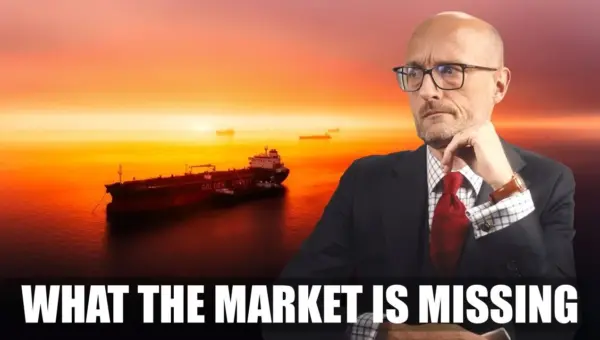
Stocks Ignore War Risks, Focus on “Taco Moments”
Stock markets appear to be overlooking the severe supply chain risks stemming from the Iran conflict, focusing instead on potential diplomatic de-escalations. While the S&P 500 shows resilience, bond and commodity markets signal deep concern over disruptions to critical resources like LNG, helium, and fertilizers.
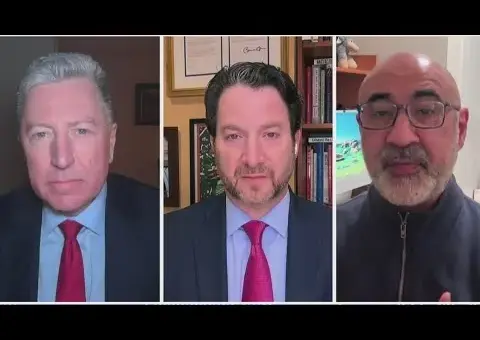
U.S. Iran Tensions Rise Amid Shifting Alliances
Rising tensions between the U.S. and Iran are creating a volatile geopolitical situation. With conflicting signals on de-escalation and potential shifts in alliances like NATO and U.S.-Israel relations, the path forward remains uncertain. The global economy and regional stability hang in the balance.


Iran Targets US With Cyberattacks, Escalating Digital Warfare
Iran is increasingly using cyberattacks to challenge the U.S., as seen in a recent hack of the FBI director's account. Experts say this is a strategic shift due to Iran's limitations in conventional warfare. The U.S. needs to strengthen its digital defenses, focusing on encryption and cloud computing, rather than solely relying on traditional security measures.