US Sends Troops Amid Iran Tensions, Asia Feels Energy Pinch
The U.S. is deploying elite troops to the Middle East amid rising tensions with Iran, even as President Trump suggests behind-the-scenes negotiations are underway. Experts debate whether the troop buildup signals a willingness to fight or a strategy to bolster diplomatic efforts. Meanwhile, soaring energy prices are hitting Asian economies hard.

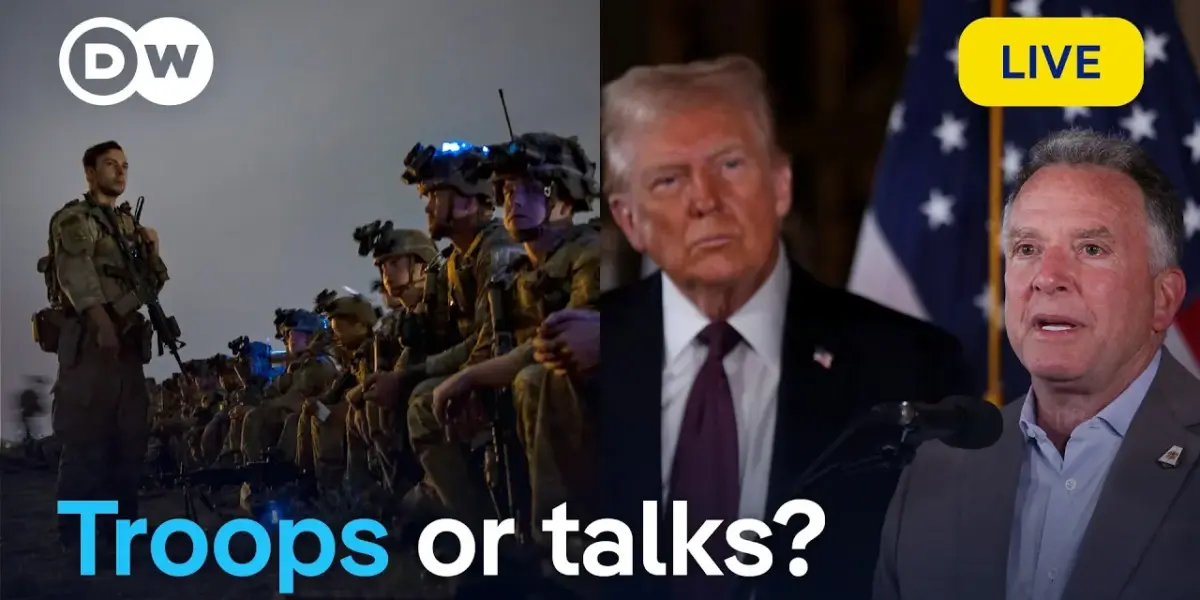
US Deploys Elite Troops Amid Escalating Iran Tensions
The United States is sending combat-ready troops to the Middle East as tensions with Iran continue to rise. The Pentagon is preparing to deploy elements of the 82nd Airborne Division, an elite unit known for its rapid global response capabilities. Reports suggest between 1,500 and 3,000 troops could be sent to bolster U.S. operations in the region.
This move comes as President Trump stated that negotiations to end the conflict are happening behind the scenes. He described a recent development as a “very big present” from Iran, which he interpreted as a sign they are dealing with the “right people” and are willing to negotiate. However, the exact nature of this “present” remains unclear, with experts suggesting it indicates a willingness from Iran to engage in talks, rather than a concrete breakthrough.
Expert Analysis: Troops Signal Leverage, Not Necessarily War
Thomas Juneau, a former analyst with Canada’s Department of National Defense and an author on Iran, offered insight into the conflicting signals of troop deployment and diplomatic talks.
“By deploying these troops, he is signaling to the Iranians that if there is no serious negotiation or that if those negotiations do not succeed, that he is willing to continue the war.”
Juneau believes President Trump desires an “off-ramp” to end the conflict and claim victory. However, he also aims to avoid appearing weak to Iran. The troop deployment, therefore, serves as a dual message: a willingness to negotiate while also demonstrating the capacity to escalate if talks fail. This strategy attempts to counter a perceived Iranian confidence that they are currently in a stronger negotiating position.
Controversial Plan to Seize Kar Island Debated
Speculation has arisen that the deployed U.S. troops might be intended to seize Kar Island, a vital hub for Iran’s oil production. Lieutenant General Keith Kellogg (Ret.) suggested on Fox News that securing such territory, similar to Roman military tactics, would be necessary to open up the Strait of Hormuz.
However, Juneau expressed skepticism about the feasibility and wisdom of such an operation. He noted that the current troop numbers, estimated between 6,000 to 8,000 additional forces including Marines, are insufficient for a large-scale seizure of the Strait of Hormuz, which would require tens of thousands of troops and heavy equipment. While taking Kar Island itself might be technically possible for U.S. forces, Juneau highlighted the significant challenge of holding it.
“The American troops who would be there… would be completely exposed and vulnerable to Iranian retaliation. Iranian drones, Iranian missiles… would be able to shoot at them at will with very little protection.”
He concluded that sustaining such a seizure would be highly problematic due to the island’s vulnerability.
Asian Economies Feel the Heat of Rising Energy Prices
The conflict’s impact is also being felt far beyond the Middle East, particularly in Asia. Rising energy costs, directly linked to the ongoing tensions, are placing a significant burden on economies across the continent. Oil prices are not expected to decrease soon, adding financial strain to countries heavily reliant on energy imports.
Challenges in Negotiation and Communication
The possibility of negotiations is complicated by the internal situation within Iran. While the regime has shown resilience, replacing leaders quickly after assassinations, communication and decision-making processes are believed to be slower and more cautious due to intense surveillance.
Juneau explained that leaders are likely communicating through intermediaries and avoiding direct meetings to prevent becoming targets. This cautious approach could slow down responses to complex peace proposals. Furthermore, the physical act of leaders traveling for direct talks poses risks, as they would be under constant surveillance.
Pakistan has reportedly emerged as a key intermediary, with its military chief, General Munir, said to have strong connections with both Iranian Revolutionary Guards and President Trump, facilitating message transfers between the two nations.
The Enduring Leverage of the Strait of Hormuz
The ability of Iran to disrupt shipping through the Strait of Hormuz remains its most significant strategic asset. Decades of military studies have acknowledged this geographic advantage, and recent events have proven its practical application.
“The precedent has been set, and that is a precedent that will not be forgotten by Iran itself and by everybody else… That is a source of leverage, a source of power that Iran will absolutely maintain and will use in the future.”
Juneau emphasized that the threat of closing the Strait will continue to give Iran considerable leverage. Risk-averse shipping companies are likely to hesitate to transit the Strait if there is a threat of attack, even a single incident could deter many.
Broader Regional Implications and Historical Parallels
The deployment of U.S. forces raises concerns about a potential wider regional war. While Saudi Arabia and the United Arab Emirates are reportedly frustrated with Iran and suffering costs from its actions, they must balance this with the risks of direct involvement. Their military capabilities might not significantly alter the war’s balance, and joining the conflict could escalate their own vulnerabilities.
The specter of past failures, such as the 1979 Iran hostage crisis rescue attempt, looms large. Experts suggest that military and intelligence planners are highly aware of historical lessons regarding the risks of intervention. However, there is concern that political leadership, particularly President Trump, may be downplaying intelligence assessments and historical warnings, choosing instead to rely on optimistic assumptions.
Intelligence vs. Political Narrative
Regarding the reliability of intelligence, Juneau suggested that the core intelligence itself is broadly accurate. The issue lies more with the political level amplifying, exaggerating, or even misrepresenting information to fit a desired narrative.
“The issue here is not one of wrongful intelligence. The issue is one of President Trump amplifying, lying, exaggerating, spreading mis or disinformation and ignoring the intelligence.”
He cited President Trump’s public statements following strikes on Iran’s nuclear program as an example, where his claims of complete obliteration were contradicted by defense intelligence assessments.
Looking Ahead: A Fragile Pause or Continued Conflict?
Predicting President Trump’s next moves remains challenging. Juneau speculates that the conflict might conclude within days or weeks, possibly through a vague agreement in principle to halt hostilities and initiate negotiations. Both sides could potentially claim victory: Iran for surviving and disrupting the Strait of Hormuz, and the U.S. for weakening the Islamic Republic.
However, he does not rule out the possibility of the war continuing for several more weeks if negotiations falter. The long-term consequences of engaging in a conflict based on potentially flawed assumptions and gut feelings are a significant concern, with repercussions expected to last for a long time.
Source: Iran Updates: U.S. Paratroopers head to the Middle East, as rising energy prices bite in Asia | DW (YouTube)

Related Articles

US Strikes Cripple Iran’s Military Might, CENTCOM Reports
U.S. Central Command reports ongoing strikes inside Iran are significantly weakening its military power. This direct action aims to reshape regional security dynamics, but carries risks of escalation. The long-term impact depends on Iran's response and ability to adapt.

U.S. Iran Tensions Rise Amid Shifting Alliances
Rising tensions between the U.S. and Iran are creating a volatile geopolitical situation. With conflicting signals on de-escalation and potential shifts in alliances like NATO and U.S.-Israel relations, the path forward remains uncertain. The global economy and regional stability hang in the balance.


Iran Targets US With Cyberattacks, Escalating Digital Warfare
Iran is increasingly using cyberattacks to challenge the U.S., as seen in a recent hack of the FBI director's account. Experts say this is a strategic shift due to Iran's limitations in conventional warfare. The U.S. needs to strengthen its digital defenses, focusing on encryption and cloud computing, rather than solely relying on traditional security measures.