30 Nations Join US to Secure Oil Strait
Over 30 nations have joined the U.S. to secure the Strait of Hormuz, a critical oil passageway, amid rising global tensions. The U.S. military is deploying forces, and a new focus on advanced drone technology is shaping modern warfare strategies.


30 Nations Join US to Secure Oil Strait
More than 30 countries are joining forces with the United States to secure the Strait of Hormuz, a vital oil passageway. U.S. Ambassador to NATO, Matthew Whitaker, confirmed the coalition’s formation, emphasizing its importance for global security. President Trump has made reopening the strait a top priority, with efforts potentially concluding as early as this weekend.
Military Mobilization Underway
The U.S. is deploying the 82nd Airborne Division to the Middle East. They will join existing Marine forces. Their mission is to help reopen the strait or to secure it independently. This move signals a strong commitment to ensuring the free flow of oil.
NATO Allies Step Up Support
Ambassador Whitaker highlighted the diplomatic efforts made to convince allies of the strait’s critical nature. While the U.S. relies less on oil from this region due to its energy independence, many European and Middle Eastern nations depend heavily on it. Initially, some allies were hesitant, with Germany stating, “This is not our war.” However, recent events, including Iran’s missile test reaching Diego Garcia, have seemingly shifted perspectives.
“We’ve been in overdrive diplomatically, pushing our allies… to convince everybody… this is more important to them than it is to the United States.”
Matthew Whitaker, U.S. Ambassador to NATO
Whitaker explained that European allies began to “find religion” after understanding the threat posed by Iran. He noted that the timing of President Trump’s initiative might have caught some allies off guard. For the past year, the U.S. has urged NATO allies to increase their military capabilities and adopt more offensive and defensive strategies.
The Rise of Drone Warfare
The discussion also turned to the growing threat of drone technology. Ambassador Whitaker identified drones, both sea and air-based, as the number one threat. He mentioned seeing promising counter-drone technologies in Ukraine. The U.S. military and private companies are working rapidly to develop and mass-produce these systems. This includes the development of low-cost “kamikaze” drones, similar to those seen in the Ukraine war.
The Pentagon faces bureaucratic hurdles in adapting new technologies quickly. However, Whitaker stressed the urgency, stating, “There’s no time to waste. We’re seeing that play out right now.” The U.S. military has been actively prosecuting targets, eliminating over 8,000 in the first 25 days of a recent conflict, showcasing its capability.
Russia’s Drone Barrage
The conversation also touched upon Russia’s recent large-scale drone and missile attacks across Ukraine. Overnight, Russia launched 940 drones in a 24-hour period. This assault resulted in four deaths and injured over two dozen people. NATO forces have responded by scrambling military resources and jets in neighboring states.
Ambassador Whitaker viewed Russia’s massive assault not as a sign of strength, but as a consequence of Ukraine’s advanced counter-drone technology and multi-layered air defenses. He noted that it takes such large attacks to penetrate these defenses. This situation underscores the need for NATO to lead in developing cost-effective drone defense technologies.
Cost of Air Defense
Operating advanced fighter jets like F-16s and F-35s to intercept drones is extremely expensive. It costs about $25,000 per hour to fly these jets, with munitions costing hundreds of thousands or even millions of dollars. This contrasts sharply with the low production cost of drones.
“We’ll have to bend that cost curve to our advantage.”
Matthew Whitaker, U.S. Ambassador to NATO
Whitaker emphasized the need to “bend that cost curve” by developing more affordable defensive measures. This is a key focus for the U.S. military under President Trump’s direction. The goal is to maintain technological superiority in this evolving battlefield.
The New Face of Warfare
The use of lower-cost drones represents a significant shift in modern warfare. Companies like Skydio and Air Environment are at the forefront of developing these advanced systems. The U.S. military must be prepared to counter drone threats across land, sea, and air.
Whitaker stressed that innovation cannot solely come from the United States. All 31 NATO allies must contribute technologies and new ideas. The alliance aims to adopt the best solutions to stay cutting-edge and protect soldiers. The U.S. military is praised for its capabilities and bravery in current operations.
Market Impact
The situation in the Strait of Hormuz directly impacts global oil prices. Disruptions to this key shipping route can lead to significant price spikes. The coalition’s efforts aim to stabilize oil markets and prevent economic fallout. The ongoing development and deployment of drone technology also signal a new era in defense spending and technological innovation. Companies involved in drone manufacturing, artificial intelligence, and cybersecurity may see increased investment.
What Investors Should Know
Investors should monitor geopolitical developments affecting the Strait of Hormuz, as these can influence energy markets. The increasing focus on drone technology suggests potential growth opportunities in the defense sector, particularly for companies developing advanced unmanned systems and counter-drone solutions. The U.S. military’s push for technological advancement and cost-efficiency in defense may favor innovative companies and those adapting quickly to new threats.
Source: 'NUMBER ONE THREAT': The unseen force DRIVING modern combat fears (YouTube)

Related Articles
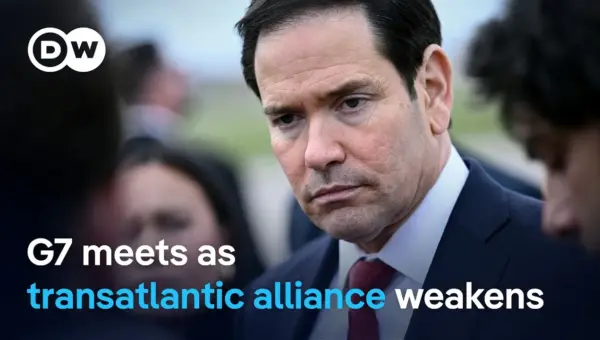
G7 Allies Clash Over Iran War Strategy, Urge Focus on Russia
G7 foreign ministers met in Paris, revealing deep divisions over the U.S. war with Iran. European allies urged the U.S. to pressure Russia, linking its actions to the conflict and fearing support for Ukraine will wane.

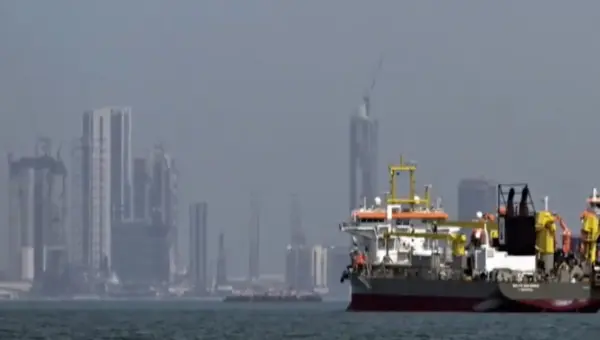
Iran Blocks China Ships, Exposing Beijing’s Weak Grip
Iran's recent decision to block Chinese ships at the Strait of Hormuz is exposing the limits of Beijing's influence in the Middle East. This action is causing delays and cancellations for Chinese manufacturers, turning a perceived geopolitical win into an economic strain.
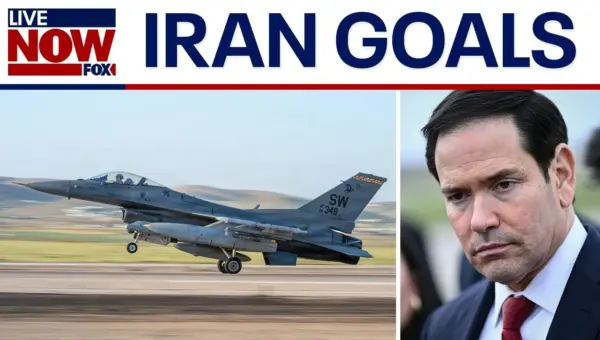
Rubio: US Can Achieve Iran War Goals Without Troops
Senator Marco Rubio outlined a strategy to counter Iran without deploying U.S. ground troops, focusing on weakening the regime and enhancing maritime security. He also criticized Cuba's economic system and expressed concerns about West Bank violence.