Phone Switching Nightmare Needs Fixing Now
Switching phones is still a frustrating and time-consuming ordeal, especially with eSIM transfers. Users face lengthy authentication processes and carrier hurdles, turning a simple upgrade into a 36-hour headache. The tech industry needs to simplify this process for everyone.

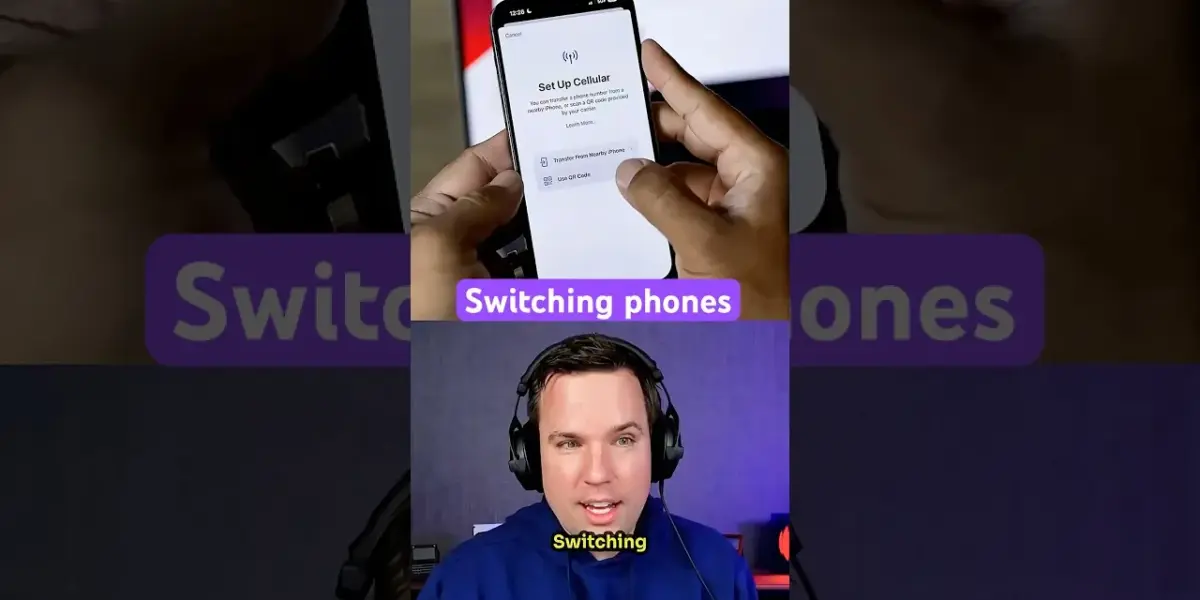
Phone Switching Remains a Painful Process
Switching phones should be simple, but it’s anything but. Whether you’re moving from an iPhone to an Android or vice-versa, the process is often frustratingly complex. This is a problem that affects everyone, and it’s time for a change.
The eSIM Hurdle
A prime example of this difficulty is moving your eSIM, the digital version of your SIM card, between devices. One user recently faced a nightmare trying to transfer their eSIM from an iPhone to an Android phone. This wasn’t a quick, easy task.
A 36-Hour Ordeal for Your Phone Number
The process involved not just one, but multiple steps that felt unnecessarily complicated. After the initial attempt failed, the user had to call their carrier, Verizon, for help. The support agent asked a bewildering question: “Do you have another phone I can call you back on?” This highlights a fundamental flaw when the very phone you need help with is the one you can’t use.
To make matters worse, the user had to involve a family member for authentication. They had to message their mom from a computer so she could authorize the account change. This entire ordeal, just to move a digital SIM card, took a staggering 36 hours. Even employees at Verizon admit the process is awful.
Why is Switching So Hard?
This isn’t just about eSIMs. Transferring contacts, apps, photos, and other data can also be a headache. While some manufacturers offer tools to help, they often work best within their own brand’s devices. Moving between different operating systems, like iOS and Android, usually requires more manual effort.
Think of it like moving houses. You have to pack everything, label boxes, and then unpack at the new place. But imagine if some of your furniture wouldn’t fit through the door of your new home, and you had to leave it behind or find a special service to help. That’s what switching phones can feel like.
Who Should Care About This?
Anyone who has ever bought a new phone can relate to this frustration. It’s especially important for people who like to upgrade regularly or switch between different brands to try new features. It’s also a significant barrier for those who aren’t as tech-savvy, potentially making them stick with a phone they don’t fully like out of fear of the switching process.
What Needs to Happen?
Carriers, phone manufacturers, and operating system developers need to work together. They must create a standardized, seamless way to transfer all your essential phone data and services. This includes your phone number, contacts, apps, messages, and settings. Making this process as simple as plugging in a new device should be the goal.
Imagine a future where you get a new phone, connect it to Wi-Fi, log in with your account, and everything just appears. Your apps are there, your photos are synced, and your phone number works instantly. That future is possible, but it requires a serious commitment from the industry to fix the current broken system.
The Bottom Line
Until the industry addresses these issues, switching phones will remain a chore. We need solutions that prioritize user experience and reduce the friction involved. The technology exists to make this better; it just needs to be implemented across the board.
Specs & Key Features (General Phone Switching)
- eSIM Transfer: Digital SIM card transfer, often requiring carrier intervention and lengthy authentication.
- Data Migration: Transfer of contacts, photos, apps, messages, and settings between devices.
- Cross-Platform Compatibility: Tools and methods for moving data between different operating systems (iOS, Android) are often limited.
- Manufacturer Tools: Specific apps or software provided by phone makers (e.g., Samsung Smart Switch, Apple’s Move to iOS) to aid in data transfer.
- Carrier Support: Mobile carriers play a role in activating and transferring phone numbers, which can add complexity.
Source: Switching phones sucks #Vergecast (YouTube)

Related Articles


Sora’s Future Uncertain Amidst AI Video Strife
OpenAI's highly anticipated Sora text-to-video model may be facing internal delays, casting doubt on its public release. This comes as competitors rapidly advance their own AI video generation technologies, intensifying the race for AI supremacy in content creation.


PS5 Price Jumps $100, Digital Up $200
Sony has significantly increased the prices of its PlayStation 5 consoles, with the standard models now costing $100 more and the anticipated PS5 Pro hitting a steep $900. This comes as Sony reports record profits, raising questions for consumers about the necessity of these price hikes.


Meta, YouTube Lose Landmark Cases Over Teen Harm
Meta and YouTube have been found liable in landmark cases alleging their platforms contribute to harm among teenage users. Juries saw through company denials after prosecutors presented damning internal documents showing awareness of negative impacts. This ruling could lead to significant changes in how social media companies are held accountable.