Trump’s Iran Oil Move Signals U.S. Weakness, Says Analyst
Lord Malloch Brown suggests President Trump's claims of a "gift" from Iran may signal U.S. weakness, potentially allowing sanctioned Iranian oil onto the market to stabilize prices. Despite Iran's denials, the situation highlights complex diplomacy and Iran's unexpected resilience.

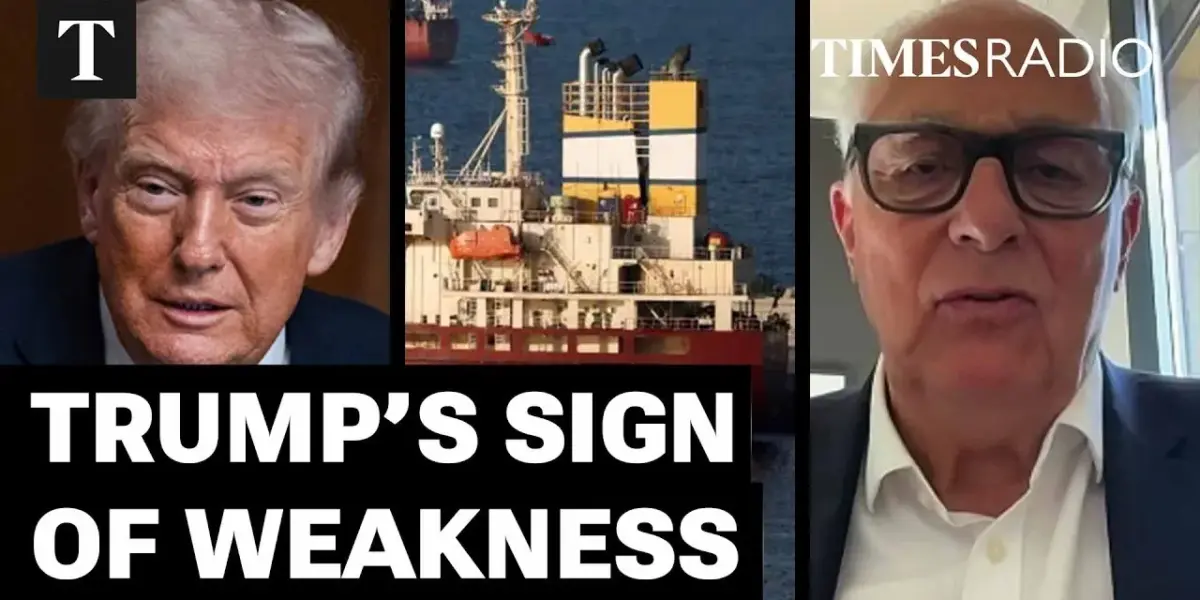
Trump’s Bold Claim on Iran’s ‘Gift’ Sparks Confusion
President Donald Trump recently announced that Iran had given the United States a significant “present.” Speaking to reporters, Trump described the gift as “very big” and “worth a tremendous amount of money,” hinting it was related to oil and gas and the Strait of Hormuz. However, the exact nature of this supposed gift remains unclear, with Trump himself offering little specific detail. This statement follows a period of heightened tension between the U.S. and Iran, including military actions and sanctions.
Expert Theory Links Oil Sales to Price Protection
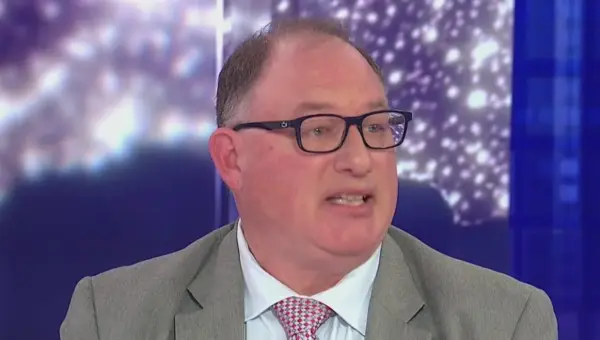
Lord Malloch Brown, former Deputy Secretary-General of the United Nations, offered a compelling theory to explain Trump’s announcement. He suggested that the U.S. might be allowing sanctioned Iranian oil to enter the international market. This move, according to Brown, could be a desperate attempt to protect global oil prices. He believes Trump’s advisors may have convinced him that Iran releasing sanctioned oil was a gesture of goodwill. However, Brown argues this actually shows American weakness, as the U.S. needs oil from any source, including Iran, to compensate for shortfalls caused by ongoing conflicts.
“It’s a confused, perverse logic,” Lord Malloch Brown stated. “The old man in his palace, with courtiers trying to blockade him, might well have got the wrong end of the stick. He often does.”
Iran Denies U.S. Claims, Calls it Self-Negotiation
Adding to the confusion, a spokesperson for the Iranian military denied Trump’s claims. They stated that the U.S. was essentially negotiating with itself, casting further doubt on the narrative of a “gift” from Iran. This contradictory messaging highlights the complex and often opaque nature of diplomatic communications between the two nations.
Trump’s Unconventional Diplomacy Draws Scrutiny
The way President Trump conducts his foreign policy, particularly with Iran, has drawn significant attention. His public statements, often made via social media or impromptu press conferences, are frequently described as erratic and lacking a consistent narrative. Lord Malloch Brown noted Trump’s “instinctive political sharpness” and his ability to grab headlines, even when his statements are contradictory or confusing.
“He’s making the story about him, even as commentators say he’s barmy. He’s contradicting himself all the time. It’s background noise, true, except it’s still making headlines because people are kept on the edge of their seats,” Brown observed.
Iran’s Unexpected Strength in Negotiations
Despite facing significant economic and military pressure, Iran appears to be entering potential negotiations from a surprisingly strong position. Lord Malloch Brown explained that initial U.S. and Israeli strikes were partly opportunistic, aiming to capitalize on Iran’s already weakened state. However, Iran has shown resilience, particularly through asymmetric tactics. The ability to disrupt oil tanker traffic in the Strait of Hormuz with simple measures, like a landmine, gives Iran significant leverage.
Furthermore, anticipated street protests within Iran have not materialized. Instead, the regime seems to have consolidated its power in the face of external attacks. This has created a more hardline, nationalist government that is proving its staying power. Brown pointed out that the U.S. is now on its back foot, facing divisions with allies like Israel, who may want to continue military action to overthrow the Iranian regime.
Challenges in Finding Common Ground
Finding a lasting agreement between the U.S. and Iran presents major challenges. Lord Malloch Brown emphasized that this is not a situation where a moderate leadership is waiting to take over. He noted that even exiled Iranians, who strongly oppose the current regime, are disturbed by Trump’s suggestion of U.S. influence over Iran’s successor government.
“Iran is a 2,500-year-old proud culture, political culture,” Brown said. “It’s going to want, even if there is regime change, a government that is very much its own and serving its own interests.” He also highlighted the critical dimension of Iran’s Shia identity versus its Sunni neighbors, a factor often overlooked by Western analysts.
Multilateral Institutions at a Low Point
The current geopolitical climate, particularly the conflict involving Iran, marks a low point for multilateral institutions like the United Nations and NATO. Lord Malloch Brown described the situation as being “out of theater” for NATO, as it involves an offensive war of choice by a member, not a defensive action. He believes both the U.S. and Russia have significantly undermined the core principles of the UN by engaging in what he termed “illegal wars.”
Despite this, Brown expressed cautious optimism, suggesting that multilateral frameworks will eventually re-emerge. He believes the “law of the jungle” approach favored by leaders like Trump and Putin is ultimately too dangerous and offensive to the rest of the world. This could lead to a resurgence of international cooperation based on established principles.
Source: Trump's Lifting Of Oil Sanctions Is A 'Moment Of Weakness' For America | Lord Malloch Brown (YouTube)

Related Articles
U.S. Iran Tensions Rise Amid Shifting Alliances
Rising tensions between the U.S. and Iran are creating a volatile geopolitical situation. With conflicting signals on de-escalation and potential shifts in alliances like NATO and U.S.-Israel relations, the path forward remains uncertain. The global economy and regional stability hang in the balance.

Iran Targets US With Cyberattacks, Escalating Digital Warfare
Iran is increasingly using cyberattacks to challenge the U.S., as seen in a recent hack of the FBI director's account. Experts say this is a strategic shift due to Iran's limitations in conventional warfare. The U.S. needs to strengthen its digital defenses, focusing on encryption and cloud computing, rather than solely relying on traditional security measures.

Iran Hacks FBI Chief, Exposing U.S. Cyber Vulnerabilities
A recent hack of FBI Director Kash Patel's personal email by an Iran-linked group highlights Iran's growing cyber threat to the U.S. Experts explain how simple security oversights are exploited, emphasizing the need for basic defenses like two-factor authentication to protect against propaganda and potential infrastructure attacks.