Iran’s Missile Gambit: A Failed Strike, A Rising Threat
Iran's attempted cruise missile strike on a U.S. aircraft carrier, though unsuccessful, signals a dangerous escalation in regional tensions. The incident, alongside drone attacks on U.S. bases, highlights evolving warfare tactics. Both the U.S. and Israel have responded with significant military action, while air defense systems face a constant challenge.

Iran’s Missile Gambit: A Failed Strike, A Rising Threat
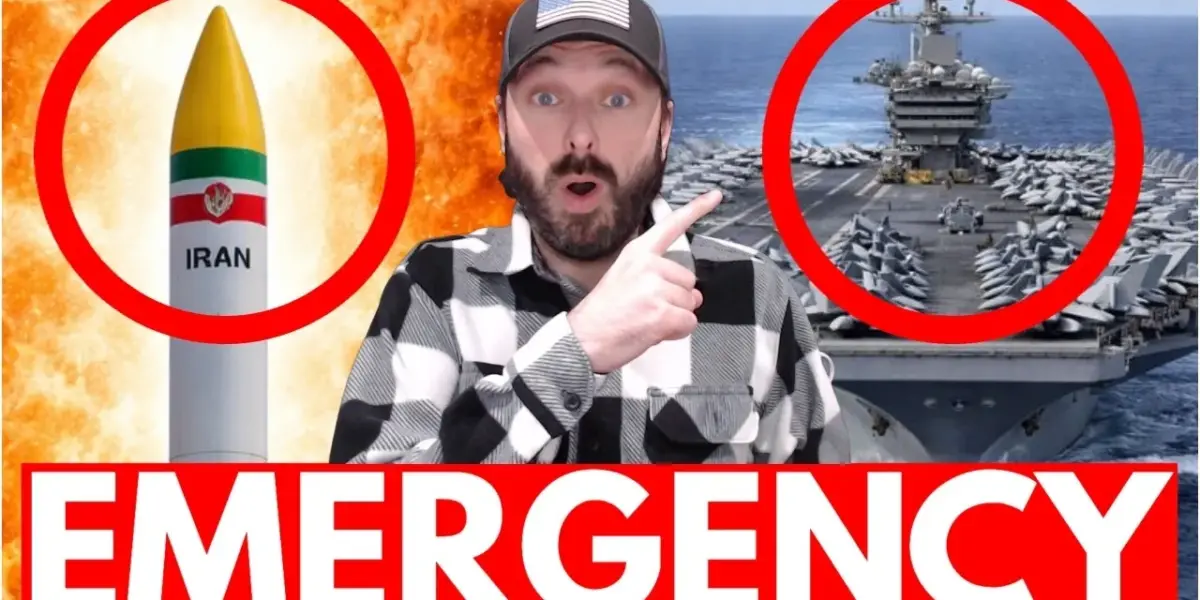
On the morning of March 25th, news broke of a significant event in the Middle East: Iran claimed to have launched a large-scale cruise missile attack targeting a U.S. aircraft carrier. While the attack ultimately failed, with no missiles hitting their intended target, the incident highlights a worrying escalation and the growing use of advanced weaponry in regional conflicts. The released footage shows Iranian cruise missiles flying through the sky, a stark visual of the attempted strike against the USS Abraham Lincoln. This event is not an isolated incident but part of a broader pattern of aggression and evolving military tactics.
The Drone Playbook and Shifting Tactics
Beyond the aircraft carrier incident, Iran-backed militias in Iraq also targeted Camp Victory, a U.S. location, using small, controllable drones packed with explosives. This tactic mirrors strategies seen in the conflict between Ukraine and Russia, demonstrating a clear adoption of new battlefield technologies. The drones were used to strike at the base and even helicopters, showcasing a terrifying effectiveness. This is not just about one-off attacks; it represents a continuous effort by these groups to penetrate U.S. positions and inflict damage.
The footage of these drone attacks is chilling. One video shows a drone flying directly towards an early warning system before hitting it. Another captures a drone targeting a U.S. Black Hawk helicopter. These controlled, one-way attack drones are becoming a common and dangerous tool, capable of slipping into heavily guarded areas.
U.S. and Israeli Responses: A Show of Force
In response to these ongoing threats, the United States has continued its own military operations. Footage shows the powerful A-10 Warthog aircraft conducting strikes, its distinctive cannon fire tearing through targets at extremely close range. These operations are a clear signal of the U.S. commitment to responding to attacks and maintaining its presence in the region. The A-10s are shown actively engaging targets, demonstrating their effectiveness in combat scenarios. This is part of a larger effort, with more air power being deployed against various targets.
Meanwhile, Israel has also been active, launching significant strikes against industrial areas west of Tyre, causing massive explosions and fireballs. Israeli forces have also released footage of successful strikes against targets across Lebanon, showing precise hits and destroyed targets. This sustained military action by both the U.S. and Israel underscores the volatile nature of the current situation and their determination to counter threats.
Air Defense Successes and Failures
The effectiveness of air defense systems has been a critical factor. While Iran fired more missiles, including Iranian ballistic missiles, Israeli air defense systems managed to intercept many of them. This marks an improvement compared to previous days, where some interceptions failed. The footage shows interceptor trails in the sky and the dramatic fireballs of successful interceptions. This includes the successful destruction of Iranian drones attempting to enter Israeli airspace, likely targeting civilian areas. The contrast in air defense performance from one day to the next highlights the ongoing nature of this aerial conflict.
Iran’s Broader Ambitions and Negotiation Stance
Iran’s actions extend beyond direct military strikes. The country has also outlined its demands for any future negotiations, which appear highly ambitious. These demands include establishing a new order for the Strait of Hormuz where Iran could collect transit fees from ships, guarantees that the war will not restart, an end to Israeli strikes on Hezbollah in Lebanon, the lifting of all sanctions, and crucially, zero limitations on Iran’s missile program. These demands are unlikely to be met by the United States or Israel, suggesting that diplomatic solutions remain distant.
A Region Under Pressure
The conflict also extends to neighboring countries, with Kuwaiti air defense systems reportedly dealing with Iranian drones and ballistic missiles. This indicates that Iran’s attacks are not confined to Israel and the U.S. but are a wider regional issue. The continuous firing of missiles and drones by Iran shows a persistent strategy that shows no signs of stopping.
Why This Matters
This ongoing series of attacks and counter-attacks is more than just a regional skirmish; it’s a clear indicator of evolving warfare. The use of sophisticated cruise missiles and programmable drones, often with support from major powers like Russia and China providing targeting data, signifies a new era of conflict. Iran’s willingness to directly target U.S. assets, even unsuccessfully, demonstrates a bold challenge to American military dominance. The effectiveness, or lack thereof, of air defense systems is also a crucial element, influencing the outcome of these exchanges. Furthermore, Iran’s maximalist demands in any potential negotiations reveal its long-term strategic goals, which appear to be at odds with international stability and the security interests of its neighbors and global powers.
Implications, Trends, and Future Outlook
The trend shows an increasing reliance on drone technology and missile warfare, adaptable and potentially cheaper than traditional air power. This suggests that future conflicts may see more asymmetric attacks, where less powerful actors can challenge well-equipped adversaries. The involvement of external powers in providing targeting data also points to a complex web of alliances and proxy support. For the future, we can expect continued military posturing, a constant cat-and-mouse game between offensive missile/drone capabilities and defensive air systems, and a persistent diplomatic stalemate given Iran’s current demands.
Historical Context and Background
The Strait of Hormuz has long been a critical chokepoint for global oil transport, and any disruption there has significant economic implications. Iran has historically used its missile program as a deterrent and a tool for projecting power in the region. The current escalation can be seen as a continuation of decades-long tensions, amplified by recent geopolitical shifts and ongoing conflicts in neighboring countries. The use of drones by state and non-state actors has rapidly advanced since their prominent use in conflicts like the Syrian Civil War and the Nagorno-Karabakh war, proving their effectiveness in reconnaissance and attack roles.
Source: BREAKING: Iran FIRES Cruise Missiles At U.S. Aircraft Carrier (YouTube)

Related Articles

US Strikes Cripple Iran’s Military Might, CENTCOM Reports
U.S. Central Command reports ongoing strikes inside Iran are significantly weakening its military power. This direct action aims to reshape regional security dynamics, but carries risks of escalation. The long-term impact depends on Iran's response and ability to adapt.


U.S. Iran Tensions Rise Amid Shifting Alliances
Rising tensions between the U.S. and Iran are creating a volatile geopolitical situation. With conflicting signals on de-escalation and potential shifts in alliances like NATO and U.S.-Israel relations, the path forward remains uncertain. The global economy and regional stability hang in the balance.


Iran Targets US With Cyberattacks, Escalating Digital Warfare
Iran is increasingly using cyberattacks to challenge the U.S., as seen in a recent hack of the FBI director's account. Experts say this is a strategic shift due to Iran's limitations in conventional warfare. The U.S. needs to strengthen its digital defenses, focusing on encryption and cloud computing, rather than solely relying on traditional security measures.