Iran Denies Trump’s Peace Claims, Plans Island Attack
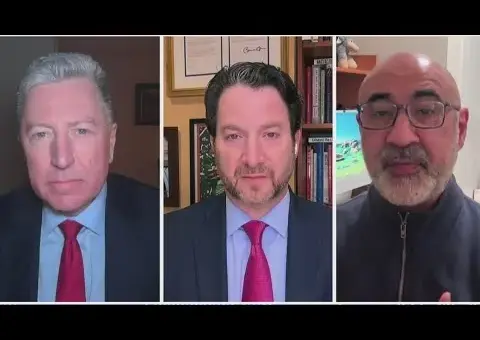
Iran denies President Trump's claims of peace talks, suggesting he plans to attack islands in the Persian Gulf. Dr. Mosen Sazigara, an IRGC founder, details Iran's resistance strategy and distrust of U.S. intentions.


Iran Denies Trump’s Peace Claims, Plans Island Attack
Tensions are high between Iran and the United States, with conflicting narratives emerging about potential peace talks and military actions. Dr. Mosen Sazigara, a founder of Iran’s Revolutionary Guard Corps and now an opposition politician living in the U.S., shared his insights on the situation. He believes Iran’s strategy is centered on resistance, expecting the conflict to last for months, while suggesting that President Trump cannot sustain a prolonged confrontation.
Conflicting Messages on Negotiations
President Trump had threatened to attack Iran’s energy infrastructure within 48 hours if Iran did not reopen the Strait of Hormuz. This deadline was later extended to Friday. Simultaneously, Trump claimed that messages had been exchanged with important figures within the Iranian regime about potential negotiations. However, Iranian sources, including the speaker of the parliament, have denied these claims, stating that no negotiations are underway and that no one intends to negotiate with the U.S. in the current climate.
Iran’s Perspective on Trump’s Intentions
From Iran’s viewpoint, Trump’s statements are seen as deceptive. Dr. Sazigara explained that Iran believes Trump is waiting for the arrival of 5,000 U.S. Marines in the Persian Gulf by the end of the week. The suspicion is that Trump intends to use this military buildup as a pretext to attack Iranian islands in the Persian Gulf and forcibly reopen the Strait of Hormuz. Iran remains cautious and prepared for any U.S. military action, including ground troops.
Iran’s Retaliation Strategy
Iran has made it clear that if its infrastructure is attacked, it will retaliate. This includes targeting the energy sectors and infrastructure of Persian Gulf states south of the Strait. Iran also intends to keep the Strait of Hormuz closed until its objectives are met. The country has reportedly proposed a six-point peace suggestion, with the first point being that the U.S. should pay Iran for damages, among other demands.
Iran’s Position of Power?
Despite facing attacks and significant damages, including an estimated 5,000 Iranian casualties, Iran asserts its resilience. Dr. Sazigara noted that Iran has been successful in closing the Strait of Hormuz, a vital global waterway for oil, natural gas, and other goods. If the conflict escalates and U.S. troops are deployed, Iran also threatens to target the Bab-el-Mandeb strait in the Red Sea, another critical global chokepoint.
Iran’s Military Capacity
Iran claims to have been preparing for this conflict. The Revolutionary Guard Corps (IRGC) has about 180,000 personnel, and the Basij militia has a theoretical strength of 2.5 million members, though many are volunteers. While the Basij has faced challenges in suppressing internal dissent, such as the recent protests, they have shown motivation when rallied by specific narratives. Dr. Sazigara pointed out that internal political factions within Iran, despite their differences, have united to defend the country against external threats.
Although Israel has targeted Iranian military facilities, Iran’s missile and drone production capabilities remain significant. Many components are produced in a vast network of industrial companies across the country, not solely in military factories. There are even reports of Iran transferring drone technology to Russia, with Iranian personnel operating drone production facilities there.
Allegations of Corruption and Kleptocracy
The conversation also touched upon the character of Mohammad Bagher Ghalibaf, the speaker of the Iranian parliament, who has been suggested as a potential intermediary. Dr. Sazigara described Ghalibaf as an “Al Capone” figure, characterizing the Iranian regime as a kleptocracy controlled by mafia-like gangs that dominate the economy, especially through smuggling during sanctions. Ghalibaf’s alleged corruption dates back to his time as mayor of Tehran, and he is said to have influence within the highest levels of the regime, including connections to the IRGC intelligence.
The Distortion of the Revolutionary Guard
Dr. Sazigara, as a founder of the IRGC, reflected on its deviation from its original mission. He explained that the IRGC was initially conceived as a people’s army to secure the country after the revolution, collect weapons, and defend against potential foreign invasion. The idea was to create a professional, yet broadly mobilized force. However, the IRGC has evolved into what he described as a “monster” with multiple heads, straying significantly from its initial objectives.
Dr. Sazigara expressed his disillusionment, dating back to 1983, when he witnessed torture and suppression of opposition groups. He resigned in 1985 and pursued historical studies, concluding that the regime’s problems were fundamental, rooted in its revolutionary interpretation of Islam.
The Cost of Conflict and Calls for Civil Resistance
The interview also briefly mentioned the arrest of a director of a school for orphaned girls with disabilities who refused to allow the IRGC to use the school as a base. Dr. Sazigara acknowledged that such incidents are plausible given the IRGC’s actions to secure bases, especially in light of potential threats. He emphasized that the majority of Iranians oppose both the regime and the current war.
Dr. Sazigara, despite his long opposition to the Iranian regime, believes that war is not the solution. He advocates for civil resistance, comprising protests, paralyzing the regime, and strikes, as the path to democracy. He argued that the current war, lacking a clear political strategy, only serves to strengthen the regime’s repressive apparatus and hinder the progress of civil resistance.
Why This Matters
This analysis highlights the deep mistrust and conflicting narratives between Iran and the U.S. The potential for miscalculation is immense, with the risk of a wider regional conflict ever-present. Understanding Iran’s internal dynamics, its strategic calculations, and the motivations behind its actions is crucial for navigating this volatile geopolitical situation. The role of figures like Ghalibaf and the internal struggles within the Iranian regime add layers of complexity. Furthermore, the emphasis on civil resistance by an insider like Dr. Sazigara offers a potential alternative path forward, contrasting with the destructive nature of escalating military conflict.
Implications and Future Outlook
The situation underscores the challenges of de-escalation when communication channels are fraught with suspicion. Iran’s strategy of resistance suggests a long-term view, while Trump’s actions appear more reactive and potentially driven by domestic political considerations. The economic impact of closing the Strait of Hormuz, even temporarily, is significant, affecting global energy markets. The future outlook remains uncertain, contingent on diplomatic breakthroughs or further military escalations. The internal cohesion of the Iranian regime, despite its outward show of unity against external threats, may also be a factor in its long-term stability.
Historical Context
The Islamic Revolution of 1979 fundamentally altered Iran’s relationship with the West, particularly the United States. The formation of the IRGC was a direct response to the perceived threats and the need for internal security and defense. Over the decades, the IRGC has grown in power and influence, extending its reach beyond military defense into economic and political spheres. The current tensions can be traced back to the U.S. withdrawal from the Iran nuclear deal and the reimposition of sanctions, which Iran views as acts of aggression. Dr. Sazigara’s personal history, from founding member to opposition figure, mirrors the broader trajectory of disillusionment and internal dissent within Iran.
Source: Iran says Trump is ‘lying’ on peace. He wants to attack islands this week | IRGC founder (YouTube)

Related Articles

U.S. Iran Tensions Rise Amid Shifting Alliances
Rising tensions between the U.S. and Iran are creating a volatile geopolitical situation. With conflicting signals on de-escalation and potential shifts in alliances like NATO and U.S.-Israel relations, the path forward remains uncertain. The global economy and regional stability hang in the balance.


Iran Targets US With Cyberattacks, Escalating Digital Warfare
Iran is increasingly using cyberattacks to challenge the U.S., as seen in a recent hack of the FBI director's account. Experts say this is a strategic shift due to Iran's limitations in conventional warfare. The U.S. needs to strengthen its digital defenses, focusing on encryption and cloud computing, rather than solely relying on traditional security measures.

Iran Hacks FBI Chief, Exposing U.S. Cyber Vulnerabilities
A recent hack of FBI Director Kash Patel's personal email by an Iran-linked group highlights Iran's growing cyber threat to the U.S. Experts explain how simple security oversights are exploited, emphasizing the need for basic defenses like two-factor authentication to protect against propaganda and potential infrastructure attacks.