Giles Coren: Rich Lefties Should Fund Private Healthcare
Giles Coren argues that wealthy individuals should utilize private healthcare to alleviate pressure on the NHS, advocating for tax relief on private insurance. The discussion also covered the challenges facing the NHS, potential improvements through efficiency, and comparisons with international healthcare systems. The conversation also touched on government intervention in fuel prices and the importance of social etiquette.

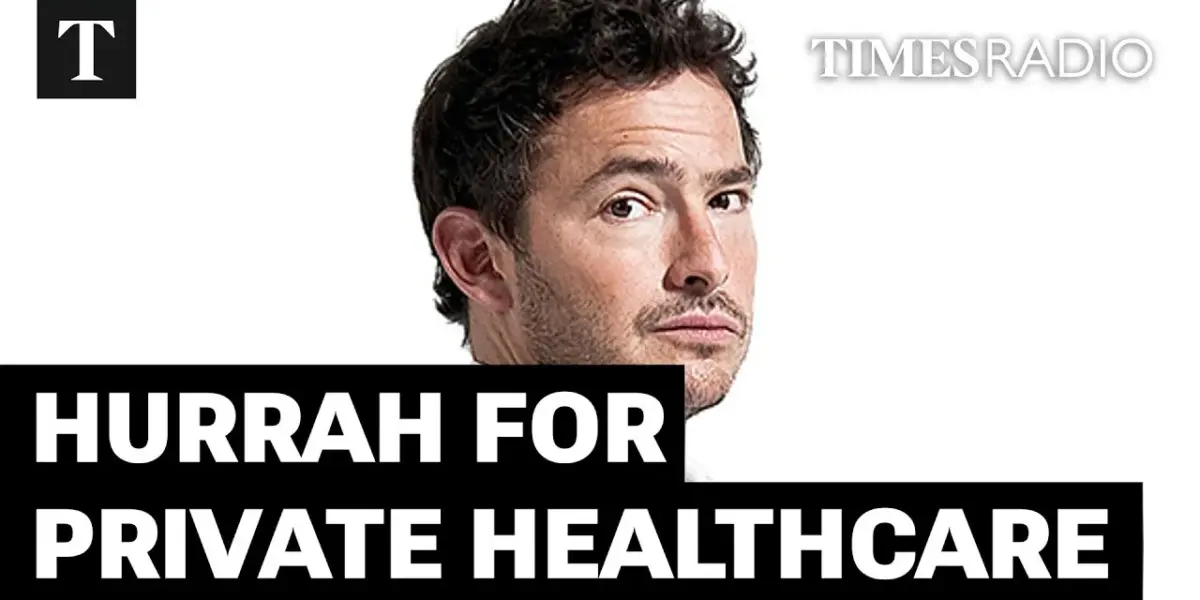
Giles Coren Argues for Private Healthcare, Tax Relief
Broadcaster and writer Giles Coren has sparked debate by suggesting that wealthy individuals, particularly those with left-leaning political views, should contribute more to private healthcare. He argues that these individuals should use private healthcare services to ease the burden on the National Health Service (NHS). Coren specifically called out celebrities who publicly praise the NHS while earning substantial incomes, questioning why they utilize a public service they can afford to pay for.
“These posh rich lefties who said shouldn’t shouldn’t be doing it. They should be taking the burden off the state,” Coren stated. He also expressed support for tax relief on private healthcare, suggesting it would encourage more people to opt out of the NHS system. This proposal aims to reduce the strain on public healthcare resources.
NHS Model Under Scrutiny, Reorganization Debated
The discussion also touched upon the structure and funding of the NHS. Edwina Currie, a former government health official, acknowledged that many other European countries have different healthcare models that seem to function more effectively. However, she cautioned against drastic reorganizations, citing past experiences where such efforts led to wasted money and rebranding without significant improvement.
Currie suggested that the focus should be on improving efficiency within the current system. “The way forward, I think, is to get everybody focused on what they’re supposed to be doing. Get rid of a lot of bureaucracy. They need to get rid of a lot of the paperwork,” she explained. She highlighted the need for better data management and digitalization to speed up processes.
While satisfaction with the NHS has seen a slight increase, Currie noted that a significant majority still feel it has a long way to go. She reiterated her belief that reorganization is not the solution, preferring to focus on practical improvements.
International Comparisons and Private Healthcare
The conversation drew parallels with healthcare systems in other countries, like the Netherlands. A Dutch woman shared her experience, noting that in Holland, everyone has insurance, with the government subsidizing it for those who cannot afford it. This system, she observed, fosters competition and high standards, leading to better outcomes compared to her experience waiting within the NHS.
Coren agreed that sneering at private healthcare or education is unproductive. “I don’t like the thing in Britain where private healthcare is sneered at just as I don’t like private education is snared at,” he said. He argued that in a capitalist economy, the wealthy naturally access better services, and this should extend to healthcare, provided a basic safety net remains for everyone.
He pointed out the significant growth in the UK’s population since the NHS was founded, suggesting that the original model might not be sustainable for current demand. “The same as universities – it was a great idea to to be free until everybody went – we can’t afford to give that level of service,” Coren remarked.
Shifting Services and Patient Access Concerns
Concerns were also raised about the centralization of healthcare services, moving away from local facilities like cottage hospitals. This trend, often driven by consultant preferences, can make accessing care more difficult for patients, especially those in rural areas.
“The whole thing becomes much more traumatic,” one speaker noted, describing the long journeys required for outpatient appointments or hospital visits. The example of services potentially shifting from a local clinic to a larger hospital miles away was cited as a move that benefits medical staff but harms patient accessibility. The speaker urged managers to consider bringing services closer to patients, even if it requires extra investment in staffing or facilities.
The discussion also touched upon the dissatisfaction with Accident and Emergency (A&E) services. Long waits, uncomfortable conditions, and the difficulty of accessing nearby urgent care centers were highlighted as reasons for poor patient experiences, even when treatment is ultimately successful.
Fuel Prices and Government Intervention
The conversation shifted to the topic of fuel prices and government intervention. Rachel Reeves, now in charge of the Treasury, stated that the previous government’s broad support for energy costs was a mistake. She indicated that future interventions would be more targeted, likely focusing on those receiving benefits.
Currie expressed skepticism about the expectation that the government should always shield citizens from price increases. “My own deep feeling is that we’ve got to get away from this idea that whatever happens, the government’s got to save you from it because it costs a fortune,” she said. She advocated for a more realistic approach where individuals manage their own expenses, with government support reserved for the most vulnerable.
The effectiveness of targeted support, like the Warm Home Discount, was discussed. The ability to match benefit recipients with energy accounts was seen as a positive step towards efficient aid delivery. However, the underlying message was that individuals must prioritize essential spending, even when facing rising costs.
Etiquette and Social Interactions
The final segment of the discussion explored etiquette, drawing inspiration from French customs. A French influencer’s advice, including the importance of greeting people, sparked a debate about social interactions in Britain.
Coren, a self-proclaimed Francophile, noted that saying hello is more common in France. He suggested that the British should reclaim and adopt this practice, especially in local shops and communities. “On that absolutely they do. And so do I. And I’m slightly baffled by this end of it,” he commented, emphasizing that greeting people when entering a shop or encountering familiar faces is a simple act of connection.
Edwina Currie shared her experiences in rural France and Britain, finding similarities in the politeness and formality. She recounted a humorous anecdote about a French shopkeeper’s reaction, highlighting cultural nuances in social interactions. The consensus was that simple greetings and politeness can significantly improve social cohesion, whether in Britain or France.
Source: Posh Rich Lefties Need To Take The Burden Off The State | Giles Coren (YouTube)

Related Articles

UK Politics: Phone Saga, North Sea Drilling, and Leadership Fears
UK politics is facing a turbulent period, with a controversy over MP Morgan McSweeney's phone raising questions about transparency and trust. Meanwhile, Labour leader Keir Starmer could face a historic leadership challenge, while the party grapples with internal divisions over North Sea drilling. Economically, the government is shifting towards targeted support, and international attention is on Iran's nuclear program.

Starmer Challenges Sunak: Key Moments from Heated PMQs
Labour leader Keir Starmer intensified his economic and NHS criticisms against Prime Minister Rishi Sunak during a lively Prime Minister's Questions. Political commentators dissected the strategic exchanges, highlighting how both leaders aim to shape public perception ahead of the next general election.


Stolen Phone Fuels Mandelson Appointment Fears
A stolen mobile phone linked to a former government adviser has reignited concerns about Peter Mandelson's potential appointment as US ambassador. Meanwhile, discussions touched on global tensions involving Iran and the U.S., the resilience of American democracy, and a call for increased frugality in the UK, reminiscent of wartime measures.