ICE Agents Flood Airports Amid TSA Chaos: A Political Stunt?
TSA officers are unpaid and quitting, leading to airport chaos. In response, ICE agents were deployed with no clear plan, causing confusion. This situation highlights how political disputes are using public services as leverage, with travelers bearing the brunt of the disruption.

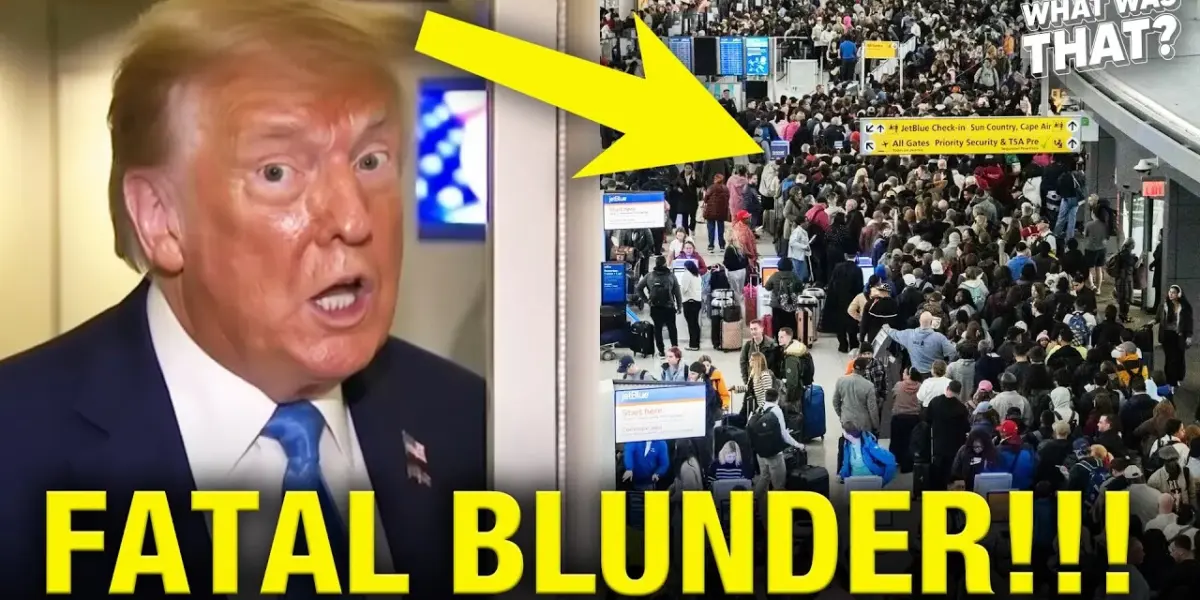
ICE Agents Flood Airports Amid TSA Chaos: A Political Stunt?
The nation’s airports are facing serious problems. For weeks, Transportation Security Administration (TSA) officers have not been paid. This has led to many officers quitting. More than 400 have left their jobs since mid-February. The number of TSA officers calling out sick is very high, over 11%. Passengers are waiting in lines for hours. The system is clearly struggling under the strain.
Amid this crisis, a surprising solution was proposed and implemented: sending in Immigration and Customs Enforcement (ICE) agents. President Trump announced that ICE agents would help at 14 airports. The idea was that they would work with TSA officers to ease the burden. However, the reality on the ground seems far less organized.
Confusion and Lack of Plan
When asked about this plan, a Department of Homeland Security (DHS) official told CBS News, “I have no idea what we’re doing.” This statement highlights a deep confusion within the department. Instead of assisting, ICE agents have been seen wandering airport terminals. They appear lost, unsure of their duties. This is happening even as the government spends billions on ICE funding.
The transcript suggests that the idea to use ICE agents in airports came from President Trump. He claimed it as his own idea, comparing it to the simple, yet brilliant, invention of the paperclip. However, evidence points to a different origin. A caller named Linda, speaking on a right-wing radio show, suggested using ICE agents to supplement TSA officers. This idea was then picked up by the radio host and eventually made its way to President Trump, likely through watching conservative news opinion shows.
Policy Driven by Media, Not Planning
This method of policy-making – taking ideas from media segments without thorough review – has led to a poorly executed plan. The decision to deploy ICE agents was not the result of careful consideration or inter-agency meetings. Instead, it appears to be a reaction to something seen on television. This led to agents being sent to airports with no clear plan or training for their new roles.
Transportation Secretary Shawn Duffy made confusing statements about the situation. He suggested that ICE agents could help manage airport lines and that Democrats wanted these lines to exist. However, TSA officers are not law enforcement in the same way ICE agents are. They have specific training for airport security, including using screening machines, which ICE agents typically do not.
ICE Agent Training and Roles
The training for ICE agents is also a point of concern. While they receive training, it’s not specifically for airport security. Some reports indicate that the training period has been shortened. This raises questions about their readiness for this new role. Officials have offered conflicting explanations about whether ICE agents would operate screening machines or handle other specific TSA tasks.
One suggestion was that ICE agents could monitor exit lanes. However, exit lanes are designed with one-way doors and are already monitored. Placing an ICE agent there would not speed up security lines or address the core issue: a lack of paid TSA officers. Another idea was for ICE to check identification before screening. But TSA officers already perform this task as part of the standard security process. The problem isn’t a lack of identification checks; it’s the shortage of TSA staff due to non-payment.
Political Leverage, Not Public Safety
The situation at the airports is being used as political leverage. Republicans, who control the House, Senate, and White House, have blocked multiple bills aimed at funding the TSA. President Trump has stated he will not sign any bill that doesn’t also include his other political demands, such as the “Save America Act.” This means unpaid federal workers and long airport lines are being used as bargaining chips to push through a broader political agenda.
Republicans had previously offered an off-ramp. They proposed reopening the Department of Homeland Security, excluding ICE, and funding enforcement agencies separately. This would have resolved the TSA pay crisis. However, President Trump rejected this offer, insisting on getting his entire wish list.
Public Perception and Blame
Travelers caught in the long lines understand who is responsible. Many directly blame President Trump for the chaos. They express opposition to ICE’s tactics and support the Democrats on this issue. The sight of ICE agents milling around, seemingly without a clear purpose, has led to confusion and frustration among passengers. They observe agents not actively working but standing around or chatting, adding to the sense that the deployment is misguided.
Why This Matters
This situation highlights a critical breakdown in government functioning. It shows how political disputes can directly harm essential public services and inconvenience millions of citizens. The use of federal employees and public safety as bargaining chips is a dangerous precedent. It raises questions about the priorities of our elected officials and the effectiveness of our government when political gamesmanship overrides practical solutions. The public’s trust in government institutions is eroded when such chaos and confusion become the norm.
Implications and Future Outlook
The long-term implications of using agencies like ICE for tasks outside their core mission are significant. It can dilute their focus and potentially lead to mission creep. For TSA, the ongoing staffing issues due to funding disputes could lead to a permanent loss of experienced personnel, making future operations more challenging. The reliance on media-driven policy decisions, rather than expert analysis and planning, suggests a troubling trend in governance. Moving forward, it is crucial for political leaders to prioritize the smooth functioning of essential services over partisan battles. Finding common ground and supporting agencies like the TSA with adequate funding is vital for national security and public convenience.
Historical Context
Government shutdowns and funding disputes are not new in American politics. However, the specific tactic of using agencies like ICE to fill gaps created by underfunding other agencies, especially in such a visible public space as airports, is a notable escalation. Historically, funding for essential services like air travel security has often been bipartisan. This current situation represents a departure, where these services have become central to a larger political struggle, impacting the daily lives of ordinary citizens in real-time.
Source: Trump DISASTER EXPLODES as Entire System BREAKS DOWN (YouTube)

Related Articles
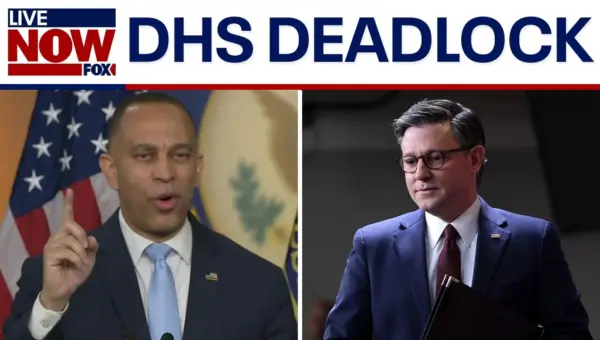
Democrats Demand End to DHS Shutdown, Pass Bipartisan Bill
Democrats are demanding an immediate end to the Department of Homeland Security (DHS) shutdown, urging House Republicans to pass a bipartisan Senate bill. The legislation aims to fund essential services, pay TSA agents, and end airport chaos. Democrats criticize Republicans for obstructing the bill to push ideological agendas and reform ICE.


Gov’t Shutdown Grips Nation as Markets Plunge
The U.S. government shutdown continues, causing historic airport delays and deepening political gridlock as lawmakers reject compromise deals. Meanwhile, Wall Street experienced a sharp sell-off, with the Dow entering correction territory amid rising global oil prices and escalating tensions with Iran over control of the Strait of Hormuz.


Trump Derails Bipartisan Deal, Halts Government Funding
Senate Republicans united on a funding bill for the Department of Homeland Security, but Donald Trump's opposition led House Speaker Mike Johnson to kill the deal. This political maneuver left TSA workers unpaid and highlighted the influence of personal directives over legislative progress.