Trump’s Florida Empire Crumbles in Shocking Election Defeats
Two special elections in Florida, strongly endorsed by Donald Trump, have resulted in surprising Democratic victories. These flips in districts considered Republican strongholds highlight voters' concerns about economic issues over partisan endorsements.


Trump’s Florida Empire Crumbles in Shocking Election Defeats
In a stunning turn of events, two special elections in Florida, strongly backed by Donald Trump and Republican leadership, have swung to the Democratic party. These losses, particularly in districts considered Republican strongholds, signal a potential shift in the political landscape of the Sunshine State and raise questions about the enduring influence of the former president.
Mara Lago District Flips Blue
The most striking result came in Florida House District 87, the very district that includes Mar-a-Lago, Donald Trump’s opulent residence. This seat, which Trump won by 11 points in 2024, was heavily contested. Despite Trump’s enthusiastic endorsement and personal appeals to vote for Republican candidate John Maples, Democrat Emily Gregory secured a victory, flipping the district from red to blue. Maples was even brought on stage by Trump at Mar-a-Lago for a personal endorsement, highlighting the high stakes and the GOP’s significant investment in this race.
Suburban Senate Seat Also Lost
Adding to the Republican woes, Democrat Brian Nathan won the Florida State Senate District 14. This district was considered a +7 Trump district, meaning it had previously voted for Trump by a significant margin. The loss here further underscores a broader trend emerging from these special elections, suggesting that traditional Republican advantages in certain areas may be eroding.
Voters Prioritize Pocketbook Issues
The victories for Democrats Emily Gregory and Brian Nathan appear to be driven by a focus on everyday concerns. Gregory, in her campaign messaging, emphasized issues like rising costs for groceries, electricity, and rent. She contrasted her approach with Maples’, criticizing him for raising taxes and accepting campaign donations from industries contributing to the state’s affordability crisis. Gregory positioned herself as a candidate focused on lowering costs and putting families first, resonating with voters facing economic pressures.
Gregory’s campaign highlighted the struggles of Florida families, stating, “We’ve all felt it. Groceries cost more. Electric bills are up. Rent keeps climbing.” Her message directly addressed the pain points of constituents, offering a stark contrast to the Republican focus, which included endorsements and discussions about renaming roads and airports after Donald Trump. This approach suggests that in these particular races, voters were more concerned with immediate economic relief than with symbolic gestures or partisan loyalty.
Historical Context and Special Elections
These special elections were necessitated by vacancies created when Governor Ron DeSantis appointed incumbent Republican officials to other positions. House District 87 became vacant when Representative Mike Caruso was appointed Palm Beach County Clerk of the Circuit Court. Senate District 14’s seat opened up when Senator Jay Collins was appointed Lieutenant Governor. The delays in calling these elections, which even led to lawsuits, may have inadvertently given Democrats more time to organize and capitalize on voter dissatisfaction.
The Republican Party’s strategy seemed to heavily rely on Trump’s endorsement and the loyalty of his base. Maples, for instance, featured Trump’s endorsement prominently in his campaign materials. However, the outcomes suggest that this strategy may not be sufficient on its own, especially when voters are feeling the pinch of inflation and other economic hardships. The video clips from the Republican side, featuring endorsements and discussions about Trump’s policies, stand in contrast to Gregory’s direct appeals to voters about their daily financial struggles.
Implications and Future Outlook
These election results are significant because they occurred in Florida, a state that has been a crucial battleground and a Republican stronghold in recent years. The victories for Democrats in districts that leaned Republican, especially those with strong Trump ties, could signal a broader trend. It suggests that voters, even those who have previously supported Republican candidates, may be re-evaluating their choices based on current economic conditions and the effectiveness of their elected officials.
The Democratic strategy of focusing on affordability and pragmatic solutions seems to have paid off in these races. Emily Gregory’s message of bringing people together to find solutions for common problems, regardless of party affiliation, offers a different approach. She stated, “We all want safety. We all want prosperity. We just need to come together, find pragmatic solutions, and solve some of these affordability crisis issues.” This inclusive message, combined with a focus on tangible issues, could be a blueprint for future Democratic campaigns.
The losses also raise questions about the Republican Party’s messaging and strategy. While Trump’s influence remains a powerful force, these results suggest that simply invoking his name may not be enough to win elections, particularly when voters are focused on kitchen-table issues. The Republican candidates in these races were heavily promoted by the party and by Trump himself, yet they failed to secure victory. This outcome might prompt a deeper introspection within the party about how to connect with voters on issues that matter most to their daily lives.
Why This Matters
These special election results are more than just isolated wins for Democrats; they are a potential indicator of shifting voter sentiment. In a state like Florida, which has a significant impact on national elections, these flips are noteworthy. They demonstrate that even in traditionally Republican areas, voters are willing to consider Democratic candidates if they feel their concerns are being addressed more effectively. The focus on economic issues by the winning Democrats highlights a critical area where voters are seeking solutions. If this trend continues, it could have significant implications for upcoming elections, forcing both parties to adapt their strategies and messaging to resonate with a more economically focused electorate.
Conclusion
The Democratic victories in Florida House District 87 and State Senate District 14 represent a significant moment. They show that a focus on affordability, coupled with a relatable message, can overcome strong partisan endorsements. As the political landscape continues to evolve, these outcomes serve as a reminder that voter priorities can shift, and that connecting with the everyday concerns of constituents remains paramount for electoral success.
Source: 🚨Trump HIT with NIGHTMARE Election LOSS in HOME DISTRICT!!! (YouTube)

Related Articles

Trump’s Name Everywhere: A ‘Stain’ on GOP Legacy?
Former President Donald Trump's efforts to brand national symbols, including a proposed signature on dollar bills, spark debate. Critics view this as an authoritarian attempt to embed his legacy, potentially staining the Republican Party's history and contrasting with democratic ideals of public ownership.


Trump’s War Talk Stuns Financial Crowd
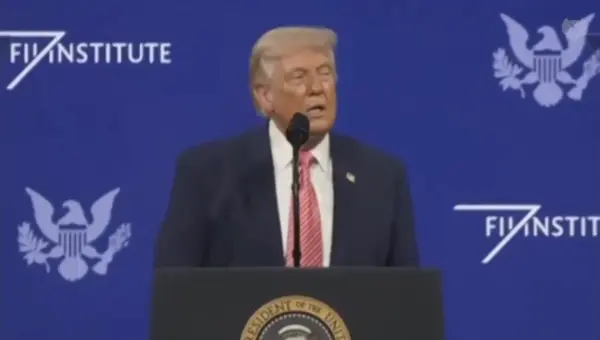
Donald Trump's recent speech in Miami focused on his foreign policy, particularly his critical views on NATO and his vision for international relations. He declared the U.S. would no longer defend NATO allies, questioned the value of existing alliances, and suggested renaming the Strait of Hormuz. The speech also touched on his personal views of success, his allies, and his perceived role as a global peacemaker.
Trump’s Warpath: New Threats Signal Imperial Ambitions
Recent statements from Donald Trump reveal a potential embrace of increased military action and interventionist foreign policy. This approach, characterized by critics as "imperialism 2.0," contrasts with his past promises of peace and has even drawn criticism from parts of his own base. The implications for U.S. global engagement and domestic priorities are significant.