Trump Claims Iran Pledges No Nukes Amidst Shifting Tensions
President Trump announced that Iran has agreed to abandon its nuclear weapons program, a claim made amidst a pause in US military threats. This development, if verified, could reshape Middle Eastern politics and follows years of intense international scrutiny over Iran's nuclear ambitions.

Trump Claims Iran Pledges No Nukes Amidst Shifting Tensions
President Trump announced recently that Iran has agreed to never develop nuclear weapons. This statement comes at a critical time, as the United States had been considering military action against Iran. Instead of immediate strikes, the US is now pausing to allow for talks and negotiations this week.
What the President Says Changed
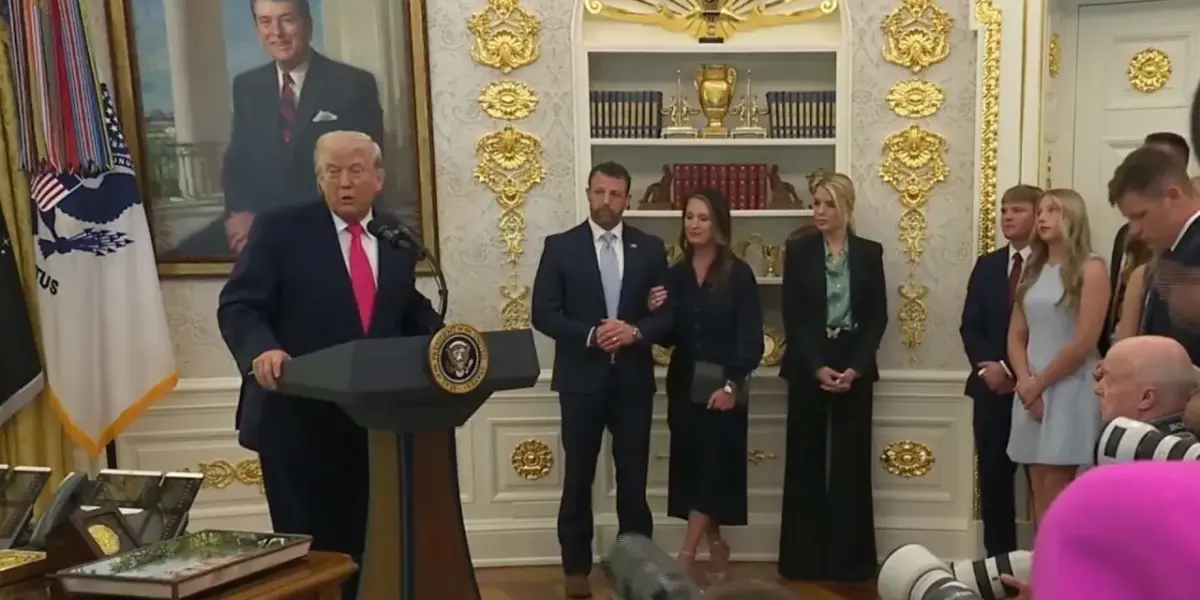
Speaking from the Oval Office, President Trump expressed confidence that Iran is ready to reach an agreement. He stated that the US is now speaking with the appropriate individuals in Iran. According to Trump, Iran has offered a significant concession, described as a major prize related to oil and gas, in exchange for the US holding back on its threat to attack Iran’s main power plants.
Previously, Trump had insisted that any deal with Iran would require their complete surrender. When asked what led to this shift, Trump pointed to Iran’s willingness to talk and their agreement to abandon nuclear weapon development. “They’re talking to us and they’re talking since,” Trump said. “And remember, it all starts with they cannot have a nuclear weapon.” He emphasized that this point is paramount, stating, “Number one, two and three is they can’t have a nuclear weapon and uh they’re not going to have a nuclear weapon.”
Iran’s Military Weakness Cited
President Trump attributed Iran’s willingness to negotiate to the weakened state of its military. He claimed that Iran’s air force, navy, and ground forces have been severely degraded. Trump added that US forces can now move freely over Iran, suggesting that Iran is powerless to respond, even if the US were to attack a major power plant.
However, Iran has reportedly denied that any talks are currently underway between the two nations. Trump countered this by pointing to Iran’s disrupted communications and what he described as confusion within the Iranian government. He suggested that the US has effectively caused “regime change” by targeting and eliminating multiple Iranian leaders, forcing them to select new ones. “We killed all their leadership and then they met to choose new leaders and we killed all of them,” Trump stated, implying that this strategy has led to the current group being more open to negotiation.
US Negotiating Team
The President also revealed some of the US officials involved in these discussions. In addition to Jared Kushner and Steve Mnuchin, Vice President JD Vance and Secretary of State Rubio are expected to engage with Iran in the coming days.
New Homeland Security Secretary Sworn In
The report also touched upon the swearing-in ceremony for Mark Wayne Mullen as the new head of the Department of Homeland Security (DHS). President Trump praised Mullen as a capable and effective leader, highlighting his past work with figures like Tom Holman in securing the US border and combating migrant crime. Mullen vowed to work tirelessly in his new role.
“We will continue our record setting efforts to deport these illegal alien criminals from our country,” Mullen declared. He stressed his commitment to protecting everyone equally, regardless of state political leanings. “My job is to be Secretary of Homeland and to protect everybody the same. And I’m not going to let any of them outwork me. The president has entrusted me with this and failure is not an option.”
Why This Matters
The potential for Iran to formally agree to abandon its nuclear program is a significant development, if confirmed and verifiable. For years, international concerns have centered on Iran’s nuclear ambitions, leading to sanctions and a tense geopolitical climate. Trump’s claim, if true, could mark a major diplomatic victory and dramatically alter the security situation in the Middle East.
Implications and Future Outlook
If Iran indeed commits to never developing nuclear weapons, it could lead to a de-escalation of regional tensions. This might also pave the way for lifting some economic sanctions, potentially boosting Iran’s struggling economy. However, the devil is in the details: verification will be crucial. International bodies will need to monitor Iran’s activities closely to ensure compliance.
The effectiveness of Trump’s strategy of military pressure combined with diplomatic engagement remains a subject of debate. While it appears to have brought Iran to the table, the long-term stability of any agreement will depend on mutual trust and consistent adherence to its terms. The appointment of a new Homeland Security Secretary also signals a continued focus on border security and immigration enforcement, aligning with the administration’s priorities.
Historical Context
The issue of Iran’s nuclear program has been a major concern since the early 2000s. International efforts, including the Joint Comprehensive Plan of Action (JCPOA) in 2015, aimed to curb Iran’s nuclear activities in exchange for sanctions relief. The US withdrawal from the JCPOA in 2018 under President Trump’s administration led to renewed tensions and the reimposition of severe sanctions on Iran. This latest development represents a potential shift back towards diplomacy after a period of heightened confrontation.
Source: Trump Says Iran Has Agreed to 'Never Have a Nuclear Weapon' (YouTube)

Related Articles


CPAC Crowd Cheers Impeachment, Stuns Trump Allies
At the recent CPAC conference in Texas, attendees surprised many by cheering for impeachment hearings, signaling potential divisions within the conservative base. The event also highlighted voter frustration over issues like ongoing wars and affordability, with some considering not voting.

U.S. Iran Tensions Rise Amid Shifting Alliances
Rising tensions between the U.S. and Iran are creating a volatile geopolitical situation. With conflicting signals on de-escalation and potential shifts in alliances like NATO and U.S.-Israel relations, the path forward remains uncertain. The global economy and regional stability hang in the balance.


House Funds DHS Short-Term, Senate Stalemate Looms
The House has passed a short-term bill to fund the Department of Homeland Security, but the Senate is expected to reject it. This temporary measure highlights ongoing political divisions and the challenges in reaching long-term budget agreements in the U.S. Congress.