Danes Vote: Election Results Leave Government Majority Uncertain
Danish voters have cast their ballots in a snap election, with early results indicating no clear majority for either the left or right blocs. Prime Minister Mette Frederiksen's Social Democrats are expected to remain the largest party but have lost ground. The process of forming a new government is likely to be lengthy and complex.

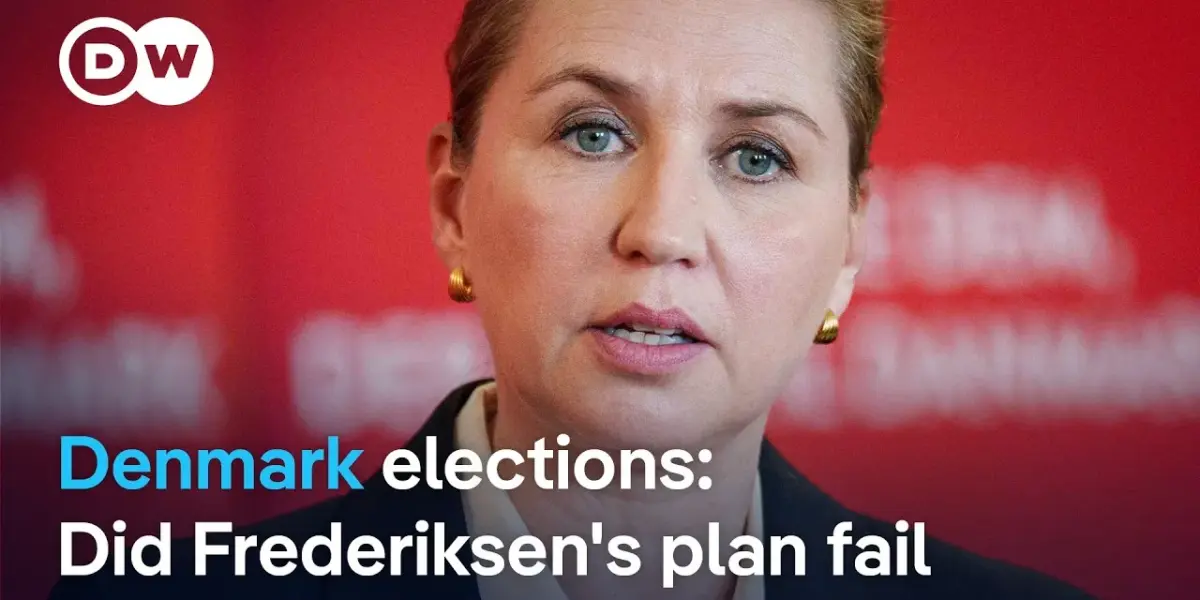
Danes Head to Polls Amidst Shifting Political Tides
Copenhagen, Denmark – Denmark held snap parliamentary elections on [Insert Date of Election, if known from transcript, otherwise omit], with early exit polls suggesting that neither the left-leaning nor the right-leaning political blocs secured a clear majority in the country’s 179-seat parliament, the Folketing.
Prime Minister Mette Frederiksen of the Social Democrats had called the early election, seemingly hoping that her strong stance against former U.S. President Donald Trump’s interest in purchasing Greenland would galvanize voters. However, the diplomatic incident appears to have taken a backseat to pressing domestic and economic concerns for many Danish citizens.
Exit Polls Show Social Democrats Leading, But With Losses
Speaking from outside the historic Folketing, DW correspondent Terry Schultz reported that initial indications point to Frederiksen’s Social Democrats emerging as the largest single party. “That’s almost unquestionable now,” Schultz stated, “but they will have suffered a big loss, particularly from their showing in 2022.” Exit polls suggest the party could lose well over a dozen seats.
While this still places the Social Democrats in a leading position, the results indicate a desire among voters for a course correction. Coalition partners from the previous government also saw seat losses, suggesting the electorate was not entirely satisfied with the country’s direction over the past three and a half years but was also hesitant about drastic changes.
Green Left Surges Amidst Focus on Environment and Spending
Conversely, one of the left-leaning parties, the Green Left, showed a notable surge in seats. Their platform, which emphasizes environmental policies and domestic spending, appears to have resonated with voters. “They would very much like to see Mette Frederiksen or whomever is the next prime minister move back towards the left,” Schultz explained.
As it stands, the preliminary results suggest that left-leaning parties may hold more seats than right-wing parties. However, the final official results are expected in the coming hours, which will confirm the precise distribution of power.
The Path to Forming a New Government
The process of forming a new government in Denmark can be lengthy. Over the next 24 to 48 hours, party leaders will formally approach the monarch to propose who they believe should lead the government formation talks. This could be Prime Minister Frederiksen herself, or it could be Lars Løkke Rasmussen, the current or likely outgoing Foreign Minister.
Rasmussen, a long-standing figure in Danish politics who has served as prime minister twice before, has also put himself forward for the role. “So it will depend on whom the king thinks is the best person to form this coalition,” Schultz noted. Following this, extensive negotiations will commence, during which parties will discuss compromises and potential policy agreements to form a governing coalition.
Policy Uncertainty and Security Spending
It remains too early to speculate definitively on potential policy shifts. The outcome hinges entirely on which parties ultimately join the government. “The last time Denmark chose a government it took 42 days, so it could be a while before we see exactly what the platform is going to be,” Schultz cautioned.
Despite the uncertainty, some trends are emerging. If the left-leaning bloc indeed holds a majority, Denmark could see a renewed focus on environmental and educational policies. However, a surprising consensus appears to be forming around increased security spending. “One thing we all agree on, even those of us on the left, is the need to spend on security,” Schultz quoted the leader of the Green Left Party.
Greenland Issue Remains a Non-Factor
The controversial bid by former President Trump to purchase Greenland, which was a catalyst for Frederiksen calling the election, did not significantly influence voters. “Nobody disagrees with the way Mette Frederiksen handled it. She was so tough on Trump. She didn’t back down,” Schultz explained.
The diplomatic standoff ultimately brought Greenland and Denmark closer, highlighting Greenland’s importance as a semi-autonomous territory. Denmark was prompted to adopt a more conciliatory approach towards Greenland, elevating its standing. “So it wasn’t an issue in the election because nobody disagreed with the way Frederiksen had handled it,” Schultz concluded.
What’s Next for Denmark?
With the final results still pending and coalition negotiations likely to be complex, Denmark faces a period of political uncertainty. The coming weeks will reveal which parties will form the next government and what their policy agenda will be, particularly concerning domestic issues and the nation’s security posture.
Source: Denmark snap elections: How will the country's next government look like? | DW News (YouTube)

Related Articles
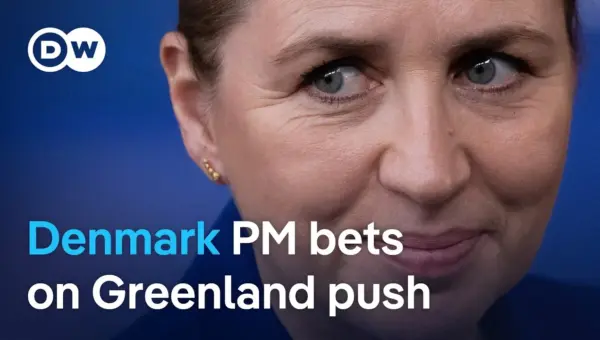
Denmark Votes: PM Bets on Trump Stance Amid Economic Woes
Danes are voting in a snap election where Prime Minister Mette Frederiksen hopes her strong stance against Donald Trump's Greenland proposal will boost her chances. However, economic issues are taking center stage, with her party currently trailing in polls. The outcome will likely depend on coalition negotiations among multiple parties.
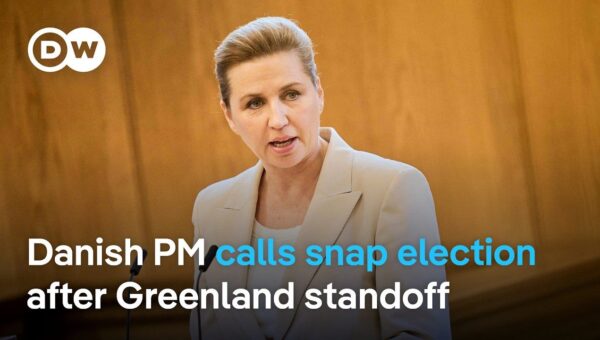
Danish PM Calls Snap Election After Greenland Standoff
Danish Prime Minister Mette Frederiksen has called a snap election for March 24th, aiming to capitalize on a surge in popularity following her government's firm stance against former U.S. President Donald Trump's bid to purchase Greenland. The move is seen as a tactical play to leverage a "Greenland bounce" in public support, positioning the government as strong international actors.

Rob Jetten Becomes Netherlands’ Youngest, First Gay Prime Minister
Rob Jetten has made history as the Netherlands' youngest and first openly gay Prime Minister, leading a new three-party coalition. His government faces challenges as a minority administration, needing opposition support to pass laws.