3,000 Troops Deployed Amid Saudi Push to Continue Iran War
The U.S. is deploying 3,000 troops to the Middle East amid reports that Saudi Arabia is encouraging the continuation of the conflict with Iran. This escalation coincides with concerns over potential conflicts of interest involving Jared Kushner and significant leverage in financial markets.

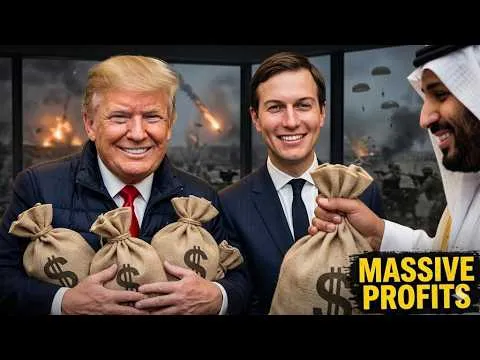
US Deploys 3,000 Troops as Middle East Tensions Rise
The United States is sending an additional 3,000 paratroopers to the Middle East, a move that comes as Saudi Arabia is reportedly pushing for the conflict with Iran to continue, rather than end.
These paratroopers were on standby, and their training event was canceled, suggesting a deployment was imminent. Now, they are officially being sent to the region, adding to existing U.S. military presence.
Saudi Arabia’s Strategic Interests
Saudi Arabia, through its Crown Prince, has allegedly urged former President Donald Trump to “seize the historic moment” and extend the war with Iran. The goal appears to be a regional reshaping, with the Saudis potentially looking to use American and Israeli resources, including funding and weaponry, to achieve their objectives.
This push for continued conflict is reportedly being discussed by figures such as Steve Witkoff, J.D. Vance, Marco Rubio, and Donald Trump himself. Notably, Jared Kushner, a former White House advisor, is also involved in these discussions.
Jared Kushner’s Role and Potential Conflicts
Jared Kushner, who previously advised Trump during his presidency, is now operating as an informal outside advisor. While in a formal White House role, advisors must provide detailed financial disclosures. However, as an unofficial advisor, Kushner is not under the same public scrutiny.
The situation becomes more complex as Saudi Arabia is reportedly investing billions of dollars into a fund managed by Kushner. This raises questions about potential conflicts of interest, as the individual involved in negotiating peace with Iran for the U.S. also has significant financial ties to Saudi Arabia, a nation advocating for the war’s continuation.
It appears that Kushner might be incentivized to align with Saudi Arabia’s goals, which include remaking the region. This could create a situation where ending the conflict may not be in the best interest of all parties involved, given the financial stakes.
Escalating Troop Presence
The deployment of 3,000 paratroopers follows the arrival of a Marine amphibious unit. These new troops will join an already substantial U.S. military presence, which includes an estimated 50,000 troops already in the region. This significant buildup suggests a heightened state of alert and potential for increased military action.
SEC Enforcement Director Resigns Amidst Investigations
In related news, Margaret Ryan, an enforcement director at the Securities and Exchange Commission (SEC), reportedly resigned after demanding investigations into alleged misconduct by the Trump family. Ryan allegedly flagged a $500 million bet on oil, made just 15 minutes before a Truth Social post, as potential insider trading.
Her departure, following disagreements with SEC leadership, has raised concerns about the thoroughness of regulatory oversight. The SEC’s current leadership includes Paul Atkins, a former Wall Street figure who previously worked at the SEC before returning after a lucrative stint in private industry.
Iran’s Stance on Nuclear Weapons and Missiles
Despite the troop deployments, former President Trump has stated that Iran is negotiating in good faith and has agreed to forgo nuclear weapons. However, reports suggest Iran remains unwilling to halt its ballistic missile program, viewing it as crucial for regional deterrence.
Israel, on the other hand, has indicated it will continue its operations against Iran until the ballistic missile threat is neutralized. This disagreement over missiles remains a significant hurdle to any potential peace agreement.
Strait of Hormuz and Trade Concerns
Iran has recently announced that “non-hostile” ships can transit the Strait of Hormuz. This statement comes after a significant number of vessels, eight, passed through the strait, matching a high seen earlier in March.
Iran has also implemented a permit system, charging up to $2 million per passage. It remains unclear if this new announcement means ships can pass freely if they are deemed non-hostile, or if it refers to ships that pay Iran’s fees, or perhaps only vessels not belonging to the U.S. or Israel.
The Strait of Hormuz is a vital waterway for global oil and trade. Any disruption or increased costs associated with its passage can impact global markets. Donald Trump has suggested this development is a positive sign, indicating he is dealing with individuals who can influence actions in the region.
Market Volatility and Economic Indicators
The ongoing geopolitical tensions are contributing to market uncertainty. The 10-year Treasury yield has approached 4.4%, a level that can be challenging for the stock market. This rise in yields may reflect market pricing in potential interest rate hikes.
Economists are also raising concerns about recession risks. Mark Xandandy from Moody’s suggests that if the conflict continues through April, it could lead to a short-term recessionary dip lasting about nine months, from March 2026 to January 2027.
Economic data supports these concerns. The latest Flash PMI report showed a decline in employment for the first time in over a year, as companies look to cut costs in an uncertain climate. The report also indicated that GDP growth has slowed to an annualized rate of 1%, roughly half the pace seen late last year.
Higher oil prices, potentially exacerbated by the conflict, could further reduce this growth. Some analysts suggest that even a $50 increase in oil prices could significantly slow or halt GDP growth.
Leveraged ETFs and Margin Debt Risks
The market is also showing signs of increased leverage. Leveraged Exchange Traded Funds (ETFs), particularly those tracking the Nasdaq 100, have seen significant growth, outperforming the S&P 500. These funds, often using 2x or 3x leverage, can amplify both gains and losses.
A report from Bank of America highlights that leveraged ETFs can cause accelerated declines in falling markets due to daily rebalancing requirements. When these funds drop in value, they must sell assets to maintain their leverage, potentially creating a downward spiral in prices.
In addition to leveraged ETFs, margin debt in U.S. accounts has reached record highs, increasing by 36% above 2021 levels to over $1.2 trillion. This high level of borrowing to invest adds another layer of risk to the market, especially if asset prices fall.
Geopolitical Spillovers and Future Outlook
The conflict’s impact is extending beyond the immediate region, with reports of Israeli strikes in the Caspian Sea, an area crucial for trade between Iran and Russia. This expansion of hostilities could draw in more global powers and further destabilize international relations.
The complex interplay of geopolitical ambitions, financial interests, and market mechanics creates a volatile environment. Investors will need to closely monitor these developments for potential impacts on global markets and economic stability.
Source: U.S. Troops Deployed | Saudi's Demand War CONTINUE (YouTube)

Related Articles
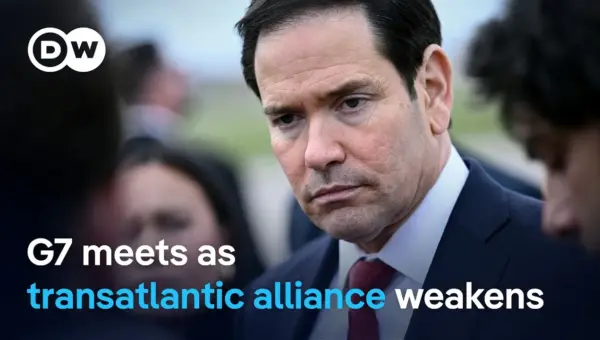
G7 Allies Clash Over Iran War Strategy, Urge Focus on Russia
G7 foreign ministers met in Paris, revealing deep divisions over the U.S. war with Iran. European allies urged the U.S. to pressure Russia, linking its actions to the conflict and fearing support for Ukraine will wane.

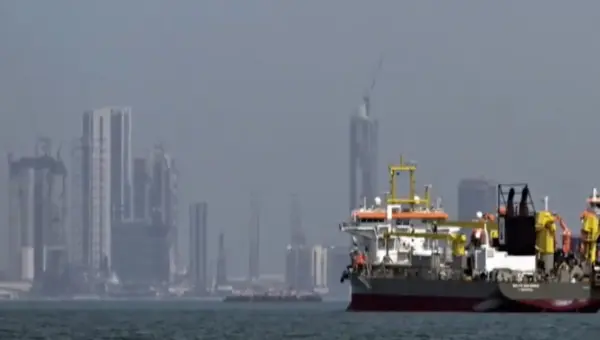
Iran Blocks China Ships, Exposing Beijing’s Weak Grip
Iran's recent decision to block Chinese ships at the Strait of Hormuz is exposing the limits of Beijing's influence in the Middle East. This action is causing delays and cancellations for Chinese manufacturers, turning a perceived geopolitical win into an economic strain.
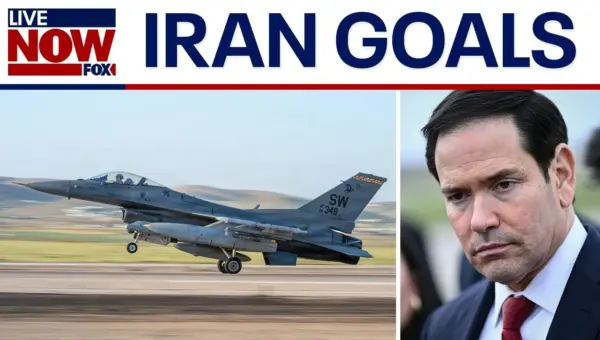
Rubio: US Can Achieve Iran War Goals Without Troops
Senator Marco Rubio outlined a strategy to counter Iran without deploying U.S. ground troops, focusing on weakening the regime and enhancing maritime security. He also criticized Cuba's economic system and expressed concerns about West Bank violence.