ICE Agents Descend on Airports, Sparking Fear and Confusion
ICE agents were deployed to airports ostensibly to help with TSA lines, but reports suggest they wandered aimlessly or engaged in intimidating behavior. Videos of arrests, while disturbing, were often from before the official deployment, yet the actions of ICE remain a point of major concern.


ICE Agents Descend on Airports, Sparking Fear and Confusion
In recent days, videos showing Immigration and Customs Enforcement (ICE) agents arresting people in airports have spread widely online. These events happened around the same time ICE agents were sent to help the Transportation Security Administration (TSA) because of long security lines. These lines were caused by a partial government shutdown. It’s important to understand the full story behind these widely shared videos.
Context is Crucial, But Actions Remain Disturbing
Some of the most shocking videos, showing violent arrests, were actually filmed before ICE agents were officially deployed to help TSA. Many people have mistakenly believed these earlier incidents were a direct result of the new deployment. While these earlier videos are disturbing and do not excuse the behavior of the agents involved, they don’t represent the reason ICE was sent to airports this time. For example, a viral video from San Francisco showed a woman being pinned to the ground while her child cried nearby. This was a planned transport of an individual, not a random act by ICE agents sent to assist TSA. Reports indicate multiple police officers were present, showing this was a coordinated operation, not ICE acting alone or unexpectedly.
Even with this added context, the actions of ICE agents are still unacceptable to many. The disturbing nature of these incidents, regardless of timing, raises serious questions about their conduct and the overall mission of ICE. However, understanding the facts behind each event is essential for a clear picture.
ICE’s Actual Role at Airports: Aimless Wandering or Targeted Harassment?
According to travelers and reporters on the ground, ICE agents have not been actively helping TSA with security lines. Instead, many have reported seeing ICE agents simply wandering through airports. They’ve been observed going up and down escalators, strolling through concourses, and talking among themselves. Some travelers have seen them hanging out in baggage claim areas. This placement is particularly confusing, as baggage claim is at the end of the travel process. By the time passengers reach baggage claim, they have already passed through TSA security and are on their way to their final destination.
This observation leads to a concerning interpretation: if ICE agents are not helping TSA, and are instead present at baggage claim, it suggests they might be there to target travelers who do not appear to be white. This raises fears of racial profiling and harassment within public transportation hubs.
A Confused Mission and Unanswered Questions
The lack of clear purpose for ICE’s presence at airports was even admitted by a high-ranking official. Tom Homan, who is in charge of the deployment, stated before it even happened that they weren’t sure what ICE agents would do. He mentioned that ICE agents are not trained to operate X-ray machines or perform TSA duties. He openly admitted that their role was unclear, and any plan would be constantly changing and not finalized.
This admission highlights a significant problem: ICE agents were deployed without a clear mission or the necessary training for airport security tasks. This leaves them with two apparent activities at airports. The first is relatively harmless: spending time at places like Cinnabon or Starbucks, essentially wasting time and resources. The second, and far more serious, is the harassment and intimidation of travelers within the United States. This second activity is deeply concerning, especially in an environment where firearms are typically not expected.
Why This Matters
The deployment of ICE agents to airports, without a clear operational plan or TSA-specific training, raises serious concerns about government priorities and the safety of travelers. When a government agency sends personnel into public spaces without a defined, helpful role, it can lead to a breakdown of trust and an increase in fear. The potential for profiling and harassment, as suggested by observations at baggage claim, is particularly alarming. It transforms airports, meant to be places of safe passage, into potential sites of intimidation for certain communities.
Historical Context and Future Outlook
The use of federal law enforcement agencies in domestic roles has a complex history. Often, these deployments are justified by claims of enhanced security or efficiency. However, when the effectiveness is questionable and the potential for civil liberties violations is high, such actions warrant close scrutiny. The current situation echoes past instances where the lines between different agencies’ responsibilities have blurred, sometimes with negative consequences for the public.
Looking ahead, this incident highlights a broader trend of increased immigration enforcement presence in everyday public spaces. The lack of a clear, constructive role for ICE at airports suggests a potential misallocation of resources and a focus on visibility rather than tangible support for TSA operations. It is crucial for authorities to provide transparency regarding the purpose and effectiveness of such deployments. Without clear answers and accountability, public anxiety and distrust are likely to grow, potentially impacting the travel experience for everyone.
Source: TOTAL CHAOS At Airports As ICE Fumbles Everything (YouTube)

Related Articles


Trump Derails Bipartisan Deal, Halts Government Funding
Senate Republicans united on a funding bill for the Department of Homeland Security, but Donald Trump's opposition led House Speaker Mike Johnson to kill the deal. This political maneuver left TSA workers unpaid and highlighted the influence of personal directives over legislative progress.

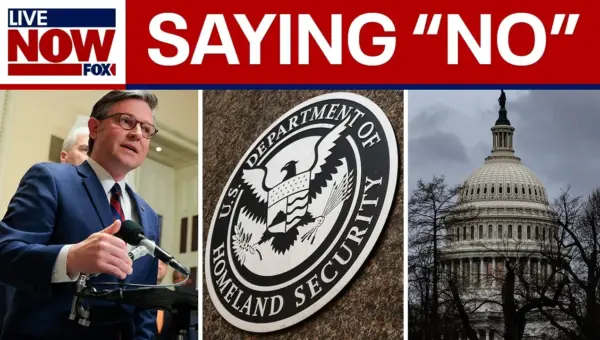
House Speaker Rejects Senate Bill, Proposes Clean Funding for DHS
House Speaker Mike Johnson rejected the Senate's proposed DHS funding bill, calling it a "radical agenda" that would reopen borders. He announced a Republican plan for a "clean" funding extension until May 22nd to ensure DHS employees are paid. President Trump reportedly supports this House-led initiative.


Trump’s Grip Tightens: House Republicans Fold on Funding Bill
House Republicans, influenced by Donald Trump, have rejected a bipartisan bill to fund the Department of Homeland Security, causing chaos and leaving essential workers unpaid. Senate Republicans had unanimously passed the bill, but Speaker Mike Johnson ultimately folded to Trump's demands, highlighting the former president's strong grip on the party.