AI in Warfare: Who Holds the Trigger on Life and Death?
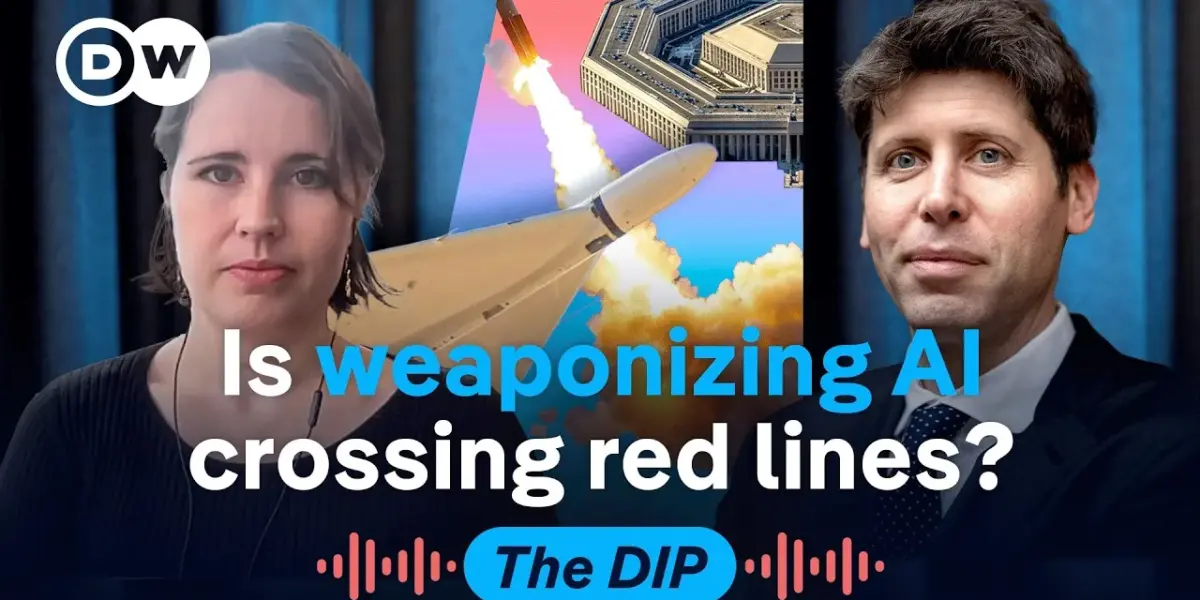
Helen Toner, formerly of OpenAI, argues that the focus on AI autonomy in warfare distracts from the core issue: accountability for life-and-death decisions. As AI integrates into military operations, defining responsibility for AI actions is becoming critical. The public needs transparency as military AI contracts increase.

AI in Warfare: Who Holds the Trigger on Life and Death?
The debate over artificial intelligence in warfare is no longer just a theoretical discussion. It’s a pressing reality where military contracts, surveillance limits, and battlefield decisions are starting to clash in public view. Helen Toner, a former member of OpenAI’s board, emphasizes that the crucial question isn’t whether AI systems act on their own. Instead, it’s about who takes responsibility when these systems influence life-and-death choices on the battlefield.
Accountability in the Age of AI
Toner argues that the focus on whether AI sounds autonomous misses the point. The real issue lies in accountability. When an AI system is involved in making critical decisions, especially those with lethal consequences, it’s vital to know who is ultimately responsible. This could be the programmer, the commander who deployed the system, or even the government that authorized its use.
She highlights that current military systems already involve complex decision-making processes. AI is increasingly being integrated to assist or even automate parts of these processes. This raises concerns about transparency and control. For example, if an AI identifies a target, how much human oversight is there before a strike is authorized? The lines of command and control can become blurred.
Defining ‘Autonomous’ and ‘Control’
The definition of ‘autonomous’ in the context of AI weapons is a significant point of contention. Toner suggests that many systems described as autonomous might still have human operators involved in the loop or on the loop. ‘In the loop’ means a human must approve each action. ‘On the loop’ means a human can intervene but doesn’t have to approve every single step. Understanding these distinctions is key to grasping who is truly in control.
She points out that the capabilities of AI are advancing rapidly. This means that systems that are currently supervised by humans could become more independent in the future. This progression necessitates clear guidelines and ethical frameworks to be established now, before advanced autonomous weapons become widespread.
The Ethical Minefield of Lethal Autonomous Weapons
The development of Lethal Autonomous Weapons Systems (LAWS) presents a serious ethical challenge. These are weapons that can independently search for, identify, and engage targets without direct human intervention. Critics worry about the potential for unintended escalation, errors in target identification, and a reduction in the threshold for going to war.
Toner’s perspective suggests that even with human oversight, the speed at which AI can operate might outpace human decision-making capabilities. This creates a situation where humans might be making decisions based on AI recommendations without fully understanding the AI’s reasoning or potential biases. It’s like a pilot relying on autopilot during a storm; the pilot is technically in charge, but the autopilot is doing the flying and making split-second adjustments.
Military Contracts and Public Scrutiny
The increasing involvement of military contracts with AI companies brings these issues into the public domain. As governments invest more in AI for defense, there is a growing need for transparency and public discussion about the implications. Toner’s role as a former OpenAI board member places her in a unique position to comment on the intersection of AI development and its potential military applications.
The public needs to be informed about how AI is being used in military contexts. Surveillance limits are also a related concern, as AI can enhance the capabilities of surveillance systems, potentially infringing on privacy rights. Balancing security needs with ethical considerations and civil liberties is a complex task that requires open dialogue.
Looking Ahead: Regulation and Responsibility
As AI technology continues to evolve, the need for clear regulations and international agreements becomes more urgent. Establishing who is accountable for the actions of AI in warfare is paramount. Without clear lines of responsibility, there is a risk of impunity and a lack of justice when errors occur. The conversation must move beyond the technical capabilities of AI to address the profound ethical and legal questions it raises for global security.
Source: Who is really in control of AI's life and death decisions in war? | The Dip Podcast (YouTube)

Related Articles


Finland Tops Happiness Chart, UK Falls to 29th
Finland has once again been named the world's happiest country, while the UK dropped to 29th in the latest World Happiness Survey. The report explores the complex ways happiness is measured and highlights unique Finnish concepts of well-being, alongside concerning trends in youth happiness.


ChatGPT Adds Library Tab, Google Overhauls AI Studio
This week's AI news highlights significant updates from major players. ChatGPT now features a Library tab for easier document management, while Google has overhauled its AI Studio, merging it with an app builder to simplify the creation of multiplayer experiences. We also look at Midjourney V8's performance, user hopes and fears about AI from an Anthropic study, and quick updates from Gamma, OpenAI, and Claude.


Ukraine Gains AI Drone Edge: Russia’s Jamming Weakened
Ukraine is integrating advanced AI drone software from Shield AI, significantly boosting its capabilities against Russian jamming. The Hivemind system enables autonomous flight and swarm tactics, challenging traditional military doctrine and potentially weakening Russia's electronic warfare advantage.