EU Aid Falters: Hungary, Slovakia Block Ukraine Funds
Hungary and Slovakia are blocking a crucial 90 billion euro EU aid package for Ukraine. This comes as Russia escalates propaganda efforts, blaming Europe for prolonging the war. The internal divisions within the EU threaten Ukraine's ability to fund its defense and essential services.

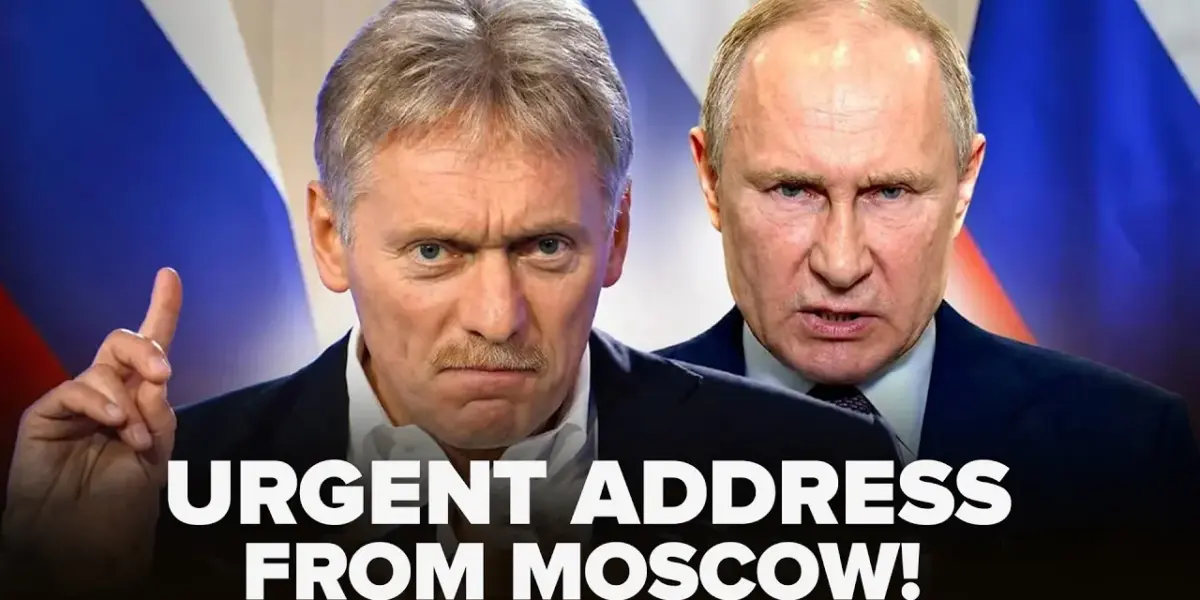
EU Aid Falters: Hungary, Slovakia Block Ukraine Funds Amidst Russian Propaganda Push
Europe’s commitment to supporting Ukraine is facing significant internal challenges, with key member states like Hungary and Slovakia actively blocking substantial financial aid packages. This internal friction comes as Moscow escalates its propaganda efforts, attempting to shift blame for the ongoing conflict and sow discord among Western allies. The Kremlin claims Europe, not Russia, is prolonging the war.
Hungary and Slovakia Raise Roadblocks
A crucial 90 billion euro aid package for Ukraine is currently stalled due to opposition from Hungary. Prime Minister Viktor Orban has intensified his criticism of Ukraine, demanding that Kyiv help restore the Druzhba oil pipeline, which supplies Hungary with oil. This pipeline was damaged by Russia, yet Budapest’s demands focus on Ukraine. Orban’s stance appears to be a strategic move, leveraging aid for political gain ahead of upcoming parliamentary elections.
Slovak Prime Minister Robert Fico has indicated that Slovakia may follow Hungary’s lead in blocking aid. Fico has openly supported Orban’s position and has been critical of the European Union’s approach to Russia. He suggested that Ukraine, specifically President Zelensky, could restart the damaged Druzhba pipeline, a claim that overlooks Russia’s role in the damage.
Kremlin Exploits Divisions
The Kremlin has seized upon these divisions within the EU to advance its narrative. Russian spokesperson Dmitry Peskov accused European countries of being unwilling to negotiate and wanting the conflict to continue. This strategy aims to justify Russia’s prolonged military campaign and place responsibility for the war squarely on the West. By highlighting European hesitations, Moscow seeks to undermine Kyiv’s international support and weaken its resolve.
This propaganda push is seen as a calculated effort to justify the continuation of the war and to portray Russia as a victim of Western aggression. The narrative suggests that the West is not seeking peace but rather aims to weaken Russia while strengthening its own geopolitical position.
Strategic Implications and European Unity
The potential failure to deliver promised financial aid to Ukraine has serious implications. Ukraine relies on this funding not only for defense but also for essential services like salaries, pensions, and infrastructure maintenance. Without it, the country could face severe budgetary shortfalls, forcing difficult cuts to social programs or defense spending. The EU’s planned aid was intended to cover both civilian needs and military expenditures, crucial for sustaining the war effort against Russian aggression.
European Parliament President Roberta Metsola emphasized that supporting Ukraine is a matter of European security, not just altruism. Despite the current disputes, many in Brussels believe a compromise can still be reached, as has happened in past instances of Hungarian opposition. However, the rising tide of populism and national interests within some member states is testing the unity that has defined the EU’s response to the conflict.
Broader Geopolitical Concerns
Beyond the immediate financial aid, broader geopolitical shifts are adding layers of uncertainty. European leaders are concerned about potential changes in U.S. support, particularly if Donald Trump returns to power. Fears exist that the U.S. might reduce its commitment to Ukraine, especially if Middle Eastern conflicts demand more American attention. This concern is amplified by Russia’s alleged offer to halt intelligence sharing with Iran in exchange for reduced U.S. support for Ukraine.
To maintain transatlantic solidarity and ensure continued U.S. engagement, some European nations are limiting their direct involvement in U.S. actions against Iran. French President Emmanuel Macron has stressed that the conflict in the Middle East must not distract from Ukraine. Simultaneously, concerns are rising that Middle Eastern conflicts could deplete vital air defense systems needed by Ukraine.
Ukraine’s Resilience and Future Outlook
Despite these challenges, Ukrainian officials express optimism that EU funding will eventually be approved. They anticipate the first tranche of aid in April, which would help stabilize the budget and support ongoing defense spending. Ukraine’s position has strengthened over the past year, with Kyiv taking a more active role in diplomacy and seeking security guarantees.
However, the reality is that Ukraine must increasingly rely on its own resources. The era of unified Western support is fracturing, and aid has become more fragmented. The focus is shifting towards Ukraine playing a more active role in its own security, a necessary adaptation in a world where allied unity is no longer guaranteed and geopolitical priorities are constantly shifting.
Source: ⚡️An urgent appeal to Ukraine! Peskov came out with new updates. Moscow is derailing negotiations (YouTube)

Related Articles
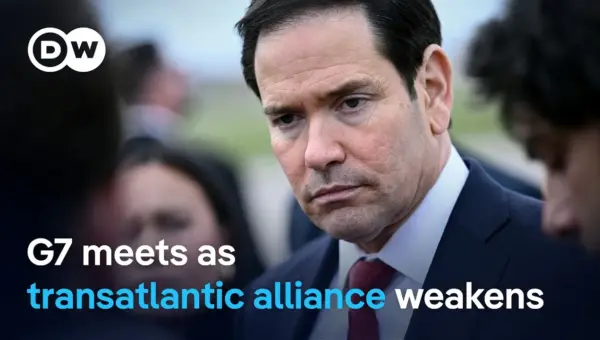
G7 Allies Clash Over Iran War Strategy, Urge Focus on Russia
G7 foreign ministers met in Paris, revealing deep divisions over the U.S. war with Iran. European allies urged the U.S. to pressure Russia, linking its actions to the conflict and fearing support for Ukraine will wane.

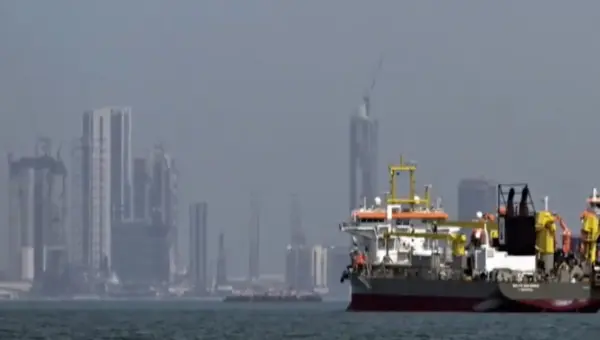
Iran Blocks China Ships, Exposing Beijing’s Weak Grip
Iran's recent decision to block Chinese ships at the Strait of Hormuz is exposing the limits of Beijing's influence in the Middle East. This action is causing delays and cancellations for Chinese manufacturers, turning a perceived geopolitical win into an economic strain.
Trump’s “Walk Away” Tactic Signals Tougher Stance on China
Retired Air Force Brigadier General David Stillwell believes President Trump's strategy of being willing to walk away from negotiations puts pressure on China. This tactic, combined with US global actions and strengthened alliances, signals a more assertive American foreign policy.