Cockpit Audio Reveals LaGuardia Crash Sequence
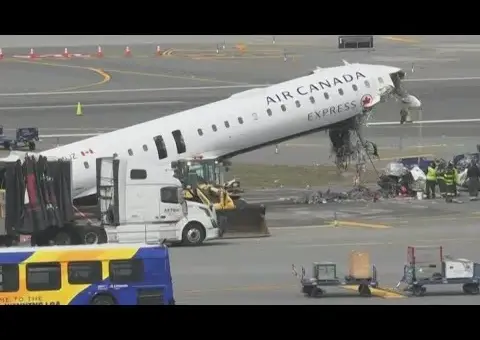
Cockpit audio from a recent LaGuardia Airport incident reveals a tense final three minutes before landing. The recording details a series of critical alerts, radio communications, and runway traffic that investigators are now analyzing. The sequence includes warnings from the aircraft's proximity system and transmissions involving ground vehicles.

Cockpit Audio Reveals LaGuardia Crash Sequence
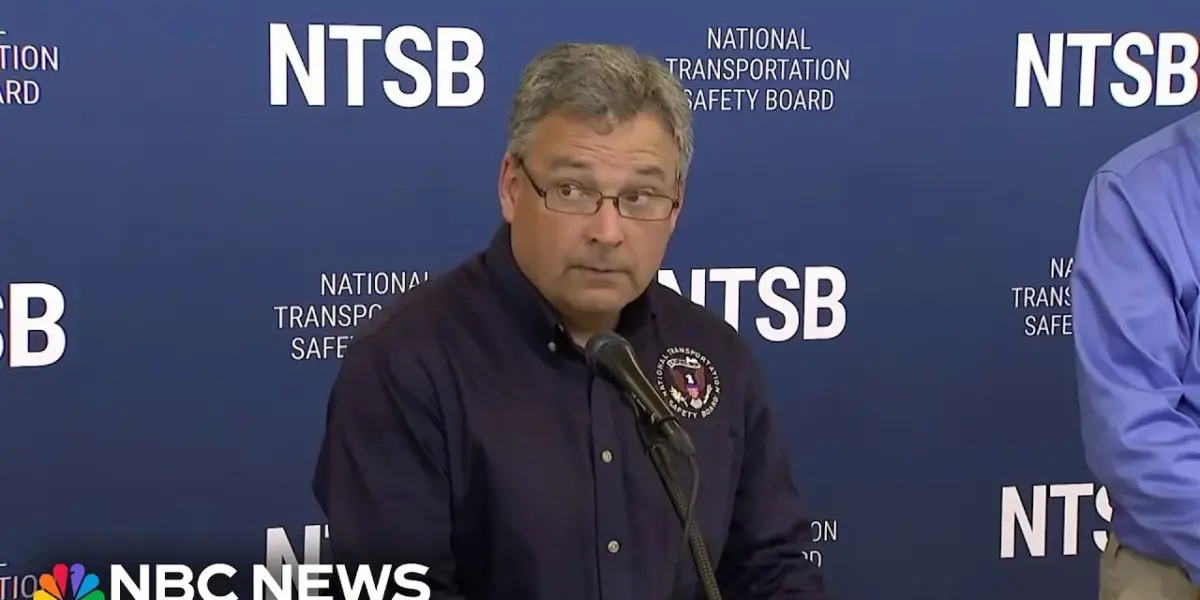
New details have emerged from the cockpit voice recorder of an aircraft that experienced an incident at LaGuardia Airport, shedding light on the critical moments leading up to the event. The recording captures a rapid exchange of communications and system alerts in the final three minutes before the aircraft’s landing, indicating a complex and potentially chaotic sequence of events on the ground and in the air.
Timeline of Critical Events
The National Transportation Safety Board (NTSB) has summarized the audio captured in the cockpit, providing a minute-by-minute account of the final stages of the flight. At three minutes and seven seconds before the recording ended, air traffic control instructed the flight crew to contact LaGuardia Tower. Just over a minute later, at two minutes and 22 seconds, the flight crew lowered the landing gear.
The aircraft checked in with LaGuardia Tower at two minutes and 17 seconds. The tower then cleared the airplane to land on Runway Four. They also informed the crew that they were the second aircraft scheduled to land. By one minute and 52 seconds, the flight crew had set the flaps to 30 degrees. This was followed by setting the flaps to 45 degrees at one minute and 33 seconds.
Warning Systems and Ground Traffic
A significant alert from the Enhanced Ground Proximity Warning System (EGPWS) sounded at one minute and 26 seconds, indicating the aircraft was 1,000 feet above the ground. This system is designed to warn pilots of potential dangers, such as flying too low or too close to the terrain. At one minute and 12 seconds, the flight crew confirmed that the landing checklist was complete, a standard procedure to ensure all preparations for landing are done.
Crucially, at one minute and three seconds, an airport vehicle made a radio transmission to the tower. However, this transmission was interrupted by another radio call, and the source of the interference has not yet been identified. This communication breakdown may have played a role in the unfolding events.
Runway Incursions and Final Moments
As the aircraft descended, at 54 seconds before the recording ended, the flight crew acknowledged they were 500 feet above the ground and on a stable approach. Shortly after, at 40 seconds, LaGuardia Tower inquired about a vehicle needing to cross the runway. At 28 seconds, a transmission from “Truck One” was made to the tower.
The tower acknowledged Truck One’s transmission at 26 seconds. Then, at 25 seconds, Truck One requested permission to cross Runway Four at Taxiway Delta. The tower cleared Truck One and its company to cross at 20 seconds. This clearance was confirmed by Truck One at 17 seconds.
Meanwhile, the aircraft continued its descent, with EGPWS alerts sounding: “100” at 19 seconds, “50/50” at 14 seconds, and “30” at 12 seconds. At this same time, the tower instructed a Frontier Airlines flight to hold its position. An EGPWS “20” callout occurred at 11 seconds, followed by a “10” callout at 10 seconds.
In the final moments, at nine seconds, the tower instructed Truck One to stop. Just one second later, at eight seconds, the audio captured a sound consistent with the airplane’s landing gear touching the runway. A pilot transfer of controls then took place at six seconds. The tower repeated the instruction for Truck One to stop at four seconds.
Broader Implications and Next Steps
This detailed timeline from the cockpit voice recorder highlights the critical importance of clear communication and situational awareness in aviation. The series of alerts, ground vehicle movements, and radio transmissions in the final moments before the landing underscore the complex environment pilots operate in. The interruption of a vehicle’s radio transmission and the subsequent runway crossing clearance raise questions about communication protocols and oversight at the airport.
Investigators will now focus on piecing together the exact sequence of events, the cause of the interrupted transmission, and the factors that led to the aircraft’s incident. The findings will likely inform recommendations to enhance safety procedures at LaGuardia and other airports, aiming to prevent similar occurrences in the future. The NTSB’s full report will provide a comprehensive analysis of the incident.
Source: Officials summarize audio inside cockpit before crash at LaGuardia (YouTube)

Related Articles
LaGuardia Runway Reopens After Deadly Crash, Safety Lapses Exposed
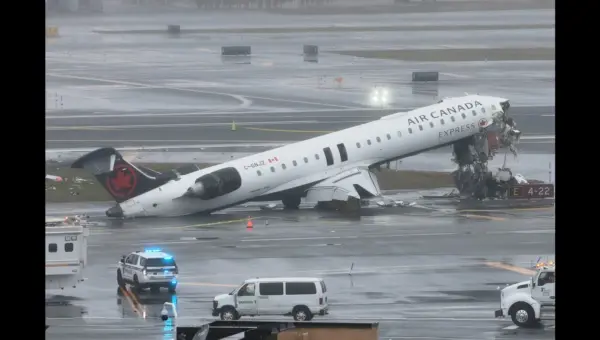
LaGuardia Airport's main runway has reopened after a fatal crash involving an Air Canada Express jet and a fire truck. The incident, which killed two pilots, exposed critical failures in airport safety systems, including ground surveillance and transponder use.


Iran War Talks Ignite, Airport Chaos Deepens
President Trump confirms peace talks with Iran are underway, while US airports face ongoing chaos due to the DHS shutdown. Investigations into a fatal LaGuardia crash reveal systemic safety issues, with experts citing controller fatigue and staffing shortages. Meanwhile, the search for a missing elderly woman continues in harsh desert terrain, highlighting diverse challenges facing the nation.
Air Safety Fears Soar After Deadly Crash
A fatal crash at LaGuardia Airport has triggered a national review of air safety, revealing a pattern of close calls and communication issues at U.S. airports. Investigators are examining technology and staffing, as calls grow for urgent safety upgrades.