US Jets Hammer Iran as Conflict Escalates Sharply
The United States has intensified its military actions against Iran with powerful A-10 Warthog airstrikes and a sustained bombing campaign. Reports indicate potential ground operations with the deployment of the 82nd Airborne Division, as diplomatic efforts appear stalled and regional allies push for continued conflict.

US Jets Hammer Iran as Conflict Escalates Sharply
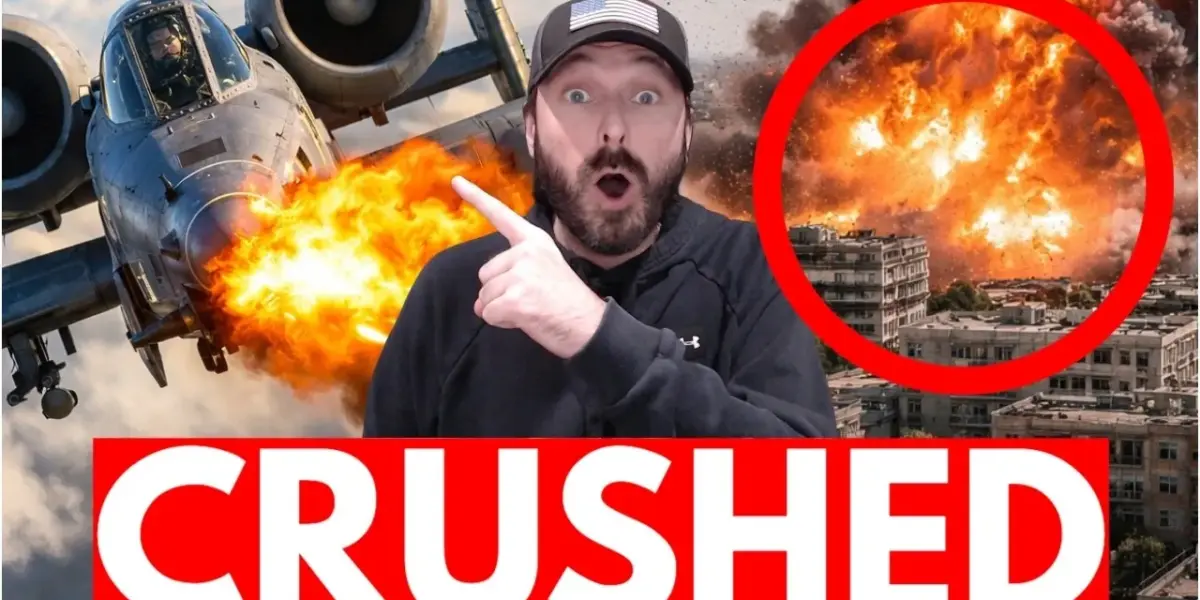
The United States has significantly ramped up its military actions against Iran, with new footage showing powerful A-10 Warthog jets striking targets believed to be linked to Iran. This escalation comes as the conflict in the region continues to intensify, drawing in various regional players and raising concerns about wider instability.
A-10 Warthogs Take Aim
Recent footage, captured over Mosul, Iraq, shows the formidable A-10 Warthog aircraft in action. These planes are specifically designed for close air support, meaning they fly low and can deliver powerful firepower directly to ground forces. The A-10s are reportedly targeting militias backed by Iran. These groups are accused of attacking U.S. interests, including the U.S. embassy and consulates, as well as regional allies. They are also said to be launching drones, guns, and rockets against American forces and their partners.
The A-10 is known for its distinctive, thunderous cannon, often described as a sound that signals serious trouble for those on the receiving end. Its ability to fly at low altitudes allows for precise targeting, making it a crucial asset in this ongoing conflict. The impressive footage highlights the aircraft’s power and the intensity of the operations.
Bombing Campaign Intensifies
Alongside the A-10 strikes, the U.S. has also continued a significant bombing campaign within Iran itself. Reports indicate large-scale airstrikes have hit areas like Shahin Shahar in Esfahan, Iran. Esfahan is notable as the location of Iran’s secret uranium facilities. The strikes have resulted in massive explosions and large smoke plumes, indicating the considerable force being used.
Further footage shows bombing runs near Bashure, Iran, and along the border between Iraq and Iran. Multiple bombs have been seen hitting targets in these areas, contributing to a continuous and heavy bombing campaign by the United States. The visual evidence suggests a sustained effort to degrade Iranian military capabilities.
Regional Back-and-Forth
The conflict is not one-sided. Hezbollah and the Iranian regime are also continuing their attacks. Recent footage shows Hezbollah launching rockets towards Israel, highlighting the ongoing hostilities. This exchange of fire underscores the volatile nature of the region and the widespread impact of the conflict.
Iran has also been accused of launching significant attacks against the United Arab Emirates (UAE). According to reports citing the UAE’s Ministry of Defense, Iran has fired numerous drones and ballistic missiles. These attacks have been ongoing since the conflict began, with the UAE reporting a substantial number of drones and missiles fired at its territory. This shows Iran’s willingness to retaliate and expand the conflict’s reach.
Ground Troop Deployment Looms
Adding another layer to the escalating situation, there are reports of significant troop movements. The commander of the 82nd Airborne Division and his staff have reportedly been ordered to deploy to the Middle East. This move suggests the Pentagon and White House are considering sending the entire 82nd Airborne Division for potential ground operations within Iran.
Speculation points to possible U.S. ground forces being used to seize strategic locations, such as Car Island, or to conduct other missions inside Iran. This would mark a major escalation, moving beyond air power to direct ground intervention. Elements of the 82nd Airborne may already be in the region, with more expected to arrive.
Negotiations Appear Stalled
Meanwhile, diplomatic efforts seem to be hitting a wall. Iran has reportedly laid out its demands for negotiations, which include guarantees against further military action, compensation for war damages, full control of the Strait of Hormuz, and no limits on its ballistic missile program. These demands are widely seen as unlikely to be accepted by the U.S. and its allies, suggesting that negotiations are unlikely to succeed.
Saudi Arabia’s Stance
Adding to the complex geopolitical landscape, Saudi Arabia is reportedly urging the United States to continue its military campaign. Crown Prince Mohammed bin Salman is said to be pushing for the removal of the current Iranian regime, hoping for its replacement with a different form of government. As a key ally in the region and a major oil producer, Saudi Arabia’s influence is significant, and its desire for continued conflict could impact U.S. decision-making.
Why This Matters
The current situation represents a significant escalation in the long-standing tensions between the U.S. and Iran. The increased military activity, including airstrikes and potential ground operations, signals a shift towards more direct confrontation. This has serious implications for regional stability, as other countries could be drawn into the conflict. The involvement of groups like Hezbollah and the ongoing missile and drone exchanges highlight the widespread nature of the hostilities.
Implications and Future Outlook
The deployment of the 82nd Airborne Division, if it occurs, would be a major turning point, indicating a willingness by the U.S. to engage in direct ground combat within Iran. This could lead to a prolonged and potentially wider conflict, with unpredictable consequences for global security and energy markets. The failure of diplomatic efforts, as suggested by Iran’s demands, further increases the likelihood of continued military action.
The involvement of regional allies like Saudi Arabia also shapes the conflict. Their desire for regime change in Iran could embolden the U.S. to pursue more aggressive strategies. The ongoing attacks on U.S. interests and allies by Iranian-backed groups provide a justification for continued U.S. responses.
Historical Context
U.S.-Iran relations have been strained for decades, dating back to the 1979 Iranian Revolution. Periods of proxy conflict, sanctions, and diplomatic standoffs have characterized their interactions. The current escalation can be seen as a continuation of these long-term tensions, exacerbated by recent events and regional power dynamics. Understanding this history is crucial to grasping the complexity and potential trajectory of the current conflict.
Source: U.S. Jets SHRED Iran Targets – Airstrikes RAIN DOWN (YouTube)

Related Articles

G7 Allies Clash Over Iran War Strategy, Urge Focus on Russia
G7 foreign ministers met in Paris, revealing deep divisions over the U.S. war with Iran. European allies urged the U.S. to pressure Russia, linking its actions to the conflict and fearing support for Ukraine will wane.

Iran Blocks China Ships, Exposing Beijing’s Weak Grip
Iran's recent decision to block Chinese ships at the Strait of Hormuz is exposing the limits of Beijing's influence in the Middle East. This action is causing delays and cancellations for Chinese manufacturers, turning a perceived geopolitical win into an economic strain.
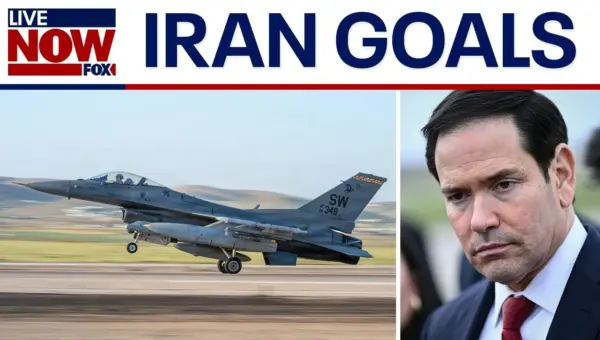
Rubio: US Can Achieve Iran War Goals Without Troops
Senator Marco Rubio outlined a strategy to counter Iran without deploying U.S. ground troops, focusing on weakening the regime and enhancing maritime security. He also criticized Cuba's economic system and expressed concerns about West Bank violence.