Cruz Blames Trump for DHS Shutdown Plan Failure
A plan to end the DHS shutdown by accepting a partial deal with Democrats was reportedly rejected by President Trump. Senator Ted Cruz was involved in proposing the strategy, which aimed to reopen agencies while using reconciliation to address ICE funding. Trump's "no deal" stance ultimately prevented the compromise.

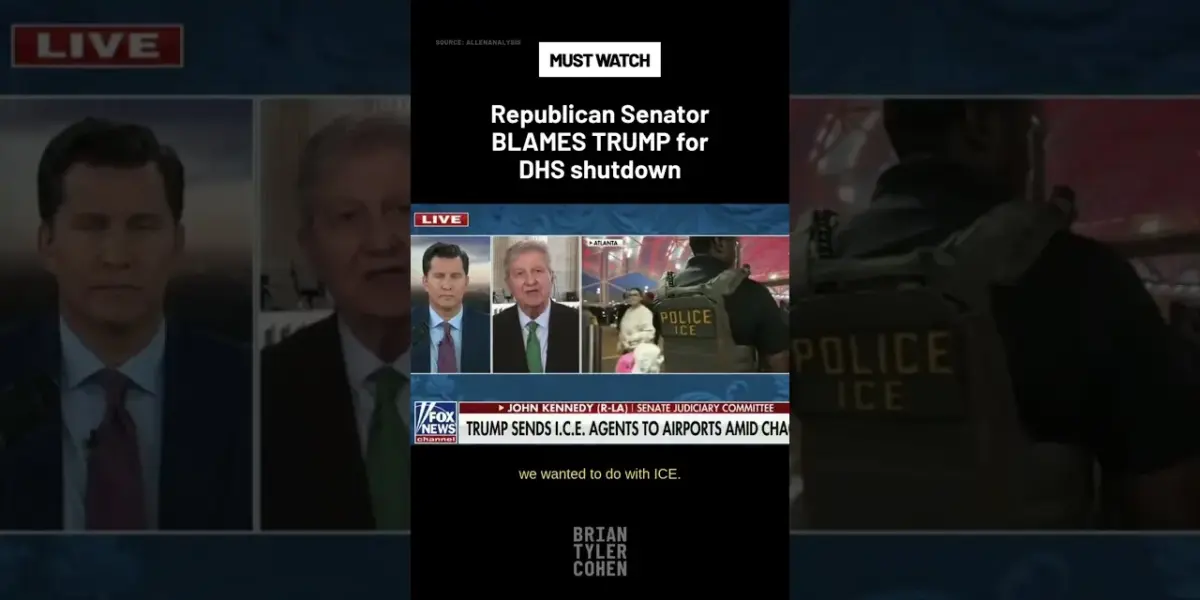
Cruz Blames Trump for DHS Shutdown Plan Failure
A recent political strategy aimed at ending a government shutdown has been revealed, with Senator Ted Cruz being identified as a key player. The plan, developed by Cruz and an unnamed Republican colleague, sought to reopen the Department of Homeland Security (DHS) by accepting a partial deal with Democrats. However, the strategy was ultimately rejected by President Donald Trump, leading to the continuation of the shutdown.
The Two-Step Strategy
The proposed plan involved a two-step process. First, Republicans would accept the Democrats’ offer to reopen most government agencies, excluding the Immigration and Customs Enforcement (ICE) agency. This would immediately get agencies like the Transportation Security Administration (TSA) back to work, paying employees who were furloughed during the shutdown. It was a way to end the immediate crisis for many government workers.
The second part of the plan was to use a special legislative procedure called reconciliation. This process allows certain bills to pass the Senate with a simple majority vote, meaning it wouldn’t require any Democratic support. Through reconciliation, Republicans could then address issues related to ICE without needing to negotiate with the opposition. This offered a path to address the core concerns of those pushing for stricter immigration policies.
President Trump’s Rejection
Senator Cruz reportedly submitted this proposal directly to President Trump. The President’s response was a firm rejection. According to the account, Trump stated, “No deals with the Democrats.” This decision effectively shut down the bipartisan negotiation attempt. The unnamed Republican senator expressed frustration, stating the plan “would work” and could have resolved the shutdown quickly.
We could have had TSA paid by the end of the week. But, uh, the President said, ‘No deal.’
Why This Matters
This incident highlights the complex dynamics within political parties, especially when dealing with presidential authority. It shows how a single decision by a party leader can derail a potential compromise, even when it comes from within their own ranks. The shutdown itself had significant real-world consequences, affecting government employees and the services they provide. The failure to reach a resolution, in this case, points to the challenges of bipartisan negotiation when party leaders are unwilling to compromise.
Historical Context and Trends
Government shutdowns are not new in American politics. They often occur when Congress and the President cannot agree on spending bills or other key legislation. These standoffs can have economic impacts and disrupt government operations. Historically, shutdowns have been used as a political tactic to pressure opponents. However, they often lead to public backlash against the party perceived as being most responsible.
The specific issue of funding for border security and immigration enforcement has been a recurring point of contention. This particular shutdown, as suggested by the transcript, revolved around these sensitive topics. The strategy proposed by Cruz and his colleague reflects an attempt to navigate these difficult issues by separating immediate relief from longer-term policy goals. This approach is a common tactic in legislative bargaining, trying to achieve wins on multiple fronts.
Implications and Future Outlook
The rejection of this compromise plan suggests a deep division, not just between parties, but also within the Republican party itself. It underscores President Trump’s influence over party strategy and his preference for a hardline approach. For future negotiations, this event might signal that compromise proposals, even those originating from within the party, may face an uphill battle if they don’t align perfectly with the President’s demands.
The ability of government to function can be seriously hampered by these shutdowns. Employees are left without pay, and essential services can be delayed. This incident serves as a reminder of the importance of finding common ground and the potential costs of political inflexibility. Moving forward, similar legislative challenges are likely to arise, and the willingness of all parties to engage in good-faith negotiation will be crucial for avoiding disruptive shutdowns.
Source: Republican Senator BLAMES TRUMP for DHS shutdown (YouTube)

Related Articles
House Rejects Senate Bill, Citing Border Security Funding Gaps
House Republicans are rejecting a Senate funding bill, arguing it lacks essential appropriations for ICE and CBP, threatening anti-trafficking efforts and border security. They plan to pass a short-term measure to force renewed negotiations.
Trump’s Name Everywhere: A ‘Stain’ on GOP Legacy?
Former President Donald Trump's efforts to brand national symbols, including a proposed signature on dollar bills, spark debate. Critics view this as an authoritarian attempt to embed his legacy, potentially staining the Republican Party's history and contrasting with democratic ideals of public ownership.

Trump’s War Talk Stuns Financial Crowd
Donald Trump's recent speech in Miami focused on his foreign policy, particularly his critical views on NATO and his vision for international relations. He declared the U.S. would no longer defend NATO allies, questioned the value of existing alliances, and suggested renaming the Strait of Hormuz. The speech also touched on his personal views of success, his allies, and his perceived role as a global peacemaker.