Congressman Warns of “Dead Young Americans” in Iran Conflict
Congressman Seth Moulton warns that the U.S. deployment of Marines to the Middle East could lead to "dead young Americans" without a clear strategy. He argues that the conflict is a "war of choice" and that negotiation, not military action, is the only way to prevent a prolonged war.


Marines Deployed Amid Escalating Tensions with Iran
Veteran Congressman Seth Moulton, a member of the House Armed Services Committee, has voiced grave concerns over the recent deployment of U.S. Marines to the Middle East. Speaking candidly, Moulton, a Marine Corps veteran himself, warned that the deployment, without a clear strategy, could lead to significant American casualties and a prolonged conflict. His remarks come as tensions between the United States and Iran continue to escalate, raising fears of a wider war.
“A War of Choice” Lacking a Clear Exit Strategy
Moulton characterized the current situation as a “war of choice” entirely concocted by President Trump. He criticized the administration’s lack of a coherent plan, stating, “Trump still has no idea what to do to get out of this problem that he created.” The congressman drew parallels to his own experience in Iraq 23 years ago, suggesting a familiar and dangerous path ahead if diplomatic solutions are not prioritized.
“A lot of dead young Americans, a lot of dead young Americans. That’s what could be coming with no clear strategy, no clear plan.”
Strategic Objectives and Potential Pitfalls
The deployment of Marines has been discussed in the context of potentially taking Karg Island, an Iranian territory holding significant oil facilities. However, Moulton argued that such a move, even if successful, would not be a decisive victory. He explained that the island is not even located within the Strait of Hormuz, a crucial waterway for global oil transport.
According to Moulton, any attempt to seize Karg Island would primarily serve as a pressure tactic for negotiations. He pointed out the irony that if Iran were to close the Strait of Hormuz due to conflict, the U.S. might eventually have to negotiate with Iran to reopen it. This highlights the complex geopolitical dynamics at play and the potential for miscalculation.
Concerns Over Nuclear Capabilities and “Forever War”
Beyond the Strait of Hormuz and oil facilities, the issue of Iran’s nuclear program remains a significant concern. Reports suggest that nuclear material may still be present within Iran. Moulton, however, dismissed the inevitability of ground troops being deployed to secure these materials. He asserted that the current trajectory is a result of President Trump’s decisions and not a foregone conclusion.
The congressman also addressed Iran’s demonstrated missile capabilities. He noted that despite reported strikes on numerous targets, Iran recently used intermediate-range ballistic missiles to target a U.S. base over 2,000 miles away. While no targets were hit, the capability to reach targets in Europe was highlighted, underscoring Iran’s growing military reach.
The Necessity of Negotiation Over Confrontation
Moulton emphasized that regardless of the number of targets destroyed or the extent of damage to Iran’s nuclear program, the crucial factor is Iran’s ability to rebuild. He argued that constant military engagement, at the current pace, would necessitate war every six months. Therefore, a negotiated settlement is the only viable path to prevent a protracted conflict, often termed a “forever war.”
He criticized President Trump’s apparent disregard for diplomacy, citing a revelation from recent hearings. The Director of National Intelligence reportedly stated that the intelligence assessment of Iran’s threat was not formulated by the intelligence community but by President Trump himself. Moulton found this deeply troubling, questioning whether it was worse to have such a flawed assessment or for the President to blindly follow his own.
Refusing Unlawful Orders: A Constitutional Duty
The congressman also raised a critical point about the military’s role in obeying orders. He stressed that military leaders have a constitutional duty to refuse unlawful orders. Moulton specifically called out the potential for bombing civilian power infrastructure as a war crime, drawing a parallel to actions condemned in Ukraine.
“Bombing civilian power infrastructure is a war crime,” Moulton stated. He urged military leaders to remember this principle and refuse any orders that violate international law. This call echoes previous discussions about the importance of the military being prepared to reject unlawful directives from the commander-in-chief, especially in light of President Trump’s past threats.
Looking Ahead: Diplomacy or Escalation?
The situation remains highly volatile, with the possibility of further escalation or a diplomatic breakthrough. The coming weeks will be crucial in determining whether the U.S. pursues a path of continued military pressure or engages in serious negotiations with Iran. The role of military leaders in upholding international law and refusing unlawful orders will also be closely watched.
Source: Veteran congressman speaks candidly about U.S. Marines being deployed to Middle East (YouTube)

Related Articles

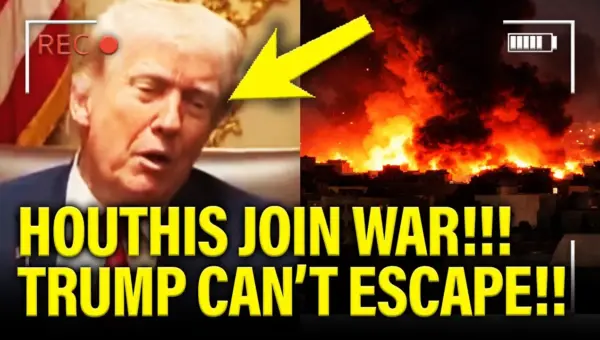
Iran Escalates Global Conflict, Threatens World Economy
Yemen's Houthi rebels have officially joined the conflict, launching ballistic missiles at Israel and escalating regional tensions. This move threatens vital shipping lanes like the Red Sea's Bab al-Mandab strait, potentially causing catastrophic economic consequences. Meanwhile, US soldiers have been injured in Iranian missile strikes, adding to the mounting human and financial costs of the escalating war.


Trump’s Iran Claims: Shocked or Deluded by War Games?
Donald Trump claimed surprise over Iran's actions in the Strait of Hormuz, but experts suggest retaliation was inevitable. Military war games likely predicted such a scenario, raising questions about the advice given to the President.


Israel’s Strategy Against Iran Revealed
Israel's strategy to counter Iran's nuclear ambitions and regional influence centers on containment, utilizing a mix of covert military actions, intelligence operations, and diplomatic pressure. Analysts highlight the growing urgency due to Iran's nuclear advancements, while also noting the persistent risk of escalation in the volatile Middle East.