US Eyes Massive Amphibious Assault on Iran’s Oil Hub
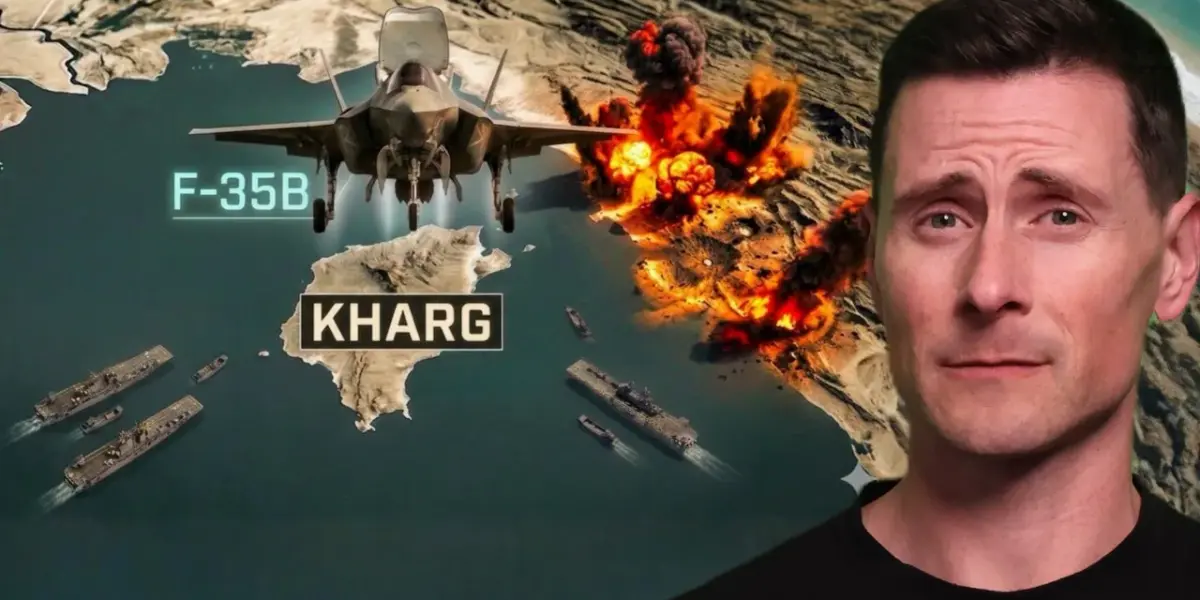
The U.S. military is reportedly planning a major amphibious operation to seize Iran's Kharg Island, a vital oil export hub. Advanced F-35B jets and potentially the 82nd Airborne Division could be involved in this high-stakes move aimed at crippling Iran's war funding and securing regional shipping lanes.

US Eyes Massive Amphibious Assault on Iran’s Oil Hub
The United States military is reportedly planning a high-stakes amphibious operation to seize Iran’s Kharg Island, a critical oil export hub. This potential move, part of the ongoing Operation Epic Fury, could involve advanced F-35B stealth fighter jets operating from amphibious assault ships. The goal appears to be to cripple Iran’s ability to fund its military operations and strike shipping in the Strait of Hormuz.
Kharg Island: A Strategic Prize
Kharg Island, located in the northern Persian Gulf, is Iran’s primary oil export terminal. The island handles a vast amount of crude oil, making it a vital economic lifeline for the Iranian regime. Its capture would severely impact Iran’s revenue, potentially forcing an end to its aggressive actions in the region. The U.S. military sees this island as a key pressure point, aiming to seize its port and airfield while leaving oil facilities intact.
Amphibious Assault Force Assembled
The operation could see Marine Expeditionary Units (MEUs) conducting the assault. These units are specifically trained for amphibious landings. The F-35B Lightning II fighter jets, known for their short takeoff and vertical landing capabilities, would provide crucial air support. These advanced aircraft can carry precision-guided munitions and strike targets from a distance before enemy forces are even aware of their presence. Reports indicate that approximately 5,000 Marines are moving toward the region on two amphibious readiness groups. The 31st MEU, operating from the USS Tripoli, and the 11th MEU, aboard the USS Boxer, are reportedly involved.
Reinforcements on Standby
In addition to naval and air assets, the 82nd Airborne Division’s immediate response force is on high alert. This unit, comprising around 3,000 paratroopers, could be deployed to reinforce the Marines and secure the island if needed. Their involvement suggests a layered approach, allowing for rapid reinforcement while aiming to keep the overall U.S. military footprint light and the operation swift. The strategic aim is to seize control of key infrastructure like the port and airfield on Kharg Island, thereby denying Iran its primary source of export revenue.
Air Dominance and Suppression
The U.S. military intends to establish air dominance over the area. F-35Bs, along with other aircraft like the A-10 Thunderbolt II, F-15s, and F-16s, would work to suppress any Iranian attempts to reinforce Kharg Island or attack U.S. forces. These aircraft would be tasked with neutralizing any IRGC fast attack craft or other vessels attempting to interfere with the amphibious operation. The goal is to prevent Iran from reinforcing the island or closing vital shipping lanes.
Denying Revenue, Maintaining Stability
A key objective of seizing Kharg Island is to cut off Iran’s oil revenue without causing global energy market instability. By keeping the oil infrastructure intact, the U.S. aims to prevent a surge in oil prices. This strategy also seeks to deny the Iranian Revolutionary Guard Corps (IRGC) its main source of income, estimated to be around $100 million per oil tanker. This would significantly degrade the IRGC’s ability to fund proxy forces and pursue aggressive regional policies. The operation also aims to ensure freedom of navigation through the Strait of Hormuz.
Geopolitical Reactions and Internal Dissent
The conflict has drawn international attention, with Germany reportedly lamenting the war as unnecessary. Meanwhile, reports suggest potential back-channel talks between Iran and the Trump administration, although conflicting statements from the IRGC indicate internal divisions. A notable development mentioned is the resignation of Joe Kent, a former special operator, who blamed Israel for pressuring the U.S. into the conflict. His resignation letter suggested a misinformation campaign by Israeli officials and American media to sow pro-war sentiment, a claim reminiscent of arguments made regarding the Iraq War.
Strategic Implications
The potential seizure of Kharg Island represents a significant escalation in the conflict. It shifts the focus from strikes on naval assets to a direct land grab of critical infrastructure. This move could effectively neutralize Iran’s ability to project power through oil revenues and proxy warfare. The operation’s success hinges on swift execution and maintaining control of the island while minimizing collateral damage to global energy markets. The U.S. strategy appears to be one of ‘smart power,’ degrading Iran’s military capacity without causing a wider economic crisis. The situation highlights the complex interplay of military action, economic pressure, and geopolitical maneuvering in the region.
Source: U.S. Military Is Planning Something HUGE With Iran's Kharg Island (YouTube)

Related Articles


G7 Allies Clash Over Iran War Strategy, Urge Focus on Russia
G7 foreign ministers met in Paris, revealing deep divisions over the U.S. war with Iran. European allies urged the U.S. to pressure Russia, linking its actions to the conflict and fearing support for Ukraine will wane.
Iran Blocks China Ships, Exposing Beijing’s Weak Grip
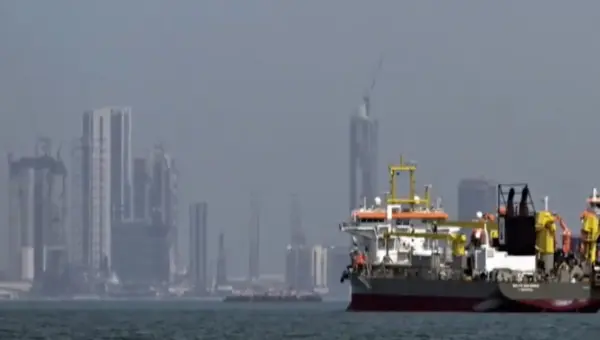
Iran's recent decision to block Chinese ships at the Strait of Hormuz is exposing the limits of Beijing's influence in the Middle East. This action is causing delays and cancellations for Chinese manufacturers, turning a perceived geopolitical win into an economic strain.
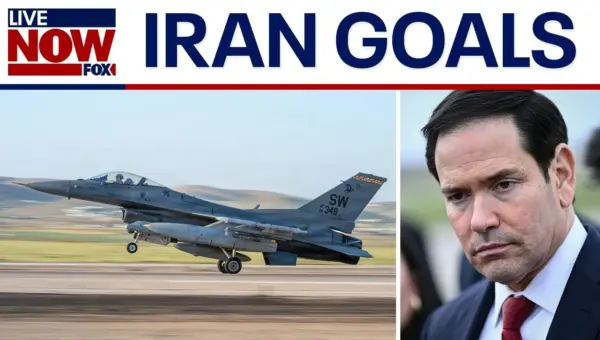
Rubio: US Can Achieve Iran War Goals Without Troops
Senator Marco Rubio outlined a strategy to counter Iran without deploying U.S. ground troops, focusing on weakening the regime and enhancing maritime security. He also criticized Cuba's economic system and expressed concerns about West Bank violence.