Suspicious Oil Trades Hint at Trump’s Iran Deal Manipulation
Suspicious financial trades just before a Trump announcement on Iran suggest potential insider trading and corruption. The analysis delves into market manipulation, conflicting narratives with Iran, and the broader implications for trust and accountability in government.

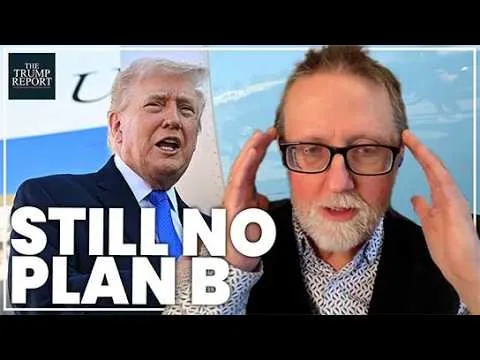
Suspicious Oil Trades Hint at Trump’s Iran Deal Manipulation
A sudden, massive drop in oil prices right before a major announcement by Donald Trump about discussions with Iran has raised serious questions. The timing suggests that some individuals may have profited from insider information, pointing to potential corruption and manipulation of market events.
Market Moves Spark Corruption Fears
Reports from the Financial Times revealed that just minutes before Trump announced productive talks with Iran, huge bets were placed on oil prices. Around $580 million worth of oil trades were made, predicting a significant market move. This news caused oil prices to plummet by 10% in a matter of hours. Some analysts noted that large trades, like $1.5 billion in S&P futures being bought while $192 million in oil futures were sold, occurred in an unusually short window.
Professor Scott Lucas from University College Dublin explained that while such market activity *could* be a coincidence, the timing is highly suspicious. He noted that these trades happened within a single minute on New York markets, just before Trump’s announcement. The core issue, Lucas stated, is the inability to definitively prove insider trading, but the evidence strongly suggests it.
“We can’t prove the fire, but we can certainly see the smoke,” Lucas commented, highlighting the visible signs of suspicious activity.
The Mechanics of Market Manipulation
Lucas broke down how such manipulation could work using the concept of oil futures. If someone knows the price of oil is about to drop, they can sell their oil contracts at the current higher price. For instance, if oil is $110 a barrel and someone knows it will fall to $100 after an announcement, they can sell their oil holdings. This allows them to profit from the price difference. In this specific case, the trades involved hundreds of millions of dollars, suggesting a significant potential for profit.
Market traders and hedge fund managers have called these movements unusual. Some have pointed out similar patterns before other major Trump administration announcements. Lucas recalled an incident in April 2025 where Trump made a significant announcement about tariffs, which he later reversed. Following this, markets surged, and Trump reportedly boasted about how much money people made that day, even posting on social media, “DJT, now is a good time to buy.”
Insider Trading and Regulatory Weakness
If individuals were indeed tipped off about Trump’s announcement, this would constitute insider trading. However, Lucas expressed skepticism about any potential investigation. He argued that the Securities and Exchange Commission (SEC) has been weakened under Trump’s administration. Lucas pointed to the April 2025 incident, which he described as blatant, as an example of a lack of investigation.
While there is talk of legislation to prevent lawmakers from trading stocks while in office, Lucas believes this won’t address the core issue. He contrasted the current situation with the 1980s and 1990s, when insider trading cases were actively prosecuted. The difference now, he suggested, is that the insider tip might be coming directly from the President of the United States or his close associates, rather than from another business or stockbroker.
Conflicting Narratives with Iran
Adding to the confusion, Iran quickly denied Trump’s claims of productive discussions. This has led to speculation that Trump might have fabricated negotiations, possibly including a temporary pause on strikes, solely to influence oil prices. One theory suggested that Trump’s announcement was timed to align with a planned US military action, allowing him to later claim Iran backed out of an imaginary deal.
The analysis suggests a pattern: never take Trump’s statements at face value and always seek to verify the facts. While there was communication between Trump’s envoy and Iranian officials, including text messages, the details and whether actual negotiations were proposed remain unclear. Reports indicated the White House sought communication with Iran’s parliamentary speaker, Mohammad Bagher Ghalibaf, whom some in the Trump administration saw as a potential partner.
However, Ghalibaf publicly dismissed Trump’s claims, stating they were for financial and oil manipulation and aimed at extricating the US and Israel from a difficult situation. Lucas emphasized that Ghalibaf is not the supreme leader of Iran, making any negotiations with him potentially unreliable. The Trump administration’s approach, seeking a figure like Ghalibaf, was compared to looking for a Venezuelan VP who could broker a deal, suggesting a desire to find a less powerful figure to negotiate with.
A 15-Point Wishlist and Oil as a Bargaining Chip
Trump also mentioned a 15-point plan, which revealed key US demands. These include ending Iran’s nuclear program, halting its ballistic missile development, and cutting ties with regional allies like Hezbollah and the Houthis. The US also wants Iran to recognize Israel, a demand viewed as highly unlikely given Iran’s history since 1979.
Lucas suggested that while Iran handing over its oil isn’t a stated demand, the US might be willing to allow Iran to export oil in exchange for concessions on nuclear weapons, missiles, and regional influence. However, he questioned why Iran would agree to such terms when it feels it holds the stronger hand. Iran’s likely response would be to demand a ceasefire before any talks, especially given the ongoing conflict and casualties.
Risky Diplomacy and Potential for Coup
Engaging with figures like Ghalibaf, who is not the supreme leader or even the president, is seen as risky. Lucas stated it would only make sense if Ghalibaf was acting on behalf of the regime’s leadership. Ghalibaf’s public rejection of the talks makes this unlikely. Furthermore, Ghalibaf’s past as a commander in the Revolutionary Guard, involved in suppressing protests, adds another layer of complexity. Lucas suggested that such a move would only be logical if Ghalibaf and the Revolutionary Guard were considering a military coup, which there is currently no sign of.
Unlike the Venezuelan regime, which fractured, the Iranian regime shows no signs of internal division that would lead to its leadership giving up core demands. The comparison highlights a key difference: the Venezuelan situation involved a split within the government, whereas Iran appears more unified.
Corruption and Conflicts of Interest
The suspicious market trades are seen as evidence of corruption, especially if linked to Trump or his inner circle. The transcript noted that the Trump family has significant investments in the Gulf region, worth billions of dollars. This creates a potential conflict of interest, as protecting these investments from Iranian retaliation could influence policy decisions.
Journalist John Miller tweeted about the situation, questioning how perfectly timed trades could be made without Trump’s involvement, especially when the public is told that high gas prices are simply the “price of freedom.” This highlights the disconnect between the perceived manipulation for personal gain and the economic burden on ordinary citizens.
US Strategy and the Quest for Dominance
The analysis also touched upon the broader US national security strategy, which aims for dominance in various regions. This aggressive stance has been criticized, with Lucas comparing it to a bully’s behavior. The decision to go to war with Iran, especially before midterm elections, and the pursuit of dominance alongside Israel, are seen as miscalculations.
The strategy, as described, involves projecting power and influence, even through military action. The initial success in eliminating key Iranian figures like the Supreme Leader and the Defense Minister is acknowledged. However, the miscalculation lies in underestimating Iran’s ability to retaliate, a factor that seems to have been overlooked in the gamble for dominance.
The Strait of Hormuz and Sanctions Relief
Regarding the Strait of Hormuz, Trump suggested it would be opened soon and jointly controlled. This comes as Iran currently controls the vital waterway, impacting global shipping. Treasury Secretary Scott Bezant’s comments about being fine with Iranian, Chinese, and Indian ships passing through the strait, and even suggesting lifting sanctions on Iranian oil, present a confusing picture.
This move, potentially freeing up billions for Iran, contradicts the administration’s previous criticisms of policies that allegedly sent money to Iran. The justification offered is that it’s better for oil prices to remain at $100 a barrel with Iran receiving some benefit, rather than rising to $150. This pragmatic, yet controversial, approach highlights the complex economic and geopolitical factors at play.
Why This Matters
The events described raise critical questions about transparency, accountability, and the integrity of financial markets. The potential for high-ranking officials to profit from geopolitical events erodes public trust and suggests a system where personal gain may outweigh national interest. The analysis underscores the need for robust regulatory oversight and ethical conduct in government, especially when dealing with international conflicts and their impact on global economies.
Implications and Future Outlook
The situation points to a concerning trend of market manipulation potentially linked to political actions. If such practices are not investigated and addressed, they could become more common, leading to greater economic instability and public cynicism. The future outlook depends heavily on whether regulatory bodies can regain their strength and independence to ensure fair play in the markets. The public’s awareness of these issues, especially when their own finances are affected by gas prices, could be a catalyst for demanding greater accountability.
Historical Context
This incident echoes historical instances of insider trading and the use of information for personal profit. The mention of past prosecutions for insider trading in the 80s and 90s provides a backdrop against which the current situation can be assessed. The strategy of using military action for dominance also has historical parallels, but the miscalculation of retaliation and the complex web of economic interests add a unique dimension to the current geopolitical landscape.
Source: Trump’s Iran ‘corruption’ exposed | Scott Lucas analyses president's suspicious intentions (YouTube)

Related Articles
Trump Halts Iran Strikes Amid Stalled Diplomacy
President Trump announced a pause on planned strikes against Iran, citing productive talks, though Iran denies negotiations occurred. Reports also suggest a potential U.S. ground operation on Iran's Hark Island. The situation raises concerns about international support for Ukraine and potential shifts in U.S. foreign policy.
Iran’s Missile Threat Reduced by 90%, Analyst Says
An analyst reports that Operation Epic Fury has degraded Iran's missile launchers by 90%, despite challenges in targeting hidden sites. The conflict's duration and media coverage are also discussed, with implications for global energy markets and investor confidence.
Trump’s ‘Board of Peace’ Crumbles Amidst Global Conflict
Donald Trump's 'Board of Peace,' launched with grand ambitions from Davos, faced immediate scrutiny over its $1 billion permanent membership fee. Despite attempts to secure ceasefires, the initiative appeared to falter as global conflicts, including strikes on Iran, escalated, leaving its intended purpose overshadowed.