Middle East Conflict Drains US Arms, Aids Russia
The Middle East conflict is depleting US military resources, potentially benefiting Russia. Concerns are rising over global economic stability and the war in Ukraine. Ukraine's drone technology is vital, despite claims to the contrary.

Middle East Conflict Drains US Arms, Aids Russia
The ongoing conflict in the Middle East is significantly impacting United States military resources. This diversion of arms and attention is creating an environment where Russia may benefit. The situation raises concerns about the global economy and the war in Ukraine.
US Goals in Iran Unclear Initially
When the conflict in the Middle East began, the United States did not clearly state its goals. This lack of communication was a concern for allies in Europe and for Congress. After the first week, the objective became to stop Iran from attacking its neighbors. A major concern is the role of Iran as a state sponsor of terror, a designation it has held since 1986.
Historically, Iran has been linked to deadly attacks. The largest number of Americans killed in a single Iranian attack was in Beirut in the 1980s, using a truck bomb. The current military actions aim to eliminate Iran’s ballistic missiles, nuclear capabilities, and its ability to disrupt global oil markets by controlling the Strait of Hormuz. However, these actions may not prevent terror attacks.
Russia and Iran’s Partnership a Growing Concern
The close partnership between Russia and Iran is a significant worry. Experts point to potential terror attacks, similar to those planned against DHL and other airplanes in Europe that were linked to Russia. These attacks could become a problem in the coming months due to the strong ties between the two nations.
US Seeks Measurable Victories, Lacks Leverage
The United States likely seeks to show that a specific number of facilities have been hit in Iran. However, it is unlikely to gain the same level of influence as seen in past negotiations, such as with Venezuela. The situation in Venezuela involved a criminal regime that was easier to influence through business agreements. This is unlike Iran, which is led by religious figures.
President Trump is being presented with arguments that a business-like agreement can be reached with leaders in places like Belarus. However, Iran’s leadership is described as religious fanatics. The killing of Iran’s religious leader by the US and Israel has led to a period of mourning. This ideological aspect makes the situation complex, and political fallout is expected.
Ground Invasion Unlikely, Allies Support Differently
A ground invasion of Iran is not planned, as President Trump has stated he does not want regime change. NATO allies are supporting the operation with radar and ship deployments but are not in favor of sending troops. Israel has signaled a potential willingness to deploy troops if specific sites require isolation and maintenance.
Economic Risks: Oil Markets and Global Crisis
A prolonged conflict in the Middle East could lead to a global economic crisis. The Strait of Hormuz is a critical chokepoint for oil and Liquefied Natural Gas (LNG) shipments. Any disruption there, such as mining the strait, could severely impact global markets, especially for energy supplies to East Asia.
Global fertilizer supplies have also been disrupted, increasing prices. Russia, a major fertilizer exporter, can influence these markets. Prices for oil and other commodities can rise quickly but do not fall as fast. A reset in the oil market to around $100 a barrel may not decrease quickly, as it encourages further investment in oil production.
Stagflation Fears Rise in US
Higher oil prices contribute to a rising Consumer Price Index in the United States, potentially leading to a poor jobs outlook. Combined with advancements in Artificial Intelligence (AI), this could result in stagflation, a situation where inflation rises while the economy stagnates. This echoes economic challenges seen in the 1970s.
US Actions Lack Coalition Support
The current war in the Middle East appears to be a decision made by a small group of individuals. This contrasts with the approach taken regarding Ukraine, where President Biden built a large coalition of nations. The United States seems to be acting alone with Israel, without broad international coordination.
This approach is concerning because a strong coalition is the best way to handle a crisis. The ability of NATO allies to patrol the Mediterranean and North Seas has allowed the US to shift its naval forces. European Command’s General Brinkrevich testified that NATO allies’ ship deployments have helped detect and defend against ballistic missile attacks from Iran.
Tariffs and Ally Relations Under Strain
The United States appears to be easing sanctions on Russia, Iran, and Belarus. However, this is happening while the US has not addressed tariffs imposed on its closest allies. These allies may seek relief from these tariffs, especially as they supported US operations in the Middle East.
Public Opinion and Election Year Impact
In an election year, public opinion on economic issues is critical. Many Americans are unhappy with the rising cost of living and goods. Energy prices and the cost of groceries have increased, partly due to tariffs on imported items. This dissatisfaction has led to a significant shift in support among independent voters, a key demographic in congressional elections.
Historically, President Trump has performed well with independent voters. However, current trends suggest a substantial loss of support. This could put Republican candidates, who have supported Trump’s policies, in a difficult position when they face voters. The war’s economic impact could be a significant factor in the November elections.
Ukraine’s Drone Technology Vital, Despite Trump’s Claims
President Trump has stated that the US does not need Ukrainian drone technology. However, other national security officials and military commanders disagree. The head of US forces in Europe has emphasized the importance of Ukrainian technology. Ukraine’s firms have won drone competitions, and the US Department of Defense is funding their development.
Interestingly, President Trump’s sons have invested in a company using Ukrainian drone technology. This contradicts the President’s public statements. Senators and members of the House of Representatives on armed services and intelligence committees have also highlighted Ukraine’s contributions to US security.
Trump’s Stance on Ukraine Peace Questioned
President Trump has claimed that Ukraine does not want peace and that Putin is ready for negotiations. However, Ukrainian President Zelensky has stated that pressure should be on Putin, not him. This has been a consistent talking point for Trump, suggesting Ukraine has misused American aid.
When facing difficult questions about military failures or casualties, advisors may point to Ukraine as a scapegoat, claiming they misused weapons. However, the US has provided Ukraine with equipment like 155mm shells and Bradley fighting vehicles that are not in primary US use. The deployment of Patriot systems in Ukraine has also provided valuable defensive lessons for the US.
Ukraine’s Role in Middle East Security
Contrary to claims of misuse, Ukraine’s military partnerships are proving beneficial. Ukraine is selling technology to Middle Eastern countries like Qatar, the UAE, and Saudi Arabia, offering capabilities that the US may not provide. As the US states it cannot protect these nations, Ukraine is stepping in to offer assistance.
Middle East Conflict Affects Russia’s War in Ukraine
The war in the Middle East has influenced Russia’s invasion of Ukraine. Higher oil prices, resulting from the Middle East conflict, initially benefited Russia’s revenue. However, Ukraine’s counterattacks, targeting Russian oil facilities, have aimed to counter this.
The lifting of some sanctions on Russia, Belarus, and Iran is also a concern. This could allow for greater integration of Russia back into the global economy. Ukraine is pushing for clarity on these actions and increased support.
Russia Benefits from Western Material Expenditure
Russia, China, and North Korea are observing the conflict in the Middle East and noting the expenditure of Western military materials. The US and its allies have used significant amounts of ballistic missiles and defensive weapons. These resources could have otherwise been allocated to supporting Ukraine.
The high rate of material usage in the Middle East conflict benefits Russia by depleting Western stockpiles. This situation highlights the need for increased defense production in the US and Europe to resupply missile reserves.
NATO Article 5 Considerations
The invocation of NATO’s Article 5, which commits members to collective defense, is complex. Recent discussions about Greenland and Denmark have shed light on the process. A committee must gather and unanimously vote to invoke Article 5. Past US actions, including imposing tariffs on allies, could make achieving unanimous consent more difficult in future crises.
Russia’s Long-Term Outlook Amidst Global Conflicts
Currently, Russia is not experiencing significant negative effects from the Middle East conflict. The US is depleting its material reserves. Russia, China, and North Korea are studying Western technologies and seeking ways to counter them. They may also be analyzing wreckage to gain intelligence.
A key strategy for Ukraine, starting in 2025, involves attacking Russia’s oil production and transport facilities. This targets Russia financially and exploits difficulties in sourcing components for repairs, especially those from sanctioned Western companies. The conflict in Iran, which has also damaged oil facilities, could further complicate the availability of replacement parts for Russia’s own infrastructure.
The demand for replacement parts for oil refineries and transport facilities could become a national security concern. It is unclear if these parts will be prioritized for allies or become available on the black market, potentially supplied by countries like Iran, Russia, or China.
Source: Putin has misled Trump! Zelensky did not expect statement.Moscow decided everything@TheBriefRight (YouTube)

Related Articles

US Strikes Cripple Iran’s Military Might, CENTCOM Reports
U.S. Central Command reports ongoing strikes inside Iran are significantly weakening its military power. This direct action aims to reshape regional security dynamics, but carries risks of escalation. The long-term impact depends on Iran's response and ability to adapt.
Ukraine Strikes Russian Oil Refinery, Eyes Iran Threat
Ukrainian forces struck a key Russian oil refinery, disrupting Moscow's war capabilities. Meanwhile, Finland's president urged continued U.S. support for Ukraine, as Kyiv shares its air defense expertise globally amid growing geopolitical complexities involving Iran and potential sanctions against Hungary.
Iran Missile Strikes Injure US Troops, Raise War Concerns
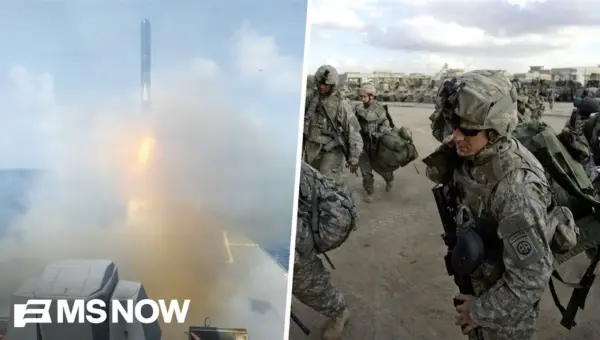
Iranian missile strikes have injured U.S. service members, escalating tensions as the conflict nears one month. The attacks are raising concerns about the effectiveness of U.S. military strategy and the depletion of crucial missile stockpiles. Global oil prices have surged, impacting economies worldwide.