Patriot Missile Stocks Drained by Mideast Conflict
The extensive use of expensive Patriot missile interceptors in the Middle East conflict has depleted global stockpiles, prompting a shift towards Ukraine's cost-effective drone defense strategies. The economic strain of using multi-million dollar missiles against cheap drones is unsustainable, highlighting a critical challenge in modern warfare.

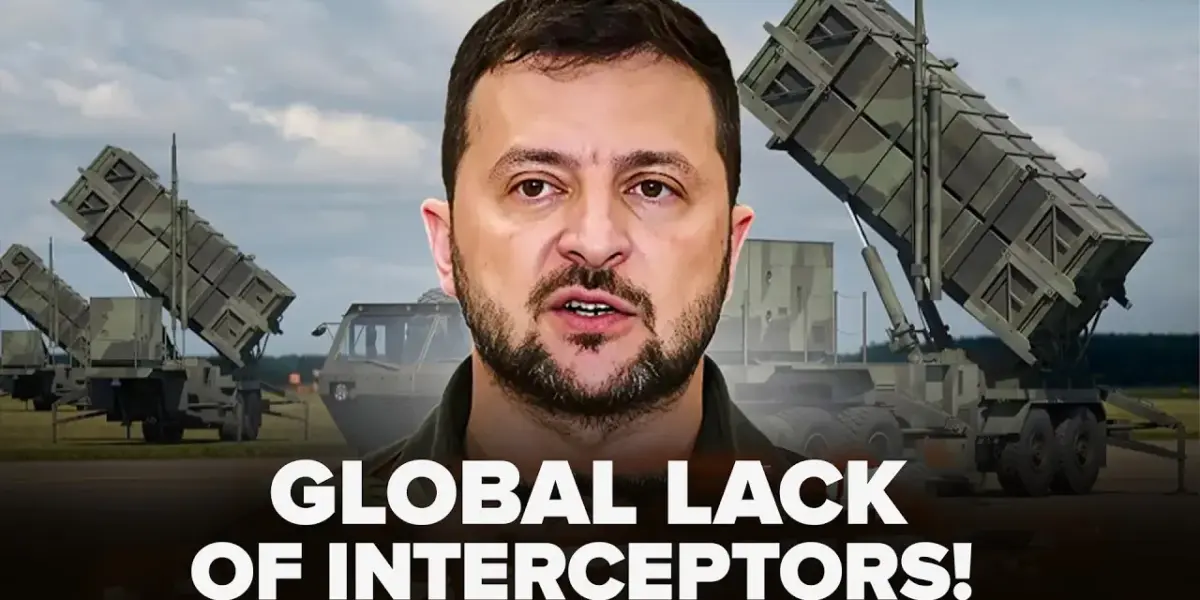
Patriot Missile Stocks Drained by Mideast Conflict
Air defense has become a critical part of modern warfare. The Patriot missile system, considered the best for defending against missiles, faces a stark reality: the world is running out of the interceptors needed to protect cities. While Ukraine has been fighting a long war, a sudden increase in conflict in the Middle East has quickly depleted global missile supplies. This situation forces nations like Israel to seek advice from Ukraine on how to defend against drone attacks without immense cost.
The Dilemma of Expensive Interceptors
A key problem facing the United States, Israel, Ukraine, and several Middle Eastern countries is using highly advanced and expensive air defense missiles to shoot down targets that cost far less. The Patriot defense system, one of the most sophisticated ever built, is now a vital tool in two major conflicts simultaneously: Russia’s war against Ukraine and the escalating confrontation in the Middle East.
The way these systems are used differs greatly between the two battlefields. In Ukraine, Patriot interceptors are used sparingly and strategically, mainly to destroy dangerous ballistic and cruise missiles that other systems cannot reliably stop. However, in the recent Middle East escalation involving Iran, Patriot missiles were fired in very large numbers. Some were even used against relatively inexpensive drones.
Publicly available information suggests that Ukraine has used between 500 to 600 Patriot interceptor missiles over four years of war. In contrast, the Middle East and Gulf region reportedly used between 800 to 1,000 missiles in a much shorter period, highlighting the intensity of that conflict.
Understanding the Patriot System
The Patriot is a long-range surface-to-air missile defense system developed in the United States. It was first designed during the Cold War to defend against aircraft. Later upgrades allowed it to intercept cruise and ballistic missiles. The most advanced version today is the PAC-3 interceptor. This missile destroys targets using a “hit-to-kill” technology. It essentially collides directly with the incoming missile at extremely high speeds.
This technology is highly advanced and very expensive. A single PAC-3 interceptor costs about $4 million for the U.S. military. For export customers, the price is even higher. This cost is justified when intercepting a ballistic missile worth millions of dollars or carrying a large explosive payload.
However, using the same $4 million interceptor against a drone that might cost $20,000 or less creates a significant economic imbalance. This is where the war in Ukraine provides valuable lessons.
Ukraine’s Experience with Drone Warfare
Since Russia’s full-scale invasion in 2022, Ukraine has endured intense aerial bombardment. Russia has employed cruise missiles, ballistic missiles, hypersonic weapons, and thousands of Iranian-designed Shahed attack drones. Patriot systems were not originally designed as the primary defense against drones.
In Ukraine, Patriots serve a specific role: intercepting the most dangerous Russian weapons. The Patriot system is one of the few capable of reliably stopping advanced ballistic missiles like Russia’s Iskander or the air-launched Kinzhal missile. Because of this, Ukrainian commanders have used these interceptors with extreme care.
Ukrainian officials report that over the four years of the full-scale war, Ukraine received about 600 Patriot interceptor missiles. During just four months of intense fighting in late 2025 and early 2026, Ukraine fired around 700 Patriot interceptors while defending against waves of Russian missile attacks. This shows the sheer scale of the air war over Ukraine.
The Middle East Escalation and Missile Consumption
The situation in the Middle East revealed an even more dramatic consumption of air defense assets. Following large-scale strikes on Iranian military infrastructure, missile and drone attacks spread across the region. Iran and its allied groups launched ballistic missiles, cruise missiles, and attack drones targeting Israel, as well as U.S. bases and strategic infrastructure.
To counter these threats, the United States and its allies deployed Patriot systems. Estimates from officials and defense analysts suggest that over 800 Patriot interceptor missiles were used in the first three days of fighting in the Middle East. This number alone exceeds the total received by Ukraine during its entire war with Russia.
Despite the presence of numerous air defense systems in the Middle East and the Gulf, security remains insufficient. This is partly because the weapons used by Iran and its proxies have evolved faster than the defenses. This is a problem that needs a swift solution.
Saturation Attacks and Economic Warfare
The heavy use of Patriot missiles highlights a central challenge in modern air defense: the economics of interception. Many of the drones used in attacks are based on designs like the Iranian Shahed 136. These drones are relatively simple, fly slowly, often at low altitudes, and use basic navigation.
Their main advantage is cost and quantity. Iran can produce these drones for tens of thousands of dollars, sometimes even less. They are launched in large numbers, known as swarms, designed to overwhelm traditional air defenses. This tactic is called a saturation attack.
The goal is simple: launch enough cheap drones to force the defender to use extremely expensive interceptor missiles. Eventually, the defender may run out of interceptors or spend far more money than the attacker. This is precisely what the U.S. and its partners faced in the Middle East.
In several instances, Patriot interceptors were used against drones because they were the fastest available defensive option. However, using a $4 million missile to destroy a $20,000 drone is an economically unsustainable exchange. Ukraine’s experience in fighting drone warfare for years offers a different model.
Ukraine’s Cost-Effective Defense Model
Since 2022, Russia has launched over 57,000 Shahed-type drones against Ukrainian targets. Ukraine has developed a layered and cost-effective system to counter these threats. Instead of relying solely on expensive missiles, Ukraine’s air defense combines multiple methods.
Electronic warfare systems are used to disrupt drone navigation signals. Mobile fire units equipped with machine guns and anti-aircraft cannons shoot down low-flying drones. Crucially, Ukraine has developed its own interceptor drones. These drones cost around $2,000 and are designed to destroy incoming attack drones.
This means a $2,000 Ukrainian drone can destroy a target that might otherwise require a $4 million Patriot missile. This alternative economic model for air defense has drawn significant interest from countries in the Middle East, including Israel and U.S. partners in the Gulf. Multiple nations have reportedly asked Ukraine to share its expertise in countering Iranian-designed drones.
Strategic Implications
For decades, Israel and the United States were seen as leaders in missile defense technology, with systems like Patriot and Israel’s Iron Dome forming the core of modern air defenses. However, the rise of mass drone warfare has changed this dynamic. While missile defense systems are effective against high-speed ballistic missiles, they are not always economically viable against large swarms of cheap drones.
The world is now closely observing Ukraine’s battlefield innovations. Ukraine has effectively been forced to reinvent air defense under wartime conditions. Its approach combines electronic warfare, gun-based air defense, mobile units, and low-cost interceptor drones, creating a more sustainable defense against mass drone attacks.
The extensive use of Patriot missiles in the Middle East has raised concerns about global interceptor stockpiles. Production of Patriot interceptors is limited, with manufacturers producing an estimated 500 to 600 PAC-3 interceptors annually in recent years. Although plans exist to increase production, large-scale conflicts can deplete these stocks rapidly. Replenishing them can take months or even years.
Defense planners in Washington and other capitals are increasingly worried about the sustainability of missile defense in a world where drones and missiles are used on an unprecedented scale. The comparison between how Patriot missiles are used in Ukraine and how they were employed during the recent Middle Eastern escalation illustrates a crucial strategic reality of modern warfare: technology alone does not guarantee victory.
The way technology is used—when to fire, when to conserve, and when to find cheaper alternatives—may be just as important. The future of air defense will likely involve a combination of technologies. High-end interceptors like Patriot will remain vital for defeating ballistic and hypersonic missiles. However, cheaper solutions such as interceptor drones, electronic warfare, directed energy weapons, and rapid-fire anti-aircraft systems will play an increasing role in defending against large drone swarms. This hybrid model of air defense is already emerging on the battlefields in Ukraine, which has become a critical testing ground for modern air warfare. The lessons learned there are shaping military planning globally.
Source: 😱DEFENSE CRISIS: Running out of Patriot missiles, and burning millions in the sky (YouTube)

Related Articles

Ukraine Hits Oil Terminals, Halting 40% of Exports
Ukraine has successfully targeted Russia's oil export terminals, disabling 40% of the nation's export capacity. This strategic shift follows an evolving campaign against Russian energy infrastructure, now focusing on the limited number of export facilities to maximize disruption.


Russian State Media’s ‘Unhinged’ Propaganda Exposed
Veteran journalist Mark Bennetts details the alarming descent of Russian state media into "unhinged" propaganda since 2014. His memoir, 'The Descent,' chronicles 25 years in Russia, revealing a stark contrast between the freedoms of the 1990s and the pervasive falsehoods of the Putin era. Bennetts discusses the psychological impact of propaganda and the difficult decision to leave Russia.


Ukraine’s Drones Strike Deep Behind Russian Lines
Ukraine is increasingly using heavy bomber drones like the 'Vampire' to strike Russian positions. In February, these drones supported counterattacks that reclaimed territory. Despite facing electronic warfare and drone losses, Ukraine sees these unmanned systems as vital for survival and pushing back the invasion.