Air Traffic Control Error Fuels LaGuardia Jet Collision
A collision at LaGuardia Airport between a fire truck and a commercial jet claimed the lives of two pilots. The NTSB is investigating the incident, which involved a fire truck reportedly given clearance before a frantic attempt to halt it. The event highlights critical air traffic control procedures and aviation safety.


Air Traffic Control Error Fuels LaGuardia Jet Collision
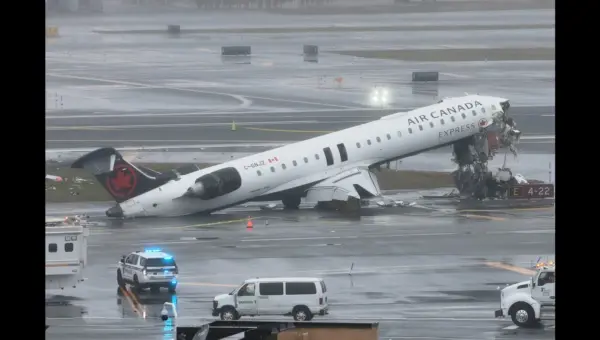
A tragic accident at New York’s LaGuardia Airport has brought renewed attention to air traffic control procedures and aviation safety. A collision between a fire truck and a commercial airplane resulted in the deaths of the aircraft’s two pilots. The incident occurred when a fire truck, reportedly responding to a call about another aircraft, was given clearance to move. Air traffic controllers then frantically tried to stop the truck before it collided with the jet.
The two pilots who lost their lives in the crash have been identified as Antoine Forest and McKenzie Gunther. The plane was carrying 72 passengers and four crew members. Following the collision, approximately 40 people were taken to the hospital. Some have since been released.
Investigation Underway
The National Transportation Safety Board (NTSB) is leading the investigation into the crash. Investigators have recovered two voice recorders from the aircraft. These recorders were immediately transported to Washington D.C. for analysis. The focus of the investigation will be on understanding the sequence of events that led to the collision, particularly the communication between air traffic control and the fire truck.
Safety Reminders Issued
Following the incident, U.S. Transportation Secretary Shawn Duffy emphasized the importance of aviation safety. He specifically highlighted the function of seat belts on airplanes. Duffy urged passengers to wear their seat belts at all times while flying, drawing a parallel to the importance of wearing seat belts in cars. He stated that seat belts can save lives, a point underscored by the recent tragedy.
Airport Operations Resume
LaGuardia Airport has since reopened most operations. However, the specific runway where the collision took place remains closed as the investigation continues. The incident has raised questions about the protocols and communication systems used in airport ground operations, especially concerning emergency vehicles.
Global Impact
This event, while localized, serves as a stark reminder of the complex systems that keep air travel safe. Accidents involving ground equipment and aircraft are rare but can have devastating consequences. The NTSB’s findings will be crucial in identifying any systemic issues and recommending improvements to prevent similar events from happening in the future. This could lead to revised training for air traffic controllers and emergency response personnel, as well as potential upgrades to communication technology within airports worldwide.
Why This Reshapes the World Order
While this incident does not represent a shift in global power dynamics, it is a critical moment for international aviation safety standards. The aviation industry operates on trust and a proven safety record. Any incident that raises questions about these fundamental aspects can have ripple effects. Airlines, airports, and regulatory bodies globally will be watching the NTSB investigation closely. The recommendations that emerge could influence safety protocols across the entire international aviation sector, impacting everything from pilot training to airport ground management.
Historical Context
Air traffic control has evolved significantly since the early days of aviation. The need for organized airspace management became apparent as air travel increased. Major incidents in the past have often led to significant safety improvements. For example, the development of radar and more sophisticated communication systems followed earlier accidents. This collision will likely prompt a review of current communication protocols and emergency vehicle management within airport perimeters, building upon decades of lessons learned in aviation safety.
Economic Leverage
While no sanctions or direct economic measures are involved in this specific event, the aviation industry is a massive global economic engine. Delays, cancellations, and heightened safety concerns can lead to economic impacts for airlines and airports. The cost of investigations, potential lawsuits, and implementing new safety measures can also be significant. Furthermore, a strong safety record is essential for maintaining public confidence, which directly affects passenger numbers and airline profitability.
Regional Alliances and Rivalries
This event does not involve geopolitical alliances or rivalries. The focus is purely on the safety and operational procedures within a single airport environment. International cooperation in aviation safety, however, is a constant. Organizations like the International Civil Aviation Organization (ICAO) work to set global standards. The findings from this investigation will be shared internationally to ensure best practices are adopted universally.
Future Scenarios
One likely scenario is that the NTSB investigation will pinpoint specific communication breakdowns or procedural failures. This could lead to updated training modules for air traffic controllers and fire department personnel at airports. Another scenario is that the investigation might reveal a need for technological upgrades in airport communication systems, ensuring clearer and more immediate alerts between controllers and ground vehicles. It is less likely, but possible, that the findings could point to broader systemic issues within air traffic management that require international regulatory attention.
Source: Pilots killed in LaGuardia Airport collision identified | NewsNation Live (YouTube)

Related Articles
LaGuardia Runway Reopens After Deadly Crash, Safety Lapses Exposed
LaGuardia Airport's main runway has reopened after a fatal crash involving an Air Canada Express jet and a fire truck. The incident, which killed two pilots, exposed critical failures in airport safety systems, including ground surveillance and transponder use.


Iran War Talks Ignite, Airport Chaos Deepens
President Trump confirms peace talks with Iran are underway, while US airports face ongoing chaos due to the DHS shutdown. Investigations into a fatal LaGuardia crash reveal systemic safety issues, with experts citing controller fatigue and staffing shortages. Meanwhile, the search for a missing elderly woman continues in harsh desert terrain, highlighting diverse challenges facing the nation.
Air Safety Fears Soar After Deadly Crash
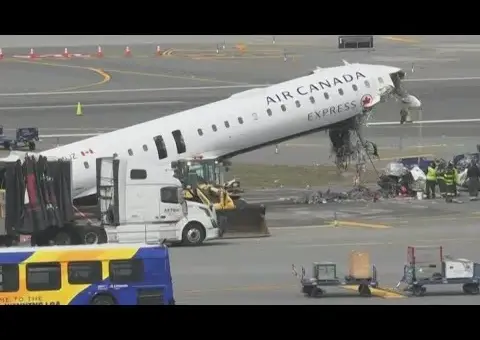
A fatal crash at LaGuardia Airport has triggered a national review of air safety, revealing a pattern of close calls and communication issues at U.S. airports. Investigators are examining technology and staffing, as calls grow for urgent safety upgrades.