Starmer Challenges Sunak: Key Moments from Heated PMQs
Labour leader Keir Starmer intensified his economic and NHS criticisms against Prime Minister Rishi Sunak during a lively Prime Minister's Questions. Political commentators dissected the strategic exchanges, highlighting how both leaders aim to shape public perception ahead of the next general election.

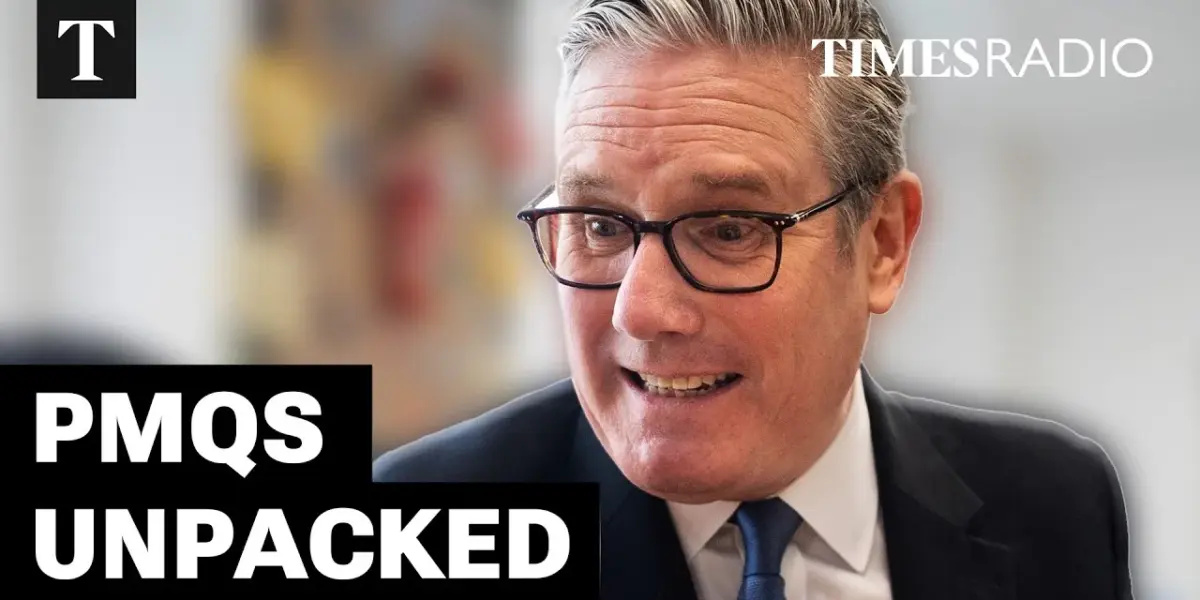
Starmer Challenges Sunak: Key Moments from Heated PMQs
The weekly Prime Minister’s Questions (PMQs) session in the House of Commons saw a sharp exchange between Labour leader Keir Starmer and Prime Minister Rishi Sunak on [Date of PMQs, inferred from context]. Political commentators Hugo Rifkind, Patrick Maguire, and Lord Wood gathered to dissect the key moments and underlying strategies during the live broadcast.
Starmer’s Core Attack: The Economy and NHS
Keir Starmer focused his questions on what he described as the government’s failures in managing the economy and the National Health Service (NHS). He pressed Prime Minister Sunak on rising inflation and the ongoing pressures faced by healthcare services across the country. Starmer aimed to link these issues directly to the government’s policies, seeking to portray them as out of touch with ordinary people’s concerns.
Patrick Maguire, chief political commentator for The Times, noted that Starmer’s strategy is to present a clear alternative vision for the country. “The Labour leader wants to draw a sharp contrast between his party’s plans and the current government’s record,” Maguire explained. This approach seeks to consolidate Labour’s polling lead and present a credible governing alternative.
Sunak’s Defense: Economic Progress and Global Challenges
Prime Minister Sunak defended his government’s record by highlighting steps taken to stabilize the economy and address global challenges. He pointed to efforts to bring down inflation and manage the impact of international events on the UK. Sunak also sought to deflect criticism by questioning Labour’s own economic plans and readiness to govern.
Lord Wood, a Labour peer, observed the tactical nature of PMQs. “Both leaders are playing to their strengths and trying to land blows,” he said. “Sunak is trying to appear in control and responsible, while Starmer is aiming to highlight perceived weaknesses in the government’s performance.” This dynamic is typical of the weekly parliamentary showdown.
Key Exchanges and Political Theater
The session featured several pointed exchanges, with both leaders trading barbs. Starmer’s questions often centered on specific policy areas where the government has faced criticism, such as the cost of living crisis or NHS waiting lists. He used these as opportunities to press for concrete commitments or to highlight perceived broken promises.
Sunak, in turn, employed a strategy of highlighting Labour’s past record or questioning the feasibility of their proposals. The exchanges are often characterized by sharp rhetoric and a focus on scoring political points rather than detailed policy debate. This is a familiar aspect of PMQs, which serves as both a check on government power and a platform for political messaging.
Commentators’ Analysis: Strategy and Impact
Hugo Rifkind, reflecting on the broader implications, suggested that PMQs is as much about performance as it is about policy. “The audience for PMQs is wider than just the MPs in the chamber,” Rifkind commented. “It’s broadcast live, and the clips are used extensively online.” This means that how leaders come across can significantly influence public perception.
Maguire added that the effectiveness of Starmer’s attacks depends on his ability to connect with voters’ everyday concerns. “If people feel their personal economic situation is improving, or if they see tangible progress on the NHS, Sunak’s position becomes stronger,” he noted. Conversely, if these issues remain prominent pain points, Starmer’s criticisms will likely resonate more deeply.
The Broader Political Context
The exchanges at PMQs take place against a backdrop of upcoming general election campaigns. Both the Conservative and Labour parties are positioning themselves for a national vote, using parliamentary sessions like PMQs to shape public opinion and define their respective platforms. The government seeks to convince voters it has a handle on the nation’s challenges, while the opposition aims to present itself as the necessary change.
Lord Wood emphasized the importance of consistency in messaging. “What happens in PMQs is part of a much larger narrative,” he stated. “The leaders need to ensure their performance here aligns with their broader campaign themes and policy offers.” The ability to maintain this coherence is crucial for electoral success.
Looking Ahead
As the political calendar moves forward, all eyes will be on how the government responds to continued scrutiny and how the opposition capitalizes on any perceived weaknesses. The effectiveness of Starmer’s challenges and Sunak’s defenses will be closely watched, as these exchanges shape the public’s perception of their leadership and their parties’ readiness to govern. The ongoing economic climate and the state of public services will undoubtedly remain central themes in future parliamentary sessions and the lead-up to the next general election.
Source: LIVE PMQs Unpacked: Keir Starmer Faces The House Of Commons (YouTube)

Related Articles
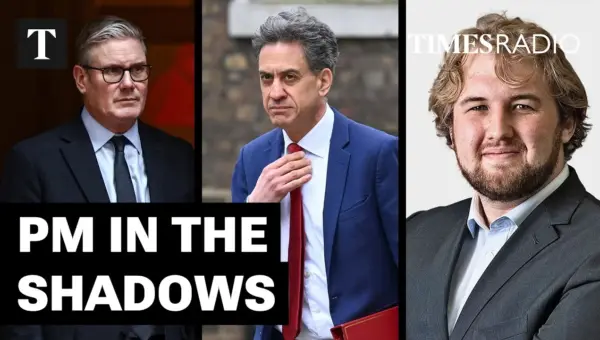
Labour’s Policies Vindicated, Ed Miliband Leads From Within
Labour's current policies are increasingly seen as vindicated by events, with Ed Miliband's economic and industrial vision guiding the party's direction. Meanwhile, speculation mounts over Sadiq Khan's potential move to a Westminster peerage and cabinet role, possibly as a response to anticipated poor local election results for Labour in London. The geopolitical landscape, particularly the conflict in the Middle East, also continues to shape the government's agenda.

UK’s Starmer Risks US Ties, Courts Iran Threat
British Prime Minister Keir Starmer's stance on Iran is creating a rift with the U.S., raising concerns about national security and appeasing specific groups. The former PM warns of escalating anti-Semitism and calls for stronger conservative leadership, while reflecting on the monarchy and the challenges facing Prince Harry and Meghan Markle.
Ed Miliband’s Quiet Influence: Is He Labour’s Real Power Broker?
Ed Miliband's enduring political influence is being debated, with some suggesting his ideas are shaping the current Labour government. While he has faced past electoral defeats, his long-term vision for the country continues to be a significant factor in British politics, though questions remain about his personal ambition for the top job.