Hidden Stories: Uncovering Nazi Persecution of ‘Mischlinge’
A hidden manuscript by Sharon Ring's uncle revealed the forgotten story of 'Mischlinge,' individuals with both Jewish and 'Aryan' ancestry persecuted by the Nazis. Classified under the Nuremberg Laws, these individuals were often condemned to slave labor and faced severe discrimination, with their experiences largely overlooked until now.

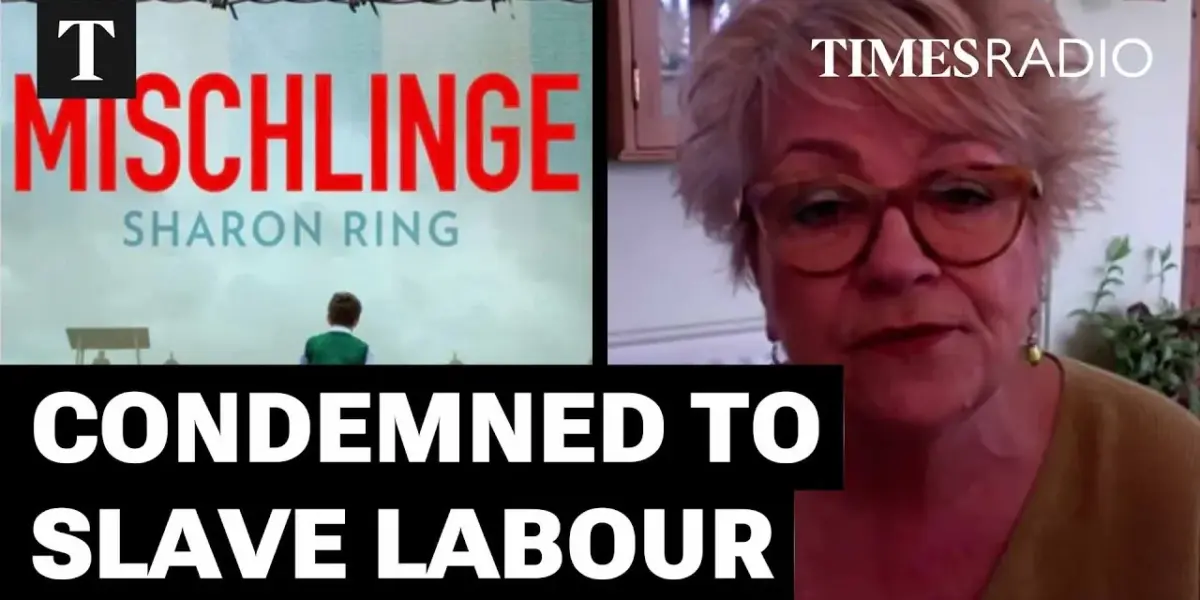
Nazi Laws Defined ‘Mischlinge’ as Sub-Human
The Nuremberg Laws of 1935 created a chilling new category: ‘Mischlinge.’ This German word, meaning ‘mongrel dog’ or ‘half-breed,’ was used by the Nazis to legally classify people with both Jewish and ‘Aryan’ ancestry. These individuals were often deemed ‘first-degree Mischlinge’ if they had two Jewish grandparents, placing them in a legal status akin to Jews under Nazi rule.
The classification meant that even if they did not die, these individuals were first condemned to slave labor for the war effort. Before the extermination camps like Auschwitz were established, Jews and those classified as Mischlinge were exploited for their work. This systematic dehumanization and exploitation laid the groundwork for the horrors of the Holocaust.
A Journalist’s Discovery Unearths Family’s Hidden Past
Journalist Sharon Ring stumbled upon a hidden manuscript in her mother’s home in Norfolk, England. The document, a memoir written by her uncle, revealed the harrowing experiences of her mother and uncle as ‘Mischlinge’ during the Nazi era. This discovery prompted Ring to investigate further, leading to the realization that thousands of similar stories remained untold.
Ring, a seasoned journalist with 30 years of experience, recognized the profound historical and personal significance of the manuscript. “You know, a good story when you see one,” she explained. “And basically, this was a revelation.” The manuscript detailed their struggles as children in Berlin, facing condemnation as slave laborers and even death threats.
A Mother’s Wisdom and an Uncle’s Resilience
Initially, Ring’s mother was hesitant to revisit the past, advising, “The way to get on in life is to look forward, not to look back, not dwell on sadness.” However, Ring felt compelled to translate the memoir and learn more about her family’s hidden history. As she received translated chapters, the narrative unfolded like a thriller, filled with suspense and emotional depth.
“As each chapter dropped through the letter box, as he translated each one, it was like a thriller. It was you had cliffhangers at the end of each chapter. And I was just absolutely gripped and had to learn more.”
The memoir described her uncle’s remarkable resilience. Despite being classified as a Mischling and expected to wear the yellow star, he actively resisted. He continued to go dancing with his sister’s help and found jobs, managing to avoid some of the most overt forms of persecution for a time. His story includes being arrested on the street and interrogated at Gestapo headquarters, offering a rare firsthand account of survival.
The ‘Mischlinge’ Experience: Between Two Worlds
The Nazi classification system was precise and cruel. First-degree Mischlinge, like Ring’s mother and uncle, were treated essentially as Jews. Those with less Jewish ancestry were classified as second-degree. This system created a deeply isolating experience for these individuals, who belonged fully to neither the Jewish nor the ‘Aryan’ world.
Ring noted that many victims of the Holocaust, and by extension those classified as Mischlinge, chose not to speak about their experiences after the war. “A lot of people did not want to talk about the Holocaust,” she said. “A lot of the victims… but a lot of people simply didn’t talk about it.” This silence, coupled with the niche nature of the Mischling classification, contributed to their stories being largely overlooked by historians until recent decades.
A Historically Significant Account
Historians have only begun to seriously examine the plight of Mischlinge in the 1980s. The discovery of her uncle’s memoir and Ring’s subsequent research suggest that there were around 100,000 Mischlinge in Germany alone. Her uncle’s memoir is considered potentially historically significant because it provides a rare, eyewitness account from someone who navigated the complex and dangerous reality of being a Mischling in Nazi Germany.
Ring’s mother, who returned to England at 19, had shared just enough about her past to avoid making it a total secret, yet not enough to overwhelm her daughter with sadness. She recalled incidents of antisemitism but had no idea of the full extent of the persecution. Her mother’s ability to move forward after meeting Ring’s father and building a new life was a testament to her strength, though the underlying trauma remained.
A Legacy of Resilience and Hope
Despite the grim circumstances, Ring’s family members displayed incredible resilience. Her mother, described as a “relentless optimist,” often reminded her daughter, “There are many more nice people in the world than there are awful. I just met a lot of the bad ones.” This perspective, while acknowledging the cruelty she faced, highlights a spirit that refused to be extinguished.
Ring’s book, “Mischlinge,” aims to bring these overlooked stories to light. It serves as a powerful reminder of the diverse groups targeted by the Nazi regime and the enduring human capacity for survival and hope even in the darkest of times. The book is available for order, offering a chance to learn more about this critical, yet often forgotten, chapter of history.
Source: How The Nazis Condemned My Mother And Uncle To Slave Labour | Sharon Ring (YouTube)

Related Articles
Soldier Survives Arctic Wilderness on Pure Meth
Finnish soldier Aimo Quunan survived two weeks in the Arctic wilderness after a Soviet ambush, fueled by methamphetamine rations. He endured extreme conditions, injuries, and hallucinations, defying death until his eventual rescue.

Trump’s Pearl Harbor Question: A Glimpse into Historical Amnesia
Donald Trump's question about why Japan didn't warn the U.S. about Pearl Harbor reveals a surprising disconnect with historical facts. The attack's success hinged on its surprise element. This incident underscores the importance of historical accuracy in international discourse.


Zelensky Warns of World War if Ukraine Conflict Isn’t Stopped
Ukrainian President Volodymyr Zelensky has issued a stark warning, stating that the ongoing conflict in Ukraine, if not stopped, could escalate into a global war akin to World War II. He highlighted the growing collaboration between Russia and Iran, the world's unpreparedness for modern warfare, and the pervasive threat of disinformation.