Iran’s Missile Threat: Can London Survive an Attack?
Recent escalations raise critical questions about the UK's ability to defend London from an Iranian missile attack. Experts analyze the complex dynamics of escalation, conflicting narratives, and the challenges of modern warfare. This situation highlights the fragility of deterrence and the need for clear communication in international relations.


Can London Survive an Iranian Missile Strike?
Recent events have raised serious questions about the UK’s ability to defend its capital, London, against a potential missile attack from Iran. This isn’t just about the immediate threat, but also about how nations communicate and de-escalate during times of high tension. The situation is complex, with conflicting statements and actions from both sides adding to the uncertainty.
Conflicting Messages and Escalation Tactics
Following a recent event, Iran stated there had been no direct or indirect contact with President Trump. They suggested that Trump was attempting to delay a potential conflict. Iran also indicated that President Trump decided against striking power plants after receiving a strong warning from their side. Iran’s government characterized Trump’s comments as psychological warfare. They warned that the situation in the Strait of Hormuz would not return to normal while this type of warfare continued.
Understanding Escalation
Experts break down escalation into several components. Rhetoric, or the use of strong language, is one such tool. Other forms include the deployment of weapons, the setting of objectives, the choice of targets, and the use of different domains like cyber warfare. Geography and troop mobilization also play a role in how a conflict escalates.
Vertical vs. Horizontal Escalation
In recent days, we’ve seen both vertical and horizontal escalation in the broader context of potential conflict. Let’s break down what these terms mean. Horizontal escalation refers to expanding the area of conflict. For example, Iran demonstrated an unexpected ability to project power towards Diego Garcia, a location over 4,000 miles away. This expansion of the conflict zone is a significant development.
Defending London: A Difficult Task
The idea of defending a major city like London from a missile attack is incredibly challenging. Modern missile technology is advanced, and a coordinated strike could overwhelm even sophisticated defense systems. The UK, like many nations, relies on a combination of air defense assets, intelligence gathering, and diplomatic efforts to deter attacks.
The Role of Deterrence
Deterrence is key in preventing attacks. This involves convincing a potential aggressor that the cost of attacking would be too high. For the UK, this means having strong military capabilities and clear alliances. It also involves clear communication about the consequences of aggression. However, deterrence can be fragile, especially when signals are mixed.
Historical Context
The current tensions are part of a longer history between Iran and Western powers. Decades of political disagreements, sanctions, and military standoffs have created a complex relationship. Understanding this history is crucial to grasping the motivations and strategies of each side. Past incidents, like the Iran nuclear deal negotiations and subsequent withdrawals, have shaped current dynamics.
Conflicting Narratives
The differing accounts from Iran and the US highlight a common feature of international relations: the battle for narrative control. Both sides try to present their actions in the best possible light and portray the other as the aggressor. This can make it difficult to understand the true state of affairs and increases the risk of miscalculation. When one side claims no contact while the other implies communication, it creates confusion.
Why This Matters
The ability of a nation to defend its capital is a fundamental aspect of its sovereignty and security. If London were truly vulnerable to a missile attack, it would have profound implications for the UK’s standing in the world and its citizens’ safety. It also raises questions about the effectiveness of current defense strategies and international diplomacy in preventing conflict. The potential for escalation, even through rhetoric, shows how quickly situations can become dangerous.
Implications and Future Outlook
The discussion around Iran’s missile capabilities and London’s defenses points to a broader trend: the increasing challenge of protecting urban centers from long-range threats. As missile technology advances, nations must continually adapt their defense strategies. This includes investing in new technologies, strengthening alliances, and improving intelligence capabilities. The future likely holds a continued focus on missile defense systems and a careful balance of deterrence and de-escalation in international relations. The risk of misinterpreting signals, as seen in the conflicting statements, remains a significant danger that requires careful management.
Source: Could the UK actually defend London from an Iranian missile attack today? (YouTube)

Related Articles

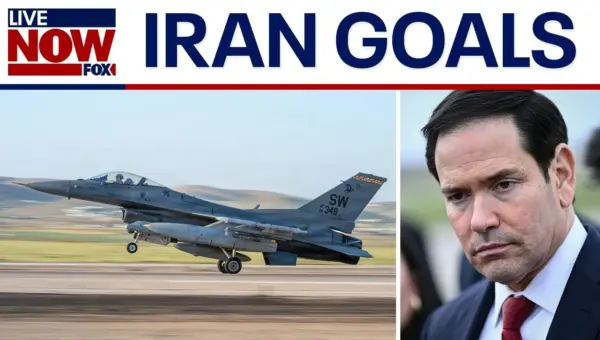
Rubio: US Can Achieve Iran War Goals Without Troops
Senator Marco Rubio outlined a strategy to counter Iran without deploying U.S. ground troops, focusing on weakening the regime and enhancing maritime security. He also criticized Cuba's economic system and expressed concerns about West Bank violence.


Israel Escalates Iran Strikes, Warns of Wider War
Israel has launched significant strikes inside Iran following continued missile fire, warning of further escalation. The conflict risks wider regional instability and economic disruption, especially concerning the Strait of Hormuz.

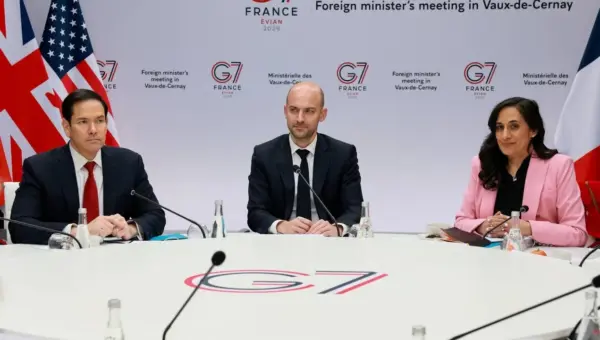
Rubio Puts US First at G7 Summit, Sparks Debate
Secretary of State Marco Rubio attended the G7 summit in France, emphasizing his commitment to serving the American people above all else. The meeting addressed the war in Iran and Russia's role, revealing differing approaches among allies on regional security and the Strait of Hormuz.