Trump’s Iran Bluff Backfires, Igniting Market Chaos
Claims of a peace deal with Iran, made by Donald Trump, have been sharply denied by Iranian officials, leading to a rapid escalation of tensions and market turmoil. U.S. and Israeli forces reportedly hit Iranian energy infrastructure, prompting retaliatory strikes in Kuwait and vows of further action from Iran. Allegations of market manipulation surrounding Trump's announcement add another layer of complexity to the escalating conflict.

Trump’s Iran Bluff Backfires, Igniting Market Chaos
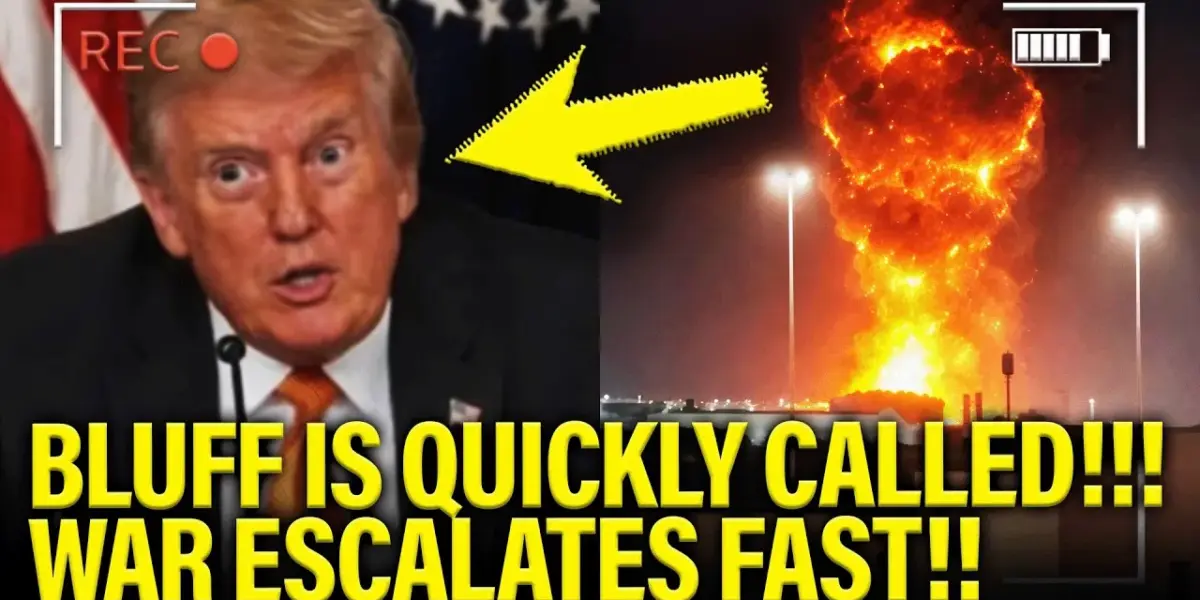
In a dramatic turn of events, claims of a peace deal with Iran, made by Donald Trump, have been sharply denied by Iranian officials, leading to a rapid escalation of tensions and market turmoil. Trump’s assertion of a negotiated peace was quickly debunked by Iran, which stated there had been no direct or indirect communication with the United States. This stark contradiction suggests Trump’s announcement was an attempt at psychological warfare and market manipulation, designed to buy time while U.S. troops were being deployed.
Escalation on the Ground
Despite Trump’s claims of de-escalation, reports indicate a significant troop movement. Approximately 2,500 Marines, 2,000 sailors, three amphibious ships, and 3,000 paratroopers, including a Marine Expeditionary Unit from Japan, were en route to the Middle East. This deployment was scheduled to arrive within a five-day window during which Trump had suggested there would be no strikes. However, strikes did occur. U.S. and Israeli forces reportedly hit gas pipelines feeding power stations in Iran, specifically in Isfahan and Ilam. The IRGC’s Fars News Agency confirmed these strikes targeted energy facilities, including a gas management building and a gas pressure reduction facility. These attacks, which also reportedly hit a desalination facility and a meteorological office in Bushehr, resulted in the death of Yusef Sobani Nisab, head of the Bushehr airport meteorological office, while he was on duty.
Iran’s Retaliation and Shifting U.S. Goals
In response to the strikes on its infrastructure, Iran vowed retaliation. A spokesperson for the Iranian Revolutionary Guard stated that American-Israeli aggression targeting energy facilities would lead to a response against power stations in Israel and the Arabian Gulf. Shortly after, Kuwait experienced a new wave of missile and drone attacks, with seven power transmission lines reportedly knocked out by falling shrapnel. An Iranian official warned that if their infrastructure is struck, the response would be severe, aiming to cripple the aggressor.
The conflict’s objective also appears to be shifting. U.S. officials have reportedly told The Washington Post that overthrowing the Iranian regime and permanently halting its nuclear program are no longer seen as achievable goals. The focus has reportedly shifted to ensuring passage through the Strait of Hormuz, a waterway that has become a flashpoint in the escalating conflict.
Market Manipulation Allegations
The situation has been further complicated by allegations of market manipulation. It is reported that significant oil trades, totaling around $580 million in Brent and WTI futures, occurred in the minutes before Trump’s announcement of a potential peace deal. Another $1.5 billion in S&P 500 futures were also traded during the same brief period. These trades, if orchestrated by a few entities, could have generated substantial profits within minutes. This pattern, according to critics, involves Trump manipulating markets with false information, leading to initial volatility, followed by a market downturn once the truth emerges, and a surge in oil prices.
Broader Economic and Geopolitical Ramifications
The escalating conflict and alleged market manipulation have far-reaching economic consequences. The report highlights concerns about dwindling supplies of liquefied natural gas (LNG) from the Middle East, potentially impacting availability in just eight days. Critical resources like helium, essential for medical equipment such as MRIs, could become scarce. Fertilizer prices are surging, potentially requiring government bailouts for farmers. Inflation and job reports are also expected to be significantly impacted.
Furthermore, the U.S. is reportedly using the situation to pressure the European Union, threatening unfavorable access to U.S. LNG shipments if the EU does not agree to favorable trade deals. This tactic is seen as leveraging Europe’s reliance on Middle Eastern LNG, which is now in jeopardy. Middle Eastern countries, which have invested heavily in U.S. companies, real estate, and treasury bonds, may halt these investments, impacting the U.S. economy. The report also points to financial instability, citing Apollo’s decision to cap redemptions for one of its funds due to significant money withdrawals.
Historical Context and Future Outlook
The current situation evokes parallels to past geopolitical tensions where disinformation and economic pressure have been used as tools. The Strait of Hormuz has historically been a critical chokepoint for global oil supplies, and any disruption there has immediate and significant global economic repercussions. The use of energy infrastructure as a target in this conflict represents a dangerous escalation, potentially drawing more nations into the fray.
The conflict appears far from over. Iran’s retaliatory actions against Kuwait and its continued ballistic missile strikes on Israel suggest a sustained response. The shifting U.S. objectives, moving from regime change to securing vital shipping lanes, indicate a recalibration in the face of persistent Iranian resistance. The long-term implications for global energy markets, international relations, and economic stability remain uncertain, with the potential for further escalation and unforeseen consequences.
Why This Matters
This situation underscores the dangerous interplay between geopolitical conflict, market dynamics, and public perception. The alleged use of disinformation to influence markets and the subsequent military escalation highlight the fragility of international stability. The potential for wider economic disruption, from energy prices to critical resource availability, affects global economies and everyday citizens. Understanding these complex interactions is crucial for navigating an increasingly volatile world.
Source: Trump PANICS as BLUFF IS CALLED in WAR…RAPID ESCALATION!!!! (YouTube)

Related Articles

U.S. Iran Tensions Rise Amid Shifting Alliances
Rising tensions between the U.S. and Iran are creating a volatile geopolitical situation. With conflicting signals on de-escalation and potential shifts in alliances like NATO and U.S.-Israel relations, the path forward remains uncertain. The global economy and regional stability hang in the balance.


Iran Targets US With Cyberattacks, Escalating Digital Warfare
Iran is increasingly using cyberattacks to challenge the U.S., as seen in a recent hack of the FBI director's account. Experts say this is a strategic shift due to Iran's limitations in conventional warfare. The U.S. needs to strengthen its digital defenses, focusing on encryption and cloud computing, rather than solely relying on traditional security measures.

Iran Hacks FBI Chief, Exposing U.S. Cyber Vulnerabilities
A recent hack of FBI Director Kash Patel's personal email by an Iran-linked group highlights Iran's growing cyber threat to the U.S. Experts explain how simple security oversights are exploited, emphasizing the need for basic defenses like two-factor authentication to protect against propaganda and potential infrastructure attacks.