Iran’s Nuclear Claims Questioned Amid Missile Tests
Iran's missile tests and past nuclear claims have fueled skepticism from U.S. officials. While diplomatic talks are ongoing, concerns remain about Iran's true intentions and regional stability.

Iran’s Nuclear Claims Questioned Amid Missile Tests
Recent events have raised serious questions about Iran’s nuclear ambitions and its reliability in international dealings. Following Iran’s firing of two long-range ballistic missiles, which traveled 2,500 miles and landed near the U.S. base on Diego Garcia, concerns have surged about the country’s growing missile capabilities. These tests highlight Iran’s potential to strike major cities across the globe, including capitals like London, Paris, Rome, Madrid, and Oslo.
U.S. Pauses Strikes Amid Diplomatic Push
In response to these developments and ongoing discussions, President Trump announced a temporary postponement of planned strikes against major energy and electricity targets in Iran. This decision came after preliminary conversations between the United States and Iran over two days. The President stated that Iran has “one more opportunity” to end its threats to America and its allies, signaling a potential path towards a broader agreement.
President Trump mentioned that Iran has agreed to a 15-point list for a possible peace deal. Key points reportedly include Iran’s commitment to never possess a nuclear weapon and the soon-to-be-opened Strait of Hormuz. The President also suggested that the Strait of Hormuz would be jointly controlled, possibly by the U.S. and Iran’s leadership.
Skepticism Over Iranian Commitments
However, former counterterrorism coordinator Nathan Sales expressed significant skepticism regarding Iran’s statements and commitments. He described Iran as “professional liars,” pointing to past instances where the U.S. and its allies believed Iran’s assurances that it did not seek nuclear weapons. This was later contradicted when Israel uncovered Iran’s nuclear weapons materials.
Sales also noted discrepancies in Iran’s missile capabilities. Iran had previously claimed its ballistic missiles could only travel 2,500 kilometers, yet the recent test demonstrated a range of 4,000 miles. “Clearly, they are not trustworthy,” Sales stated, emphasizing that any statements from Tehran should not be taken at face value.
“They have all sorts of reasons to use diplomacy as a shield to run out the clock and provide cover for themselves to reconstitute their nuclear program or ballistic missile program or to provide support to terror proxies around the region.”
He further explained that diplomacy can sometimes be used by nations as a tactic to buy time. This allows them to rebuild their nuclear or missile programs or to continue supporting proxy groups in the region. Such actions can create a false sense of security while the underlying threats persist.
Navigating Future Relations
Despite the distrust, Sales advised keeping the door open to diplomacy, a strategy he noted the President has employed previously. The U.S. remains open to talks but reserves the right to use force if diplomatic objectives are not met. This dual approach, combining dialogue with the credible threat of military action, is seen as crucial.
Pentagon planners have reportedly developed detailed war plans targeting key Iranian assets. These include nuclear facilities, ballistic missile sites, and infrastructure supporting Iran’s defense industry. The aim is to degrade and dismantle Iran’s capabilities, preventing it from rebuilding its military programs after any potential conflict.
Market Impact and Investor Considerations
The ongoing tensions with Iran have broader implications for global markets, particularly concerning energy supplies. The Strait of Hormuz is a critical chokepoint for oil transportation, and any disruption could lead to significant price volatility. 22 nations, including the UAE, Bahrain, and several European allies, have signed a joint statement condemning Iran’s actions and pledging to secure the Strait.
For investors, the situation underscores the importance of monitoring geopolitical risks, especially those impacting energy security and international stability. While the U.S. continues to signal openness to diplomacy, the potential for military action remains a key factor influencing market sentiment. Investors should consider how these geopolitical developments could affect global supply chains, commodity prices, and the overall economic outlook.
The long-term implications depend on whether a stable diplomatic solution can be reached or if tensions escalate. A de-escalation could lead to greater market confidence and stability, particularly in the energy sector. Conversely, further escalation could trigger increased uncertainty and negatively impact global economic growth.
Source: ‘PROFESSIONAL LIARS’: Iranians have fooled the US for years, says ex-Trump counterterrorism official (YouTube)

Related Articles


Mexico Navigates US-China Rivalry
Mexico is caught in a geopolitical tug-of-war between the United States and China. The nation must carefully balance its economic needs and strategic interests with both superpowers. This situation highlights Mexico's growing importance in global affairs.
Iran-Backed Houthis Strike Israel, Escalating Regional Tensions
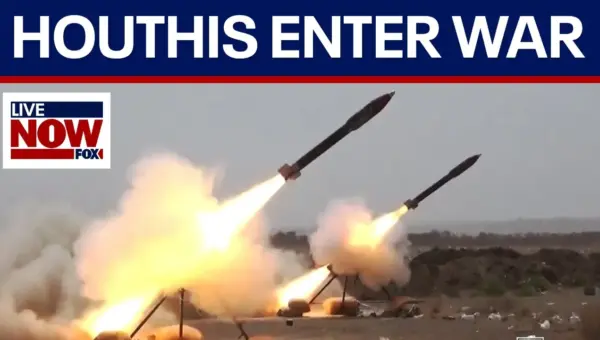
Iran-backed Houthi rebels have launched a missile attack targeting Israel, marking their first such strike since the current Middle East conflict began. The Israeli military confirmed the interception of the projectile. Analysts view this action as part of Iran's broader regional strategy, highlighting the regime's reliance on proxy forces amid internal weaknesses.
Europe Strikes New Trade Deals, Eyes Global Influence
The European Union is actively forging new trade alliances, notably with South American nations like Brazil, to reduce reliance on China and the US. Driven by the need for critical resources like rare earth metals and the desire to boost its own industries, Europe is making strategic concessions and seeking new markets, despite facing internal criticism and a changing global economic landscape.