Trump Hints at Iran Deal Amidst War Uncertainty
President Donald Trump has signaled a potential diplomatic breakthrough in the ongoing war with Iran, stating the nation is ready for a deal. However, experts express skepticism, pointing to Iran's denial of talks and the strategic timing of Trump's announcements. The situation remains uncertain, with analysts debating the credibility of negotiations and outlining both dire and hopeful potential outcomes for the conflict.

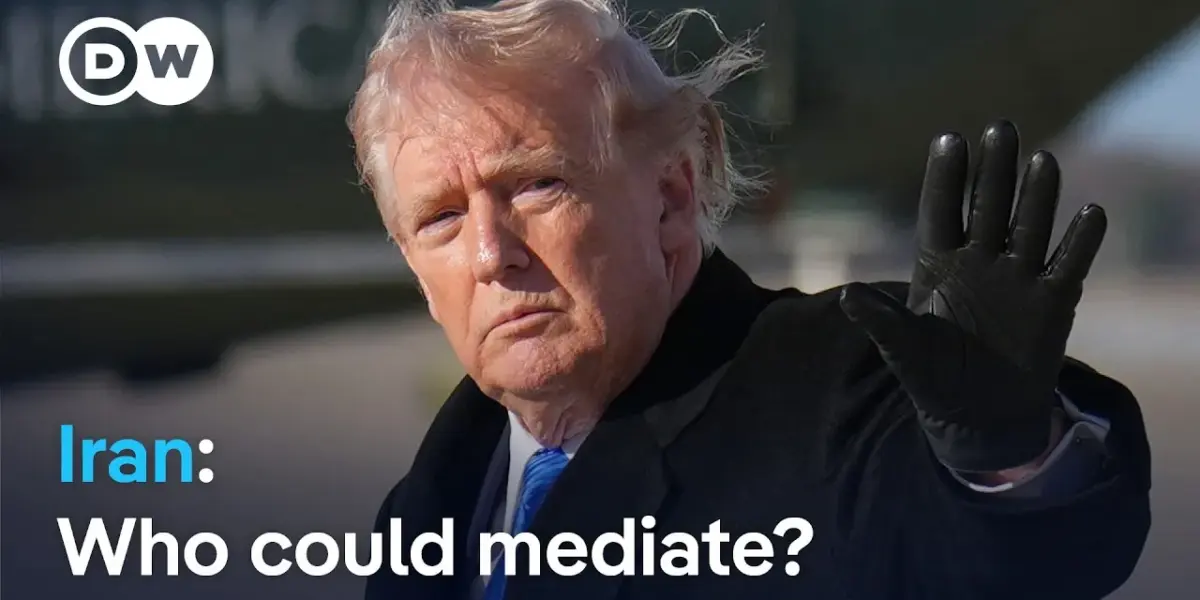
U.S. President Suggests Diplomatic Breakthrough Possible
Day 25 of the conflict with Iran has seen a surprising shift in rhetoric from U.S. President Donald Trump. For the first time, Trump is suggesting that a diplomatic solution to the ongoing war may be within reach, stating that Iran is ready to make a deal. However, Iran has publicly denied any direct talks with the Americans, creating a confusing picture of the situation.
Expert Skepticism Meets Cautious Hope
Rosemary Kyanek, director of the Middle East program at the think tank Defense Priorities, expressed a mix of hope and disbelief upon hearing Trump’s statements. “It’s time for this war to end,” Kyanek stated, emphasizing that the conflict “never should have started.” She believes a peace deal or ceasefire would be “very smart for the United States.” However, she remains skeptical about the possibility of negotiations being close to a resolution, especially given the timing of Trump’s announcements.
Trump’s statements on Monday contrasted sharply with his remarks from just three days prior. On Monday, he said, “We had very very strong talks. We’ll see where they lead. We have points major points of agreement.” This was a stark change from his earlier assertion that “nobody wants to be a leader over there anymore. We’re having a hard time. We want to talk to them and there’s nobody to talk to.”
Timing and Credibility of Negotiations Questioned
Kyanek suggested that Trump’s shift might be a way to back down from a previous deadline without appearing weak. “It’s just a convenient way, I think, for him to back down from that deadline without looking weak necessarily,” she explained. She pointed out the strategic timing of the announcement, coinciding with market openings and a five-day postponement of attacks on energy infrastructure, which conveniently ends before the market closes on Friday.
When asked about the specific Iranian contact person, Trump’s response was vague, mentioning a “top person” but also acknowledging that the U.S. had “wiped out the leadership.” Kyanek compared Trump’s statements to a student unprepared for class, saying, “he sounded like a student who hadn’t done the reading for today’s class and was sort of making it up on the spot.” She doubts the existence of a direct top contact, suggesting that any communication is likely indirect, possibly through mediators in countries like Turkey, Oman, Pakistan, and Egypt.
Public Reaction and U.S.-Israel Dynamics
Public reaction in the U.S. mirrors Kyanek’s skepticism. While many hope for the war’s end, polls indicate it is unpopular, and Americans do not want escalation. History shows Trump has sometimes appeared to ease pressure before striking later, leading to widespread doubt about the sincerity of these diplomatic overtures.
Reports have surfaced suggesting Trump is not naming an alleged Iranian contact out of fear for their safety, possibly due to Israeli threats against Iranian leaders. Kyanek acknowledged the possibility but stressed a broader dynamic: the U.S. and Israel are not fully aligned on the war’s objectives or strategy. She noted that Israel has often pushed the U.S. to escalate, citing an instance where Israel attacked Iran’s natural gas fields, leading to Iranian retaliation against Qatar’s fields.
Kyanek stated that while Israel influences U.S. policy, the U.S. remains the senior partner and holds the ultimate power to say no. She believes the U.S. shares significant blame, if not more, for the conflict’s continuation, noting that Israel has sought U.S. strikes on Iran’s nuclear facilities since the George W. Bush administration.
Market Manipulation and Iran’s Stance
Iranian Parliament Speaker Mohammad Baher Kalibah has suggested Trump’s announcement was merely to calm financial markets. Kyanek agrees this is a strong possibility, given Trump’s known focus on stock market performance as a measure of his presidency’s success. She also highlighted Iran’s significant reasons for distrusting the U.S., especially after past bombings during talks. “It’s pretty unprecedented to have a talk about anything other than a ceasefire when you’re at war with somebody,” she remarked.
Iran likely feels it is in a position of strength due to its ability to threaten the Strait of Hormuz and potential U.S. casualties. Therefore, Kyanek finds it improbable that Iran would be eager for negotiations under current circumstances without significant concessions.
Worst-Case and Best-Case Scenarios
Looking ahead, Kyanek outlined two potential scenarios. The worst-case scenario for the U.S. involves the war escalating into a prolonged engagement akin to Afghanistan, trapping U.S. forces in a lengthy conflict with little progress. While Trump might not have the patience for a 20-year war, such an outcome would be detrimental.
The best-case scenario, though considered unlikely, would involve a comprehensive political settlement after a ceasefire. This would include addressing nuclear and ballistic missile concerns, potentially paving the way for improved regional relations and stability. This hopeful outcome remains a distant possibility.
The situation remains fluid, with uncertainty surrounding the true state of negotiations and the motivations behind the public statements. As the war continues, the world watches to see if diplomacy can overcome the deep-seated mistrust and conflicting interests at play.
Source: Iran war: Worst and best-case scenario | DW News (YouTube)

Related Articles

G7 Allies Clash Over Iran War Strategy, Urge Focus on Russia
G7 foreign ministers met in Paris, revealing deep divisions over the U.S. war with Iran. European allies urged the U.S. to pressure Russia, linking its actions to the conflict and fearing support for Ukraine will wane.

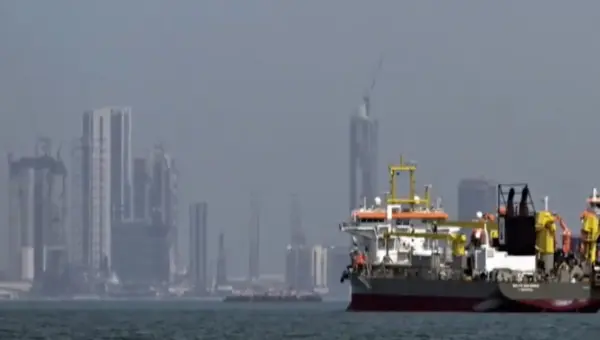
Iran Blocks China Ships, Exposing Beijing’s Weak Grip
Iran's recent decision to block Chinese ships at the Strait of Hormuz is exposing the limits of Beijing's influence in the Middle East. This action is causing delays and cancellations for Chinese manufacturers, turning a perceived geopolitical win into an economic strain.
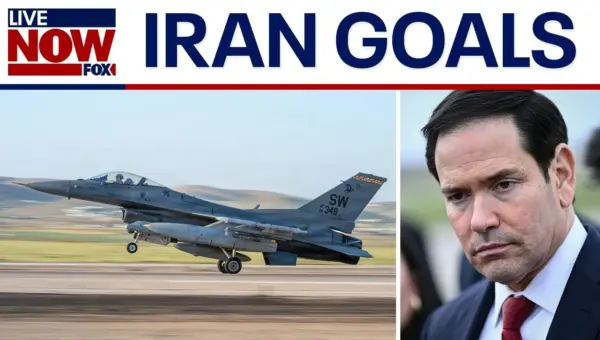
Rubio: US Can Achieve Iran War Goals Without Troops
Senator Marco Rubio outlined a strategy to counter Iran without deploying U.S. ground troops, focusing on weakening the regime and enhancing maritime security. He also criticized Cuba's economic system and expressed concerns about West Bank violence.