Trump Campaign Links ICE Deportations to Modest Rent Drop, Sparking Economic Debate
A Trump campaign spokesperson claims that the annual cost for new rental units decreased by nearly $100 under former President Trump, attributing this modest drop to ICE deportation efforts. This is contrasted with a significant rise in rents under President Biden, linking immigration enforcement directly to housing affordability. Economists, however, note the complex interplay of numerous factors influencing rental markets, suggesting a more nuanced view is necessary.

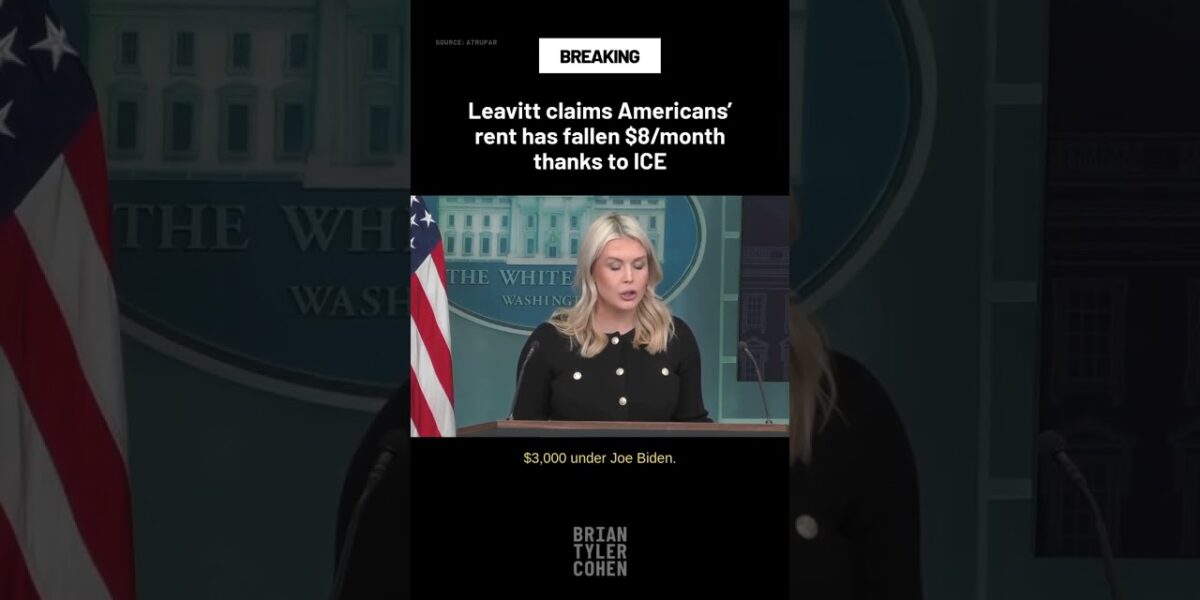
Trump Campaign Attributes Modest Rent Decrease to ICE Deportation Efforts, Drawing Economic Scrutiny
A recent claim from the Trump campaign has ignited a fresh debate over the complex factors influencing housing affordability in the United States. Karoline Leavitt, National Press Secretary for the Trump campaign, asserted that the annual rental cost for new rental units has seen a modest decrease of nearly $100—or approximately $8 per month—under former President Donald Trump. This reduction, Leavitt claims, is directly attributable to the U.S. Immigration and Customs Enforcement (ICE) deportation efforts, which aim to remove undocumented immigrants from communities and, by extension, from housing perceived as being for American citizens.
The campaign further contrasted this figure with a significant rise of over $3,000 in rental costs under the Biden administration, presenting a narrative that links immigration enforcement directly to domestic economic benefits, specifically housing affordability. However, this assertion has prompted economists and housing market analysts to scrutinize the proposed causal link, highlighting the multifaceted nature of rental market dynamics.
The Claim: A Closer Look at Rental Market Dynamics
Leavitt’s claim centers on a very specific segment of the housing market: "new rental units." The assertion is that these units have experienced a collective annual cost reduction of nearly $100 during a period associated with the Trump presidency. The underlying mechanism, as presented by the campaign, is a reduction in housing demand stemming from the removal of undocumented immigrants, thereby freeing up housing stock and exerting downward pressure on rents.
This narrative is underscored by a sharp contrast with the current administration. The campaign highlighted that "rent has risen more than $3,000 under Joe Biden," suggesting a direct correlation between the change in presidential leadership and the trajectory of rental costs. This juxtaposition aims to paint a clear picture: one administration’s policies lead to affordability, while the other’s lead to surging costs.
Contextualizing the Data: Broader Rental Market Trends
To understand the validity and scope of the Trump campaign’s claim, it’s essential to contextualize it within broader rental market trends and economic cycles. The rental housing market is influenced by a myriad of factors, including supply and demand, interest rates, construction costs, inflation, population growth, and employment rates.
Rental Market Under the Biden Administration
The period coinciding with the Biden administration, particularly from 2021 to 2022, indeed saw unprecedented increases in rental prices across many parts of the United States. Economists generally attribute this surge to several key factors:
- Post-Pandemic Demand Surge: As the economy reopened and remote work became more prevalent, there was a significant shift in housing preferences and a surge in demand for rental units, particularly in suburban and Sun Belt areas.
- Inflationary Pressures: Broad-based inflation, driven by supply chain disruptions, increased consumer spending, and expansionary fiscal policies, contributed to higher operating costs for landlords and, consequently, higher rents.
- Limited Supply: A long-standing shortage of housing supply, exacerbated by rising construction costs and labor shortages, meant that new housing construction struggled to keep pace with demand.
- Rising Interest Rates: As the Federal Reserve began hiking interest rates to combat inflation, homeownership became less affordable for many, pushing more potential buyers into the rental market and further increasing demand.
These factors created a perfect storm for landlords to raise rents significantly, often far exceeding historical averages.
Rental Market Under the Trump Administration (Pre-Pandemic)
The period preceding the COVID-19 pandemic, largely coinciding with the Trump administration’s term, generally saw more stable, albeit still rising, rental markets. While specific data on "new rental units" showing a *decline* of $8 per month nationwide during this period would require detailed empirical verification, general housing market data from pre-pandemic years typically indicated steady growth in rents, driven by a strong economy and population increases.
Any localized or segment-specific dips in rent during this time would likely be attributed to factors such as an increase in local housing supply outpacing demand in particular markets, or other micro-economic shifts, rather than a national trend tied solely to immigration enforcement.
The Immigration-Housing Nexus: An Economic Perspective
The core of the Trump campaign’s argument rests on a direct causal link between immigration enforcement and housing affordability. The implied mechanism is that the removal of undocumented immigrants reduces overall population and, therefore, housing demand, leading to lower rents. While population growth is indeed a factor in housing demand, the specific dynamics are far more complex than a simple subtraction of individuals.
Economic Theory on Immigration and Housing
Economists generally acknowledge that population growth, whether from domestic migration or international immigration, increases demand for housing. If housing supply does not expand commensurately, this increased demand can lead to higher prices and rents. Conversely, a reduction in population could, in theory, lead to decreased demand and lower housing costs, assuming all other factors remain constant.
However, the scale and nature of immigration enforcement actions present several nuances:
- Magnitude of Impact: For ICE deportations to have a measurable impact on national average rents, particularly for "new rental units," the number of individuals removed would need to be substantial enough to significantly alter housing demand across diverse markets. The total number of deportations, while significant, might not be large enough to shift national rental averages by a noticeable amount, especially when compared to the broader population and economic forces at play.
- Housing Market Segmentation: Undocumented immigrants often occupy older, more affordable housing stock, or live in denser arrangements, rather than exclusively or primarily influencing the market for "new rental units." The direct impact on the segment of the market for newly constructed or recently renovated units might be minimal.
- Economic Contribution: Undocumented immigrants are also workers and consumers, contributing to local economies. Their removal could have other economic impacts, including labor shortages in certain sectors, which could indirectly affect economic growth and, consequently, housing market dynamics.
Expert Analysis and Counterarguments
Economists and housing market analysts typically point to a broader array of factors as the primary drivers of rent fluctuations, rather than singling out immigration enforcement as a dominant force, especially for a modest national average change.
Most experts would argue that rent prices are primarily dictated by the fundamental balance of housing supply versus demand, influenced by:
- Construction Rates and Costs: The pace of new housing construction, availability of land, zoning regulations, and the cost of labor and materials are critical.
- Interest Rates: Affect both the cost of mortgages (driving more people to rent) and the cost of financing for developers.
- Local Job Growth and Wages: Strong local economies attract residents, increasing housing demand.
- Demographic Shifts: Changes in household formation, age demographics, and migration patterns (both domestic and international).
- Inflation: Affects operating costs for landlords and the purchasing power of tenants.
Attributing a specific, modest change like an $8 monthly decrease in "new rental unit" costs directly and solely to ICE deportations oversimplifies a highly complex economic system. It would be challenging for researchers to isolate the impact of immigration enforcement from the multitude of other variables that simultaneously influence housing markets.
Broader Implications and Political Context
The Trump campaign’s claim fits into a broader political narrative that seeks to link immigration policy directly to the economic well-being of American citizens. By presenting a tangible benefit like reduced housing costs, the campaign aims to galvanize support for stricter immigration enforcement measures.
This approach also serves to draw a stark contrast with the Biden administration, which has faced criticism regarding its handling of the economy and immigration at the southern border. The claim suggests that a return to Trump-era policies would not only secure the border but also yield direct financial advantages for Americans.
However, critics often argue that such claims risk politicizing complex economic issues and may divert attention from more systemic solutions to housing affordability, such as addressing restrictive zoning laws, increasing housing supply, or implementing targeted rental assistance programs.
Conclusion
Karoline Leavitt’s assertion that ICE deportation efforts under former President Trump led to a modest $8 monthly reduction in the cost of new rental units, while rents surged under President Biden, introduces a highly politicized narrative into the housing affordability debate. While population changes can influence housing demand, economists generally highlight a much broader and more intricate web of factors—including supply constraints, interest rates, inflation, and broader economic conditions—as the primary drivers of rental market fluctuations.
The claim, presented without detailed economic analysis or specific data sources, warrants careful scrutiny. While the Trump campaign seeks to draw a direct line between immigration enforcement and tangible economic benefits for citizens, the reality of housing economics is far more nuanced, suggesting that a single policy lever rarely accounts for such specific market shifts amidst a multitude of competing forces.
Source: Leavitt claims Americans' rent has fallen $8/month thanks to ICE (YouTube)

Related Articles

Powell’s Fed Exit Looms: Warsh Poised for Top Job
Kevin Warsh is reportedly set to become the next Federal Reserve Chair, with his confirmation hearing scheduled soon. This potential leadership change at the central bank signals a new direction for U.S. economic policy.

53 Million Get Tax Cuts, Yet Many Think Taxes Rose
Despite tax cuts benefiting millions, a new poll shows most Americans believe their taxes are rising. Experts highlight a communication gap and call for further pro-growth economic plans.


Trump Tax Cuts Boost Refunds, Fueling Campaign Narrative
President Trump's administration is highlighting a surge in tax refunds, claiming over 53 million Americans benefited from the "working families tax cuts." Officials emphasized specific benefits like tax-free tips and overtime, contrasting these with Democratic proposals they say would raise taxes. The campaign uses Tax Day to promote the economic advantages of its policies.