ICE Agents at Airports Spark Fears Amid Shutdown
Armed ICE agents have been deployed at major US airports amid a partial government shutdown, sparking concerns about their training and potential to intimidate. Experts question the agency's suitability for airport security roles and suggest the move is a political tactic to pressure Democrats over funding.

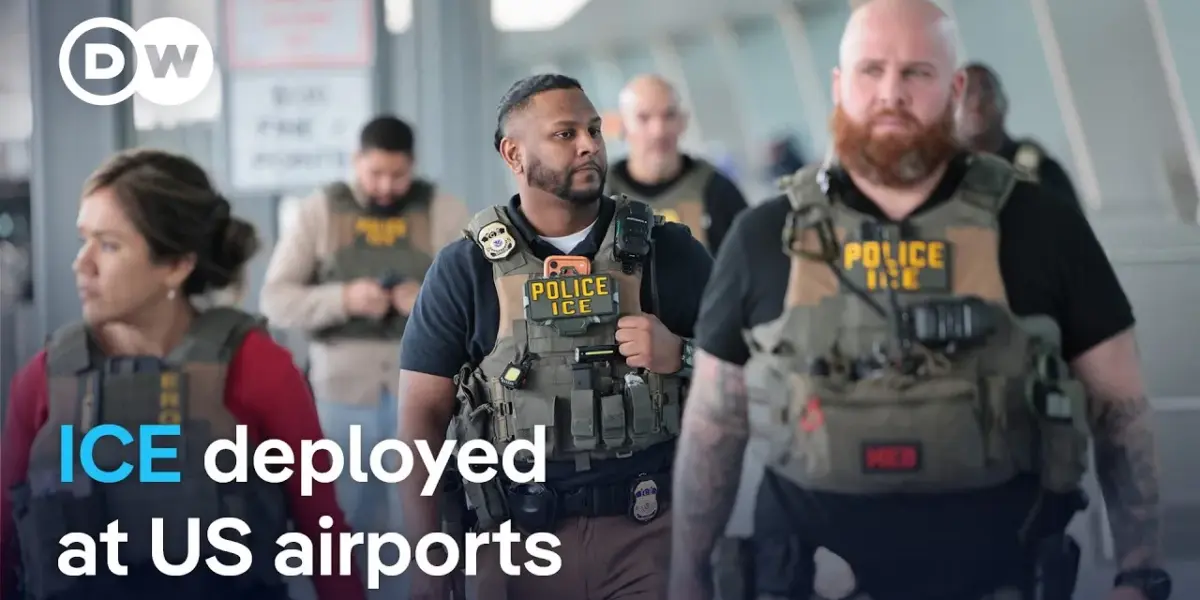
ICE Deployed at Busy Airports Amid Government Shutdown
Armed Immigration and Customs Enforcement (ICE) agents have been seen patrolling security lines and checkpoints at some of the nation’s busiest airports. This deployment comes as a partial government shutdown has led to significant staffing shortages and long wait times for travelers.
Reasons Behind the Deployment
President Donald Trump stated that ICE agents were deployed to assist during the shutdown, which has impacted agencies like the Transportation Security Administration (TSA). TSA officers have not been paid since February 14th, contributing to the operational strain. Trump has suggested that if Democrats do not approve funding for the Department of Homeland Security, ICE agents would handle airport security, promising unprecedented efficiency and the immediate arrest of undocumented immigrants.
Concerns Over Training and Tactics
Experts, like Claire Finkelstein, faculty director of the Center for Ethics and the Rule of Law at the University of Pennsylvania, express significant concern. Finkelstein noted that ICE agents are not adequately trained for the specific demands of airport security and interacting with thousands of diverse passengers. She pointed to past incidents, such as those in Minneapolis, where ICE tactics allegedly violated the constitutional rights of individuals and sowed chaos.
“They have extremely poor training for this kind of operation,” Finkelstein stated. “Their training times have notoriously been very much shortened.” She added that the agents are “really not trained to interact well with civilians” and have been observed using “extremely brutal tactics” with a “very limited training period.”
Public Reaction and Potential Intimidation
Public reaction to ICE’s presence at airports is largely negative, with polls indicating a general distrust of the agency. Unconfirmed reports from San Francisco described a woman, believed to be an American citizen, being detained and asked for citizenship papers, with witnesses describing brutal tactics and public opposition. Finkelstein suggested that the deployment could be intended to intimidate not only immigrants but also ordinary Americans and political opponents, aiming to force concessions in the ongoing budget dispute.
“The ambitions of the Trump administration in terms of the number of agents that they want to get out there on the streets or in this case to the airports is so significant that they’ve had to shorten these training periods to just about nothing,” Finkelstein explained. “It’s not at all clear that they’re really there to try to shorten lines… as much as to intimidate Democrats into giving way on a budget crisis.”
ICE’s Growing Power and Funding
ICE has seen a significant increase in funding and influence under the Trump administration. A bill nicknamed the “big beautiful bill” in 2025 reportedly surged ICE’s funding to roughly $22 billion, a substantial rise from its previous $10 billion level. This increased funding, combined with what some describe as the stripping away of oversight, has led to ICE being characterized as a “militarized almost a paramilitary force.”
Finkelstein elaborated, “It’s like a police force, but they’re not really trained the way police are… This is a a kind of militarized organization which the president seems to feel he can call out at his pleasure.” This follows a Supreme Court decision in Trump v. Illinois that limited the president’s ability to use the National Guard for immigration enforcement, leading to ICE being substituted as the operational force.
Political Strategy and Democratic Options
President Trump appears to be using the airport deployments as a political tactic to blame Democrats for the government shutdown and the resulting travel disruptions. By portraying Democrats as obstructionists causing chaos, he aims to negotiate from a perceived position of strength. However, this strategy risks alienating voters, as ICE is widely unpopular, even among some Republicans.
Democrats face a difficult messaging challenge. While opposing funding for Homeland Security could be spun as obstructionist, they emphasize that the administration has discretion over existing funds to pay TSA workers. California Governor Gavin Newsom criticized the move, calling ICE the “president’s lawless undertrained personal police force.”
Future Implications and Accountability
Concerns remain about ICE’s future power and accountability. While federal judges have begun to challenge ICE’s tactics in court, arguing they violate constitutional rights, these cases can take a long time to work through the legal system. This allows ICE to continue its operations while longer-term fixes are sought.
“The fixes are long-term and the damage is short-term,” Finkelstein observed. “And the kind of show of force that the Trump administration wants to engage in, I think that they will keep pressing the envelope on that.” The deployment at airports highlights a broader debate about the agency’s role, training, and adherence to the rule of law.
Source: Unease as ICE deployed at US airports: What's the point? | DW News (YouTube)

Related Articles
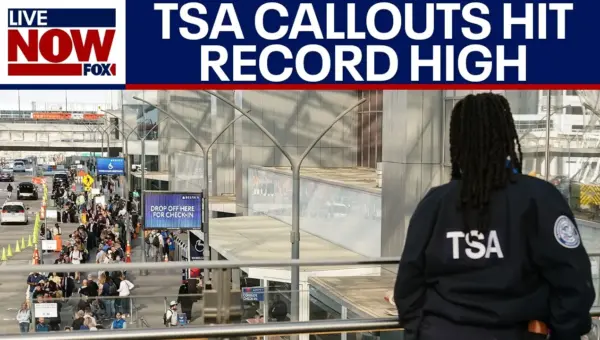
TSA Workers Get Paid After Record Absences
TSA agents will finally receive paychecks after working nearly six weeks without salary, following a directive from President Trump. Record high absences had strained airport operations and caused significant passenger delays. The situation has sparked calls for better protections for essential workers during government shutdowns.

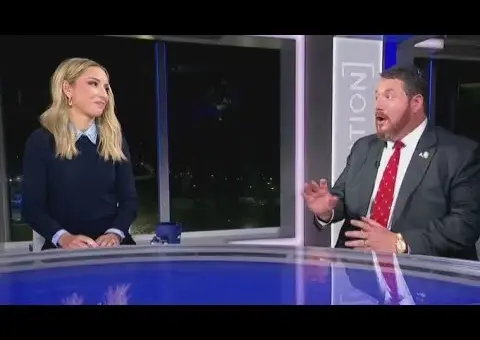
House Republicans Reject Senate Deal, Sparking Government Funding Clash
House Republicans have rejected a Senate bill to end the government shutdown, citing insufficient border security measures. Congressman Randy Fine called the Senate deal a "disgrace" and highlighted the ongoing fight for full government funding. President Trump's executive order to pay TSA agents offers temporary relief, but the core disagreement over border security continues to paralyze Washington.
House Rejects Senate Bill, Citing Border Security Funding Gaps
House Republicans are rejecting a Senate funding bill, arguing it lacks essential appropriations for ICE and CBP, threatening anti-trafficking efforts and border security. They plan to pass a short-term measure to force renewed negotiations.