Trump’s Iran ‘Deal’ Collapses Amid Market Chaos
Reports suggest a supposed deal between former President Trump and Iran has quickly collapsed, with Iran denying any agreement and accusing Trump of market manipulation. This comes as the conflict escalates and a confusing event in Memphis leaves observers baffled. Meanwhile, ICE deployments to airports have also sparked questions due to apparent confusion among officers.

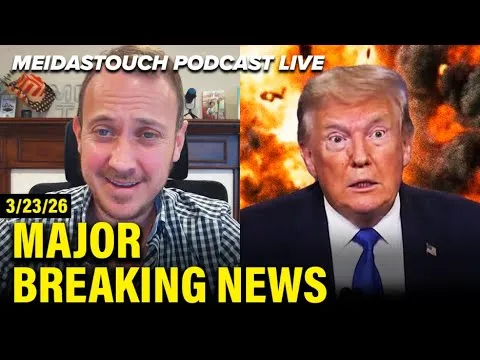
Trump’s Iran ‘Deal’ Collapses Amid Market Chaos
Reports suggest a supposed deal between former President Trump and Iran has quickly fallen apart. The Iranian regime itself has reportedly denied any such agreement, instead accusing Trump of trying to manipulate markets. This situation unfolds as the conflict in the region continues to worsen, with some observers noting Trump’s increasing desperation.
The details of this alleged deal remain unclear, but the swift denial from Iran highlights the shaky ground on which such negotiations might stand. It raises questions about the motives behind the announcement and the potential consequences of such unconfirmed agreements. The market reactions, if any, are yet to be fully understood, but the accusation of manipulation points to a complex web of international relations and financial interests.
An Event That Baffled Many
Adding to the confusion, a recent event hosted by Trump in Memphis has left many observers scratching their heads. While the specific nature of the event is not detailed, its ability to cause widespread bewilderment suggests a departure from typical political gatherings. Such events often serve as opportunities for candidates or public figures to connect with supporters and outline their platforms. However, when the outcome is confusion, it raises concerns about clarity of message and strategic execution.
ICE Deployment Sparks Questions
Meanwhile, the deployment of Immigration and Customs Enforcement (ICE) officers to airports has also become a point of discussion. Reports indicate that even the officers themselves seemed unsure of the reasons behind their deployment. This lack of clarity from within the agency itself is particularly concerning. It suggests a potential disconnect between policy directives and operational understanding, or perhaps a poorly communicated directive.
The presence of law enforcement in public spaces like airports can create anxiety for travelers. When the purpose of such a presence is not clearly understood, it can lead to increased public concern and speculation. This situation underscores the importance of clear communication and defined objectives when deploying government resources, especially those that impact public safety and perception.
Why This Matters
The events surrounding Trump’s alleged Iran deal and the ICE airport deployment highlight critical issues in governance and international relations. Firstly, the apparent collapse of the Iran deal, if true, shows the difficulty of navigating complex geopolitical landscapes, especially when public announcements outpace actual diplomatic progress. It suggests that perceived deals can be fragile, easily undermined by conflicting interests or a lack of genuine commitment from all parties involved. The accusation of market manipulation also points to the intersection of politics and global finance, where actions can have far-reaching economic consequences.
Secondly, the confusion surrounding the ICE deployment to airports raises questions about operational efficiency and transparency within government agencies. When personnel on the ground are unaware of their mission’s purpose, it can lead to public distrust and operational missteps. This lack of clarity can erode public confidence in the agencies tasked with maintaining security and order. It is vital for government actions, especially those involving law enforcement, to be clearly communicated and justified to both the public and the personnel involved.
Historical Context and Future Outlook
The Trump administration had a complex relationship with Iran, marked by the withdrawal from the Joint Comprehensive Plan of Action (JCPOA) nuclear deal in 2018 and the imposition of stringent sanctions. This move was met with international criticism but was lauded by some in the US as a necessary step to curb Iran’s nuclear ambitions and influence. The subsequent period saw heightened tensions, including military confrontations in the Persian Gulf.
The current situation, with an alleged deal now reportedly denied, could be seen as a continuation of this volatile dynamic. If Trump is indeed seeking to re-engage on Iran, the path forward is fraught with challenges. The credibility of any future agreements will depend on clear communication, verifiable actions, and the willingness of all parties to engage in good faith. The accusation of market manipulation, if substantiated, could further complicate diplomatic efforts and damage international trust.
Regarding the ICE deployment, the history of increased immigration enforcement and border security measures under various administrations provides context. However, the reported confusion among ICE officers themselves is a more specific and concerning development. It suggests potential issues with internal communication, training, or the strategic planning of such operations. Looking ahead, a greater emphasis on transparency and clear operational directives will be crucial for maintaining public trust and ensuring the effective functioning of law enforcement agencies.
Broader Implications
The developments discussed, from the alleged Iran deal to the airport deployments, touch upon broader trends in political communication and governance. The speed at which information, or misinformation, can spread in the digital age means that unverified claims can have significant impacts before they are properly addressed. This places a premium on factual reporting and responsible communication from public figures and institutions.
Furthermore, these events highlight the ongoing challenges of foreign policy and national security. Crafting effective strategies requires a deep understanding of international dynamics, careful diplomacy, and clear communication. When these elements are lacking, the risk of miscalculation and escalation increases, as seen in the ongoing regional conflicts. The effective functioning of domestic agencies, like ICE, also relies on clear leadership and well-defined objectives. The ability to adapt to changing circumstances while maintaining transparency is key to public confidence.
A New Voice Joins the Conversation
Adding to the discussion around these complex issues is the news of veteran journalist Scott MacFarlane joining the MeidasTouch Network. MacFarlane, known for his reporting on legal and political matters, will bring his expertise to a broader audience. His involvement suggests a commitment to providing in-depth analysis and commentary on critical events, aiming to inform the public amidst a sea of often confusing or biased information. This expansion of the MeidasTouch Network signals a growing effort to provide diverse perspectives and dedicated coverage on significant news stories.
Source: LIVE: MeidasTouch RESPONDS to MAJOR BREAKING NEWS – 3/23/26 (YouTube)

Related Articles


Stocks Ignore War Risks, Focus on “Taco Moments”
Stock markets appear to be overlooking the severe supply chain risks stemming from the Iran conflict, focusing instead on potential diplomatic de-escalations. While the S&P 500 shows resilience, bond and commodity markets signal deep concern over disruptions to critical resources like LNG, helium, and fertilizers.

U.S. Iran Tensions Rise Amid Shifting Alliances
Rising tensions between the U.S. and Iran are creating a volatile geopolitical situation. With conflicting signals on de-escalation and potential shifts in alliances like NATO and U.S.-Israel relations, the path forward remains uncertain. The global economy and regional stability hang in the balance.


Iran Targets US With Cyberattacks, Escalating Digital Warfare
Iran is increasingly using cyberattacks to challenge the U.S., as seen in a recent hack of the FBI director's account. Experts say this is a strategic shift due to Iran's limitations in conventional warfare. The U.S. needs to strengthen its digital defenses, focusing on encryption and cloud computing, rather than solely relying on traditional security measures.