Whale Rescue Fails: Stranded Mammal Dies on German Coast
A whale stranded on a sandbank off Germany's Baltic Sea coast died despite rescue efforts. The incident highlights the challenges of saving large marine mammals and the threats they face from human activity and environmental changes.

Whale Rescue Fails: Stranded Mammal Dies on German Coast
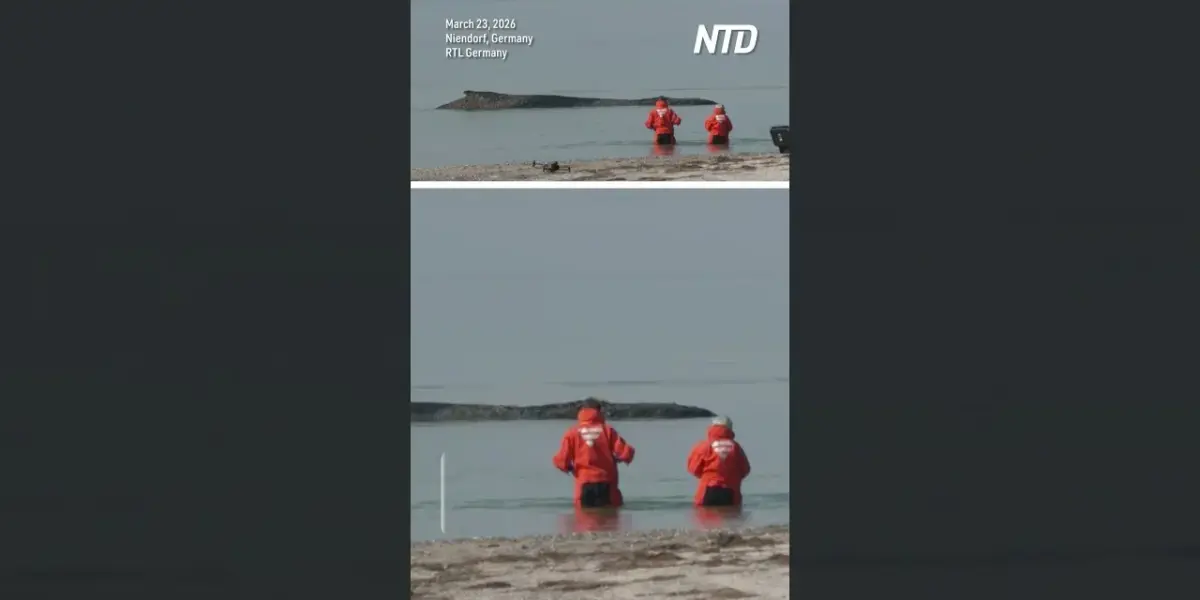
A large whale ended up on a sandbank along Germany’s Baltic Sea coast. Rescue teams worked hard to get the animal back into the water. Sadly, their efforts were not enough to save the stranded mammal.
A Difficult Rescue Attempt
The incident happened on Germany’s Timmendorfer Strand early Monday morning. People found the whale stuck on the sand. This is a dangerous situation for any whale, as they need water to support their bodies and breathe properly.
Teams of rescuers rushed to the scene. Their main goal was to move the whale from the shallow sandbank back to the deeper parts of the sea. This is a very challenging task. Whales are incredibly heavy, and moving them requires special equipment and a lot of careful planning. It’s like trying to move a large truck without a crane; it’s incredibly difficult and risky.
The process involves trying to lift or guide the whale. Rescuers often use large nets and special vehicles. They have to be very gentle to avoid injuring the animal further. The whale’s own weight can cause serious internal damage if it’s not supported correctly.
Why This Matters
The stranding and eventual death of this whale highlight several important issues. It shows how vulnerable marine life can be to environmental changes and human activity. It also points to the challenges in animal rescue operations for such large creatures.
Marine animals like whales face many threats. These include pollution, noise from ships, and changes in ocean temperatures. When a whale beaches itself, it can be a sign that something is wrong. It might be sick, injured, or disoriented. Sometimes, they get lost or are pushed ashore by strong currents or storms.
The rescue efforts, even when they fail, are important. They show a commitment to protecting wildlife. These attempts gather valuable data for scientists. This information helps us understand why strandings happen and how to prevent them in the future. It also helps improve rescue techniques for the next time.
Historical Context and Background
Whale strandings are not a new phenomenon. Throughout history, people have found large marine mammals washed ashore. Ancient mariners and coastal communities have long observed these events. Scientists have studied strandings for centuries, trying to find the causes.
In the past, rescue efforts were often limited by technology and understanding. Now, with better equipment and more knowledge about whale behavior and physiology, rescue operations are more sophisticated. However, the sheer size and weight of whales still make these operations incredibly difficult. Success often depends on how quickly the animal is found and how quickly help can arrive.
The Baltic Sea, where this whale was found, is a relatively shallow and busy body of water. It faces many environmental pressures, including heavy shipping traffic and pollution. These factors can contribute to the stress and disorientation of marine animals. This makes them more susceptible to beaching.
Implications, Trends, and Future Outlook
The death of this whale is a sad reminder of the challenges facing our oceans. As human activity increases, so do the risks for marine life. More ships mean more noise, which can interfere with whales’ ability to navigate and communicate.
Pollution, including plastic waste and chemical runoff, can harm whales directly or affect their food sources. Climate change is also altering ocean currents and temperatures, potentially disrupting whale migration patterns and habitats.
Looking ahead, there is a growing need for better monitoring of marine environments. This includes tracking whale populations and identifying areas where they are at higher risk. Investing in advanced rescue technologies and training for response teams is also crucial.
Furthermore, efforts to reduce pollution and shipping noise are essential. Protecting these magnificent creatures requires a global approach. We need to work together to ensure the health of our oceans for future generations. The story of this stranded whale is a call to action for all of us.
Source: Whale Stranded on Germany’s Baltic Sea Coast (YouTube)

Related Articles


Ukraine Strikes Russian Baltic Port, Icebreaker
Ukraine struck key Russian Baltic infrastructure, including a unique icebreaker and oil export facilities, while Russia launched massive aerial assaults. These actions highlight a widening conflict encompassing logistics, energy, and diplomacy.

US Deputies Brave Icy Waters to Save Stranded Dog
New York sheriff's deputies executed a daring rescue, using a helicopter to save a golden doodle named Cooper from the freezing Seneca River. The operation highlighted the deputies' quick thinking and dedication to community safety.


NY Deputies Execute Daring River Rescue of Dog
New York sheriff's deputies performed a daring helicopter rescue, saving a Golden Doodle named Cooper from a freezing river. Pilot Sergeant Jim Farley and Deputy Levi Taylor used a specialized skid rescue technique. The operation, completed in six minutes, highlights the advanced training and quick response of law enforcement aviation units.