US and Iran ‘Fumble’ Towards Deal Amid Tensions
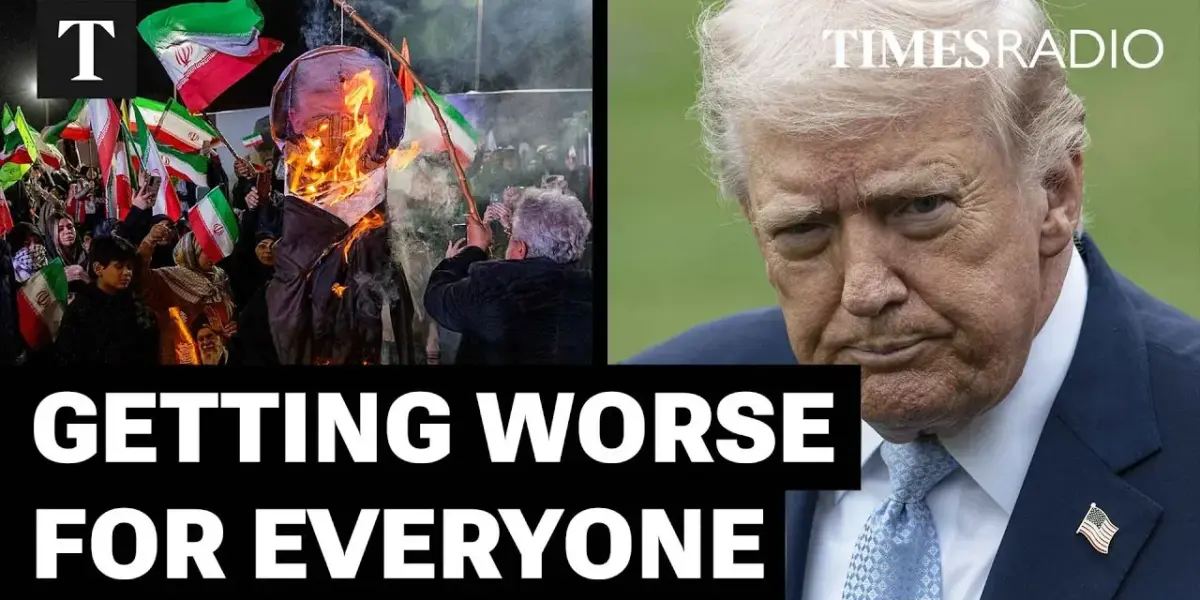
Amidst escalating tensions, the U.S. and Iran are reportedly exploring a potential deal to de-escalate their conflict. President Trump announced productive conversations, suggesting a mutual desire to avoid further worsening of the situation. Discussions are focused on an initial agreement to halt attacks on energy facilities in exchange for opening the Strait of Hormuz, with a broader ceasefire as a subsequent goal.

US and Iran Explore Potential Deal Amid Escalating Tensions
In a complex and rapidly evolving situation, the United States and Iran appear to be cautiously exploring a path toward de-escalation and a potential resolution to their ongoing conflict. President Trump announced on his Truth Social platform that productive conversations had taken place, suggesting a willingness from both sides to find a way out of the current crisis. These discussions, which reportedly extended into the evening, signal a mutual recognition that the situation could worsen significantly for all parties involved.
Diplomatic Moves and Military Posturing
President Trump described the talks as a step towards a deal, stating, “We want very much to make a deal. We’d like to make a deal, too.” He indicated that further discussions would occur soon, possibly by phone, due to logistical challenges in arranging in-person meetings. The immediate focus, according to reports, is a five-day period to assess how these initial steps proceed. A successful outcome could lead to a broader settlement, aiming for an end to hostilities and the prevention of nuclear weapons development by Iran.
However, the diplomatic overtures are unfolding against a backdrop of military posturing. The U.S. had previously threatened to strike Iranian power facilities if diplomatic talks did not advance. This threat, aimed at pressuring Iran to negotiate, involved targeting a major electric generating plant. The White House stated that Iran initiated contact, seeking a deal, and that the U.S. is open to one, provided it is a “good deal” that includes Iran abandoning nuclear ambitions and ending hostilities.
The Strait of Hormuz and De-escalation Efforts
A key point of discussion appears to be the control of the Strait of Hormuz, a vital shipping lane. President Trump suggested joint control, possibly involving the U.S. and Iranian leadership. The immediate goal of the de-escalation appears to be a two-part process: first, an agreement that the U.S. will not attack Iranian energy infrastructure, and in return, Iran will open the Strait of Hormuz. This would allow shipping to resume while the broader conflict continues. The second phase would then focus on a ceasefire.
Foreign affairs expert Tim Marshall noted that the threat of U.S. military action, including the deployment of additional Marines to the region, likely influenced Iran’s willingness to engage. Marshall suggested that the U.S. military’s warnings about the extreme difficulty and risks of enforcing passage through the Strait of Hormuz might have prompted a more cautious approach from President Trump. He described the current situation as both sides “fumbling towards this deal,” recognizing that further escalation would be detrimental.
Conflicting Reports and Expert Analysis
Despite the President’s statements, reports emerged that the speaker of the Iranian parliament denied any direct communication had taken place. Iranian state media also refuted claims of negotiations, asserting that the U.S. had backed down on its threats to target power plants without any concessions from Iran. This divergence in accounts highlights the complexity and opacity of the situation.
Tim Marshall explained that direct phone calls might not be happening, but rather discussions through intermediaries like Turkey and Qatar. He believes that Muhammad Bagar Ghalibaf, the speaker of the Iranian parliament and a former senior commander in the Revolutionary Guard Corps (IRGC), is likely involved in the negotiations on the Iranian side. This suggests that even amidst public denials, back-channel communications may be active.
Military Implications and Strategic Concerns
Lieutenant General Russell Honory, a former commanding general of the U.S. First Army, expressed a desire to believe that the talks are legitimate and that back-channel communications are occurring. He emphasized the urgent need for a resolution to prevent further destruction and global economic impact. General Honory also commented on the potential illegality of attacking civilian infrastructure like power plants, noting that while U.S. soldiers might question such orders, the Pentagon might deem them legitimate for achieving political solutions. He added that if the U.S. hesitated, Israel might take action.
Both experts cautioned that President Trump’s approach, often characterized as making decisions as he goes along, adds uncertainty. Marshall noted that the military has significant concerns about the practicalities of securing the Strait of Hormuz, citing threats from mines, drones, and missiles. General Honory described the current situation as operating in a “land of the unknown,” driven by social media posts rather than traditional diplomacy. He also pointed out that Iran’s strategy of drawing regional nations into the conflict has broadened the scope of risk, potentially endangering U.S. infrastructure and personnel globally.
What to Watch Next
The coming days will be critical in determining whether these tentative steps lead to a genuine de-escalation or if the situation reverts to heightened tensions. Observers will be watching for any concrete signs of progress in opening the Strait of Hormuz and moving towards a ceasefire. The conflicting narratives from the U.S. and Iran, coupled with the ongoing military deployments, underscore the fragility of the current diplomatic efforts and the high stakes involved in resolving the standoff.
Source: US and Iran ‘Fumbling’ Towards A Deal (YouTube)

Related Articles

US Strikes Cripple Iran’s Military Might, CENTCOM Reports
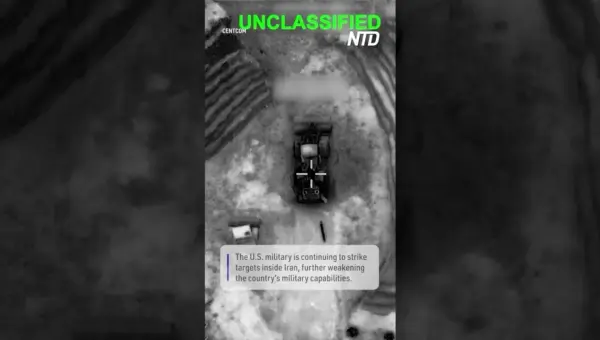
U.S. Central Command reports ongoing strikes inside Iran are significantly weakening its military power. This direct action aims to reshape regional security dynamics, but carries risks of escalation. The long-term impact depends on Iran's response and ability to adapt.

U.S. Iran Tensions Rise Amid Shifting Alliances
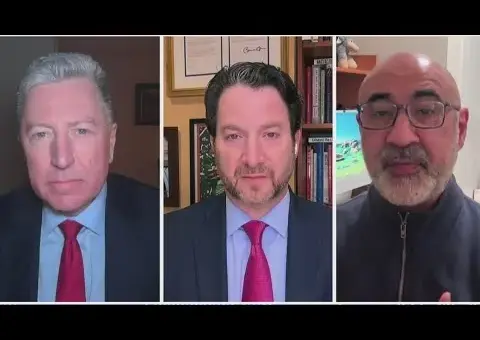
Rising tensions between the U.S. and Iran are creating a volatile geopolitical situation. With conflicting signals on de-escalation and potential shifts in alliances like NATO and U.S.-Israel relations, the path forward remains uncertain. The global economy and regional stability hang in the balance.


Iran Targets US With Cyberattacks, Escalating Digital Warfare
Iran is increasingly using cyberattacks to challenge the U.S., as seen in a recent hack of the FBI director's account. Experts say this is a strategic shift due to Iran's limitations in conventional warfare. The U.S. needs to strengthen its digital defenses, focusing on encryption and cloud computing, rather than solely relying on traditional security measures.