Staffing Cuts Imperil Air Traffic Control Safety
A recent tarmac collision at LaGuardia Airport exposes critical understaffing issues in U.S. air traffic control, rooted in decades-old labor disputes and ongoing funding challenges. Experts warn that an overworked controller and minimal support staff create unacceptable risks to aviation safety.

Staffing Cuts Imperil Air Traffic Control Safety
A recent collision on the tarmac at LaGuardia Airport highlights a long-standing issue within the U.S. air traffic control system: chronic understaffing. The incident, involving a fire rescue vehicle and a United Airlines jet, has brought renewed attention to the critical role of air traffic controllers and the potential dangers when they are overworked and under-supported.
The Incident and Its Immediate Causes
The collision occurred as a fire rescue vehicle, responding to a report of a suspicious odor and potential fire on a United jet, needed to cross a runway. Air traffic control facilities typically have strict rules for vehicles crossing active runways. These rules state that vehicles should only cross when absolutely necessary and must have explicit clearance. In this case, the vehicle was responding to an emergency, which is a valid reason to cross.
However, the air traffic controller managing the situation was reportedly overwhelmed. They were simultaneously coordinating the runway crossing for the fire vehicle and managing gate assignments for the United aircraft. This multitasking, especially during the busy night shift, created a high-stress environment. The audio from the incident captured the controller urgently shouting “Stop, stop, stop” as the collision happened, indicating a last-ditch effort to prevent it.
Controller Workload and Staffing Concerns
Experts suggest that the controller’s heavy workload was a significant factor. Managing runway traffic, responding to emergencies, and coordinating aircraft movements are all standard duties. However, doing so with limited support, particularly on overnight shifts, increases the risk of errors. It is common for only one controller to be in the tower cab during the midnight shift, with another controller nearby within the facility.
This arrangement can be problematic during intense situations. When a controller is swamped with multiple critical tasks, there might not be enough time to call for backup. The controller could also be in the tower cab alone, without immediate assistance for other tasks. This lack of readily available support raises serious questions about the current staffing levels.
Historical Roots of the Staffing Problem
The current staffing challenges in air traffic control are not new. They are deeply connected to events that began decades ago. Following the 1981 air traffic controller strike, President Reagan fired thousands of striking controllers and decertified their union. This action had a lasting impact on the Federal Aviation Administration (FAA) and its ability to maintain adequate staffing levels nationwide.
Since then, the FAA has struggled to hire and retain enough controllers to meet the demands of an increasingly complex and busy air traffic system. The workforce has been at a 30-year low in recent years. Various reasons contribute to this, but insufficient funding and difficulties in hiring and training new controllers are key issues. This has led to a situation where decisions are often made to operate with fewer staff than ideal, especially during less busy periods like the midnight shift.
The Impact of Understaffing
Operating with minimal staff on critical shifts creates a precarious situation. If a medical emergency were to incapacitate a lone controller, there might be no one else in the tower to take over or call for help. This is why advocates have pushed for decades to ensure that at least two controllers are present during midnight shifts and to avoid leaving a single controller working alone.
The stakes are incredibly high in air traffic control. Controllers manage everything from aircraft takeoffs and landings to the movement of vehicles on the ground. When they are fatigued or overwhelmed due to understaffing, the potential for accidents increases. This incident serves as a stark reminder of the consequences when staffing decisions do not adequately consider the immense responsibility placed on these professionals.
Investigating the Collision
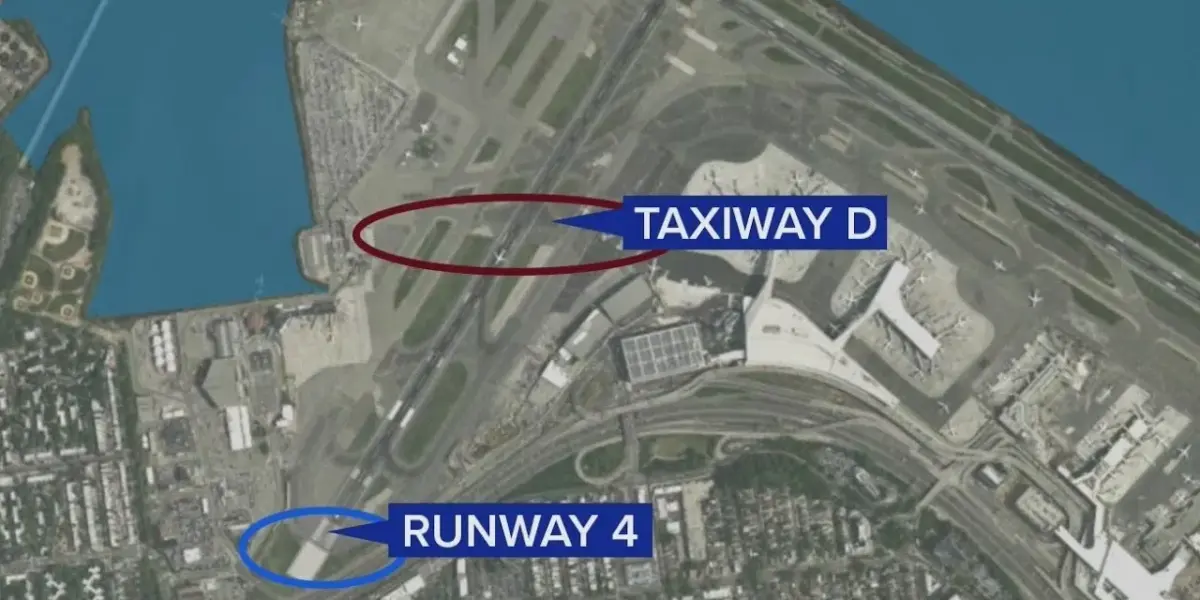
The investigation into the LaGuardia incident will focus on several key areas. The timing of the fire vehicle’s clearance to cross the runway will be examined. Investigators will look at the airport diagram and the specific taxiway involved, noting how the vehicle’s angle and the approaching aircraft’s position could have made visibility difficult. The controller’s judgment call in yelling “Stop, stop, stop” will also be analyzed in relation to the relative positions of the vehicle and the aircraft.
There are many factors that likely contributed to this event. Understanding the exact sequence of events, the communication protocols followed, and the staffing levels at the time will be crucial in determining how to prevent similar incidents in the future. This investigation will shed light on the complex interplay between human factors, operational procedures, and staffing policies in air traffic control.
Global Impact: Why This Reshapes the World Order
While this incident occurred in the United States, it reflects a broader global challenge in aviation safety and infrastructure management. Air travel is a cornerstone of the modern global economy, connecting people and businesses across continents. Any threat to its reliability and safety has far-reaching economic and social consequences.
Globally, air traffic control systems face similar pressures. Aging infrastructure, the need for technological upgrades, and the challenge of attracting and retaining skilled personnel are common issues. Nations must balance budget constraints with the absolute necessity of maintaining the highest safety standards. Underfunding or neglecting air traffic control staffing can lead to disruptions, delays, and, in the worst cases, tragic accidents that erode public confidence in air travel. This incident underscores the critical need for sustained investment and strategic workforce planning in aviation infrastructure worldwide.
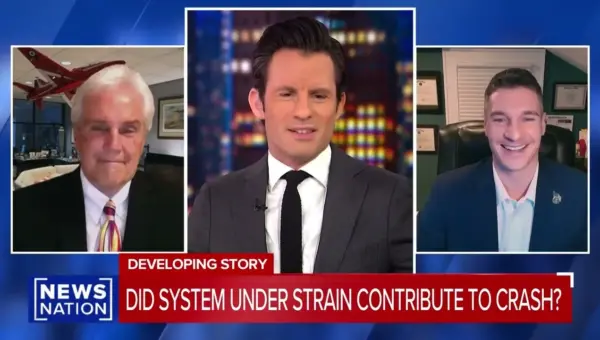
Source: LaGuardia crash: What we know about tarmac collision | NewsNation Live (YouTube)

Related Articles
LaGuardia Runway Reopens After Deadly Crash, Safety Lapses Exposed
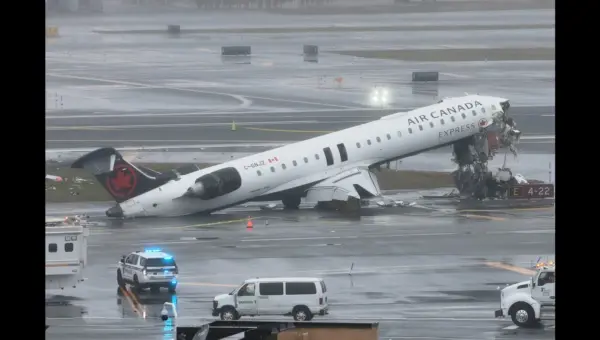
LaGuardia Airport's main runway has reopened after a fatal crash involving an Air Canada Express jet and a fire truck. The incident, which killed two pilots, exposed critical failures in airport safety systems, including ground surveillance and transponder use.

Government Shutdown Strains TSA, Sparks Airport Chaos
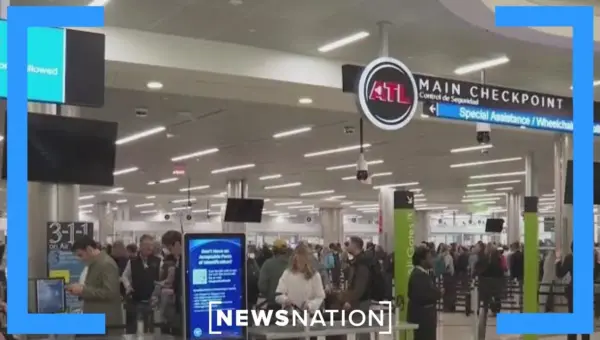
A recent government funding bill's passage hasn't immediately fixed widespread airport delays. TSA staffing shortages, caused by delayed paychecks from the shutdown, are leading to extreme wait times. Travelers face missed flights and frustration, while TSA workers question their job security.

Iran War Talks Ignite, Airport Chaos Deepens
President Trump confirms peace talks with Iran are underway, while US airports face ongoing chaos due to the DHS shutdown. Investigations into a fatal LaGuardia crash reveal systemic safety issues, with experts citing controller fatigue and staffing shortages. Meanwhile, the search for a missing elderly woman continues in harsh desert terrain, highlighting diverse challenges facing the nation.