Stocks Surge 1900 Points on Trump’s Iran Deal Pause
The Dow Jones Industrial Average surged 1,900 points, reversing an earlier 800-point drop, following President Trump's announcement of productive talks with Iran and a pause on military strikes. Oil prices also reversed course, reflecting reduced geopolitical tension.

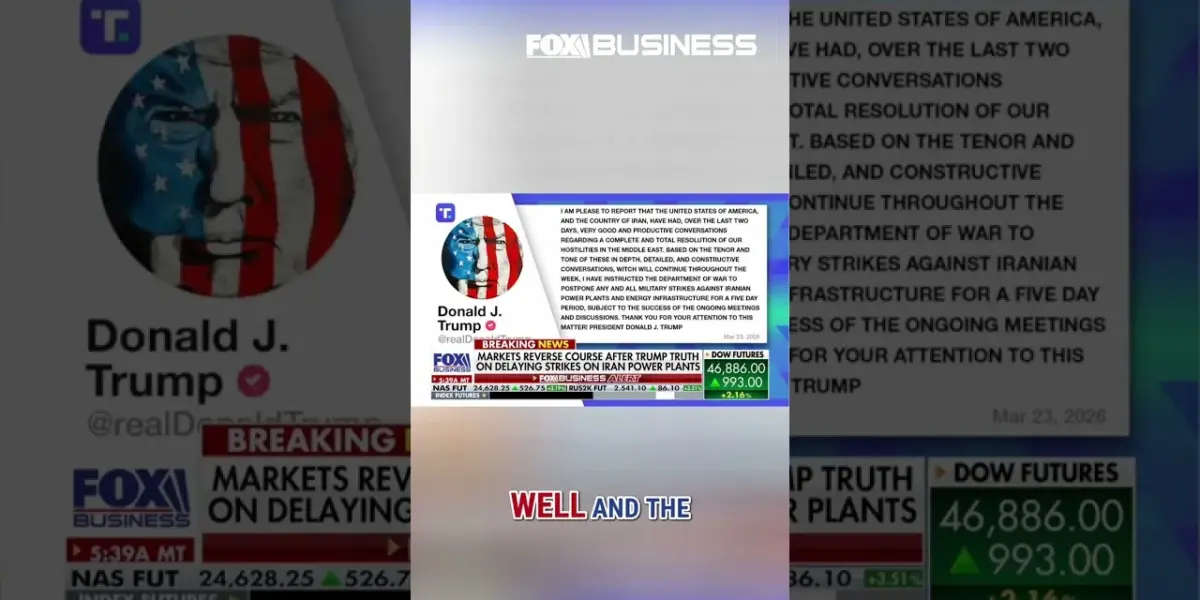
Stocks Rally as Trump Halts Iran Strikes
The stock market experienced a dramatic turnaround, surging by 1,900 points on the Dow Jones Industrial Average. This sharp rise came after President Trump announced a pause in potential military action against Iran. The Dow, which had been down by 800 points earlier, dramatically reversed its course to finish up 1,100 points. This significant market move suggests investor relief and optimism following the news.
Diplomacy Takes Center Stage
President Trump shared on his social media platform, Truth Social, that the United States and Iran have engaged in a series of “productive conversations” over the last two days. Following these discussions, the President has directed the Department of Defense, referred to as the “Department of War” in the statement, to postpone any military strikes against Iran’s power plants and energy infrastructure. This postponement is set for a five-day period, allowing more time for dialogue.
The President’s post indicated that the ongoing conversations have been going well. This diplomatic approach has clearly resonated with the financial markets, leading to a strong positive reaction. The focus has shifted from potential conflict to ongoing discussions, a development welcomed by investors.
Oil Prices Follow Stocks Higher
The positive news also had a significant impact on oil prices, which mirrored the stock market’s reversal. West Texas Intermediate (WTI) crude oil prices saw a notable upward swing. While specific numbers for the oil price reversal were not provided, the transcript states that oil prices “have also reversed course,” indicating a move away from earlier declines.
Typically, geopolitical tensions, especially involving major oil-producing regions like the Middle East, can lead to higher oil prices due to fears of supply disruptions. Conversely, de-escalation and diplomatic progress often lead to a decrease in oil prices as supply concerns ease. The reversal in oil prices suggests that the market is pricing in a reduced risk of conflict and potential supply disruptions.
Market Impact: What Investors Should Know
The sudden reversal in stock and oil prices highlights the market’s sensitivity to geopolitical events. Investors often react swiftly to news that could impact global stability and economic activity.
Stocks: The Dow’s 1,900-point swing (from down 800 to up 1,100) demonstrates how quickly sentiment can change. This kind of volatility can create both opportunities and risks for investors. A pause in military escalation reduces uncertainty, which is generally positive for stock prices. Companies that might be indirectly affected by Middle East tensions, such as those in the energy sector or global trade, could see their stock values adjust accordingly.
Oil Prices: The reversal in oil prices indicates that the market was perhaps anticipating or reacting to heightened tensions. The postponement of strikes suggests that the immediate threat to oil supply has lessened. Lower or stabilizing oil prices can be beneficial for consumers and businesses by reducing transportation and energy costs. For energy companies, however, it could mean less revenue if prices were expected to rise significantly due to conflict.
Long-Term Implications
While the immediate market reaction was strongly positive, the long-term implications depend on the continued success of diplomatic efforts between the U.S. and Iran. If the “productive conversations” lead to a sustained de-escalation of tensions, it could foster a more stable environment for global markets. This stability can encourage business investment and consumer spending.
However, if diplomatic talks falter or tensions re-emerge, the market could quickly reverse its gains. Investors will be closely watching future communications and actions from both sides. The five-day postponement provides a critical window for dialogue, but the ultimate resolution of these geopolitical issues will shape market performance in the months to come.
Context: Geopolitics and Markets
The relationship between geopolitical events and financial markets is well-established. Major international developments, particularly those involving energy supplies or global trade routes, can cause significant price swings. The Middle East is a crucial region for global oil production, making any news from the area particularly impactful for energy markets and, by extension, the broader economy. The swift market reaction underscores the interconnectedness of global politics and finance.
Source: Trump's Iran deal: Stock market, oil prices REVERSE entirely #shorts (YouTube)

Related Articles


Stocks Ignore War Risks, Focus on “Taco Moments”
Stock markets appear to be overlooking the severe supply chain risks stemming from the Iran conflict, focusing instead on potential diplomatic de-escalations. While the S&P 500 shows resilience, bond and commodity markets signal deep concern over disruptions to critical resources like LNG, helium, and fertilizers.


U.S. Iran Tensions Rise Amid Shifting Alliances
Rising tensions between the U.S. and Iran are creating a volatile geopolitical situation. With conflicting signals on de-escalation and potential shifts in alliances like NATO and U.S.-Israel relations, the path forward remains uncertain. The global economy and regional stability hang in the balance.


Iran Targets US With Cyberattacks, Escalating Digital Warfare
Iran is increasingly using cyberattacks to challenge the U.S., as seen in a recent hack of the FBI director's account. Experts say this is a strategic shift due to Iran's limitations in conventional warfare. The U.S. needs to strengthen its digital defenses, focusing on encryption and cloud computing, rather than solely relying on traditional security measures.