Iran’s F-15E Claims Debunked Amidst US Air Dominance
Iran's claims of shooting down a U.S. F-15E Strike Eagle have been debunked by Centcom, which confirmed no American aircraft have been lost during Operation Epic Fury. U.S. forces maintain air superiority while conducting precision strikes on Iranian military facilities.

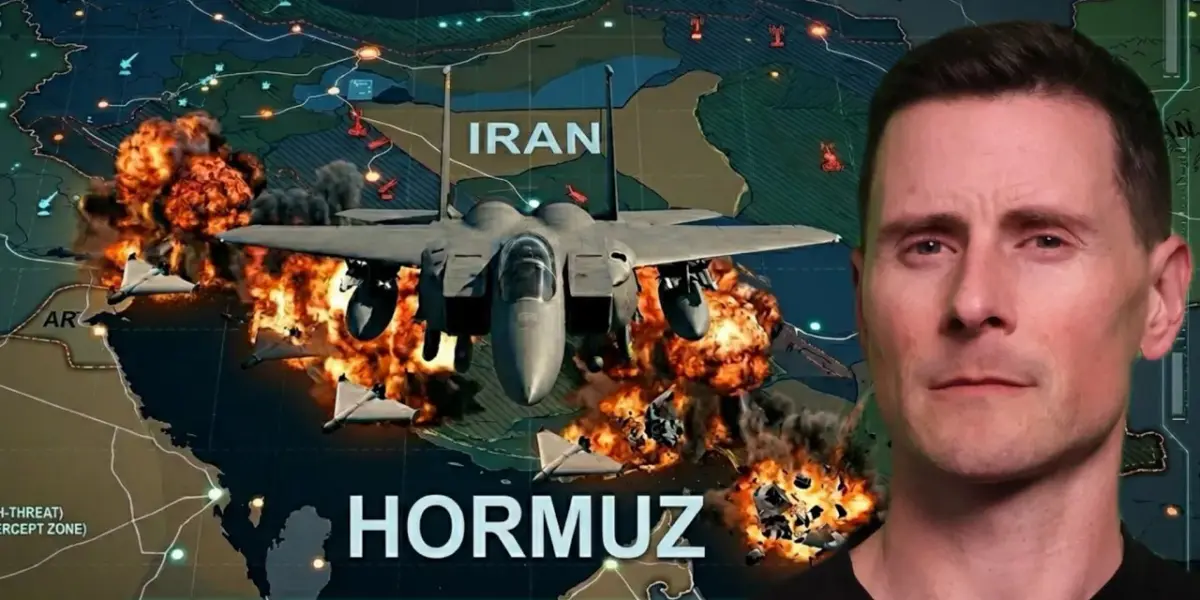
Iran’s Claims of Downing F-15E Rejected Amidst US Air Superiority
On March 23rd, 2026, the 24th day of Operation Epic Fury, Iran issued a propaganda claim stating its air defenses had successfully shot down a U.S. F-15E Strike Eagle near the Strait of Hormuz. However, U.S. Central Command (Centcom) has swiftly refuted these assertions, confirming no American fighter jets have been downed. U.S. forces have conducted approximately 8,000 combat sorties, maintaining complete air dominance and superiority over Iranian airspace.
Analysis of Iranian Propaganda
Video footage released by Iran, purportedly showing the F-15E’s destruction, has been scrutinized. Experts note the aircraft in the video appears not to be maneuvering, which is highly unlikely for a pilot under active threat from surface-to-air missile systems. Furthermore, the footage lacks clear evidence of an incoming missile and bears signs of being digitally generated. Military analysts suggest this is a tactic to create a narrative of resistance despite significant battlefield setbacks.
US Strikes Target Key Iranian Facilities
In contrast to Iran’s claims, U.S. air power has intensified its operations. Over the past 12 hours, U.S. aircraft, including the F-15E Strike Eagle, B-1 bombers, and F-35 fighter jets, have conducted some of their most significant strikes to date. These operations have targeted crucial Iranian military infrastructure, including a gas turbine engine production plant. This facility supplied engines for attack drones and aircraft components used by Iran’s Islamic Revolutionary Guard Corps (IRGC).
Imagery shows the targeted plant before and after the strikes, revealing extensive damage. The strikes also impacted numerous other facilities in the vicinity, suggesting a deliberate effort to degrade Iran’s military industrial capacity. These actions aim to disrupt Iran’s ability to produce and deploy advanced weaponry, particularly one-way attack drones.
Centcom Confirms Operational Success
Centcom released a statement directly addressing the false rumors. “False rumors claim the IRGC recently shot down an F-15 over Iran,” the statement read. “The truth is U.S. forces have flown more than 8,000 combat flight hours during Operation Epic Fury. No U.S. fighter aircraft have been shot down by Iran.” This underscores the operational reality on the ground, where U.S. air power continues to exert control.
Strategic Context: Iran’s Drone Warfare and US Countermeasures
Iran’s strategy has largely relied on deploying large numbers of inexpensive, long-range, one-way attack drones, often referred to as Shahed-style kamikaze drones. The initial plan was to overwhelm enemy defenses through sheer volume. While these drones have achieved some limited successes, hitting targets like desalination plants and energy infrastructure in neighboring countries, their effectiveness is diminishing rapidly.
The IRGC has attempted to counter U.S. air superiority by launching drones from mobile, dispersed coastal sites, particularly near the Strait of Hormuz. This tactic aims to threaten vital shipping lanes and U.S. energy platforms. However, U.S. aircraft, including the F-15E, MQ-9 Reaper drones, and F-35s, are actively countering these threats. They are systematically locating, tracking, and striking these mobile launch sites and drone assembly plants before they can become operational.
The Role of the F-15E Strike Eagle
The F-15E Strike Eagle is highlighted as a key platform in these operations. Its dual-engine design provides significant thrust and maneuverability, allowing it to operate at speeds exceeding Mach 1.3 with afterburners engaged. This capability enhances its survivability against air defense threats. The aircraft is equipped with advanced radar systems, such as the APG-82 Active Electronically Scanned Array (AESA) radar, which can detect targets well in advance.
Furthermore, the F-15E can carry a substantial payload of precision-guided munitions. These include GBU-54 Laser JDAMs (Joint Direct Attack Munitions) and laser-guided weapons. These weapons allow pilots to engage moving targets with high accuracy. The ability to guide munitions even after the laser designator is no longer actively painting the target adds a crucial layer of flexibility in dynamic combat situations.
Diplomatic Developments and Ongoing Pressure
Amidst the military operations, a diplomatic development occurred. President Trump announced that productive conversations had taken place with Iran regarding a resolution to the hostilities. Based on these discussions, he ordered a five-day postponement of strikes on Iranian energy sites. This pause is contingent on the continued success of ongoing negotiations.
However, reports indicate that Iran has continued to launch missiles and drones at neighboring states, even during these talks. This dual approach—engaging in diplomacy while simultaneously escalating attacks—is seen by some as a sign of desperation. The U.S. military continues to target mobile launch sites and hardened storage facilities along Iran’s southern coast, creating leverage for diplomatic discussions.
Strategic Implications: “4D Chess” Diplomacy
This situation is described as “4D chess” diplomacy, where overwhelming military force is used to back diplomatic efforts. The U.S. strategy appears to be degrading Iran’s military capabilities, particularly its drone program and naval threats to shipping, thereby forcing Iran to negotiate from a position of weakness. The stated goal is to weaken the IRGC and the ruling regime, potentially enabling an internal uprising by the Iranian people, referred to as the “Iranian Free People” (IFP).
The U.S. military’s ongoing precision strikes are designed to dismantle Iran’s ability to threaten international shipping, especially through the Strait of Hormuz. This strategic pressure aims to compel Iran to accept a resolution that aligns with U.S. interests and promotes regional stability. The long-term objective appears to be the dismantling of the current regime, either through internal pressure or targeted intervention, supported by a phased military campaign.
Future Outlook
The coming days will be critical in determining the trajectory of the conflict. The five-day pause on energy infrastructure strikes provides a window for diplomatic progress. However, Iran’s continued provocations suggest a complex and potentially volatile situation. The effectiveness of U.S. strategy will depend on its ability to maintain military pressure while pursuing diplomatic solutions, ultimately aiming for a lasting de-escalation and a shift in Iran’s regional behavior.
Source: Iran Claims They SHOT DOWN an F-15E Then THIS HAPPENED (YouTube)

Related Articles

US Strikes Cripple Iran’s Military Might, CENTCOM Reports
U.S. Central Command reports ongoing strikes inside Iran are significantly weakening its military power. This direct action aims to reshape regional security dynamics, but carries risks of escalation. The long-term impact depends on Iran's response and ability to adapt.


Iran Targets US With Cyberattacks, Escalating Digital Warfare
Iran is increasingly using cyberattacks to challenge the U.S., as seen in a recent hack of the FBI director's account. Experts say this is a strategic shift due to Iran's limitations in conventional warfare. The U.S. needs to strengthen its digital defenses, focusing on encryption and cloud computing, rather than solely relying on traditional security measures.


Iran Hacks FBI Chief, Exposing U.S. Cyber Vulnerabilities
A recent hack of FBI Director Kash Patel's personal email by an Iran-linked group highlights Iran's growing cyber threat to the U.S. Experts explain how simple security oversights are exploited, emphasizing the need for basic defenses like two-factor authentication to protect against propaganda and potential infrastructure attacks.