Iran Standoff: Trump’s Options Shrink Amidst Escalating Crisis
Tensions between the U.S. and Iran remain high as conflicting narratives emerge regarding negotiations and military actions. Major General Chip Chapman analyzes the strategic implications, highlighting Iran's control over the Strait of Hormuz and the limited options available to the U.S. The conflict raises questions about the effectiveness of current military strategies and the long-term consequences of escalating hostilities.

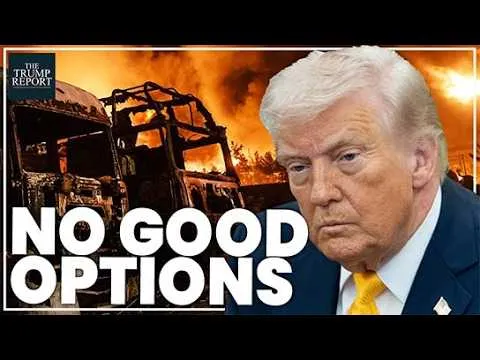
Iran Standoff: Trump’s Options Shrink Amidst Escalating Crisis
The recent escalation in tensions between the United States and Iran has created a complex and rapidly changing situation. Major General Chip Chapman, speaking on The Trump Report, breaks down the conflicting narratives and military realities. The core issue remains the Strait of Hormuz, a vital oil shipping route, which Iran continues to control. This control, known as anti-access area denial, means Iran can effectively block or threaten shipping, putting it in a strong position.
Conflicting Demands and Diplomatic Stalemates
The situation intensified over a weekend with a series of dramatic events. On Saturday, President Trump issued a stark ultimatum: fully reopen the Strait of Hormuz within 48 hours, or the U.S. would strike Iran’s power infrastructure. Iran swiftly rejected this demand, stating the strait was open, but not for enemy vessels. This back-and-forth highlights a significant communication breakdown and differing interpretations of the conflict.
Iran responded to Trump’s threat with its own four-point plan for retaliation, which included shutting down the Strait, targeting U.S.-linked companies, striking energy infrastructure in Gulf States, and expanding attacks on regional allies and Israel. This aggressive stance shows Iran’s willingness to escalate if provoked.
Adding to the confusion, President Trump later announced a five-day pause on strikes, citing “productive conversations” and ongoing talks for a “complete and total resolution.” However, Iran quickly denied any direct or indirect contact with Trump, suggesting he was merely trying to buy time. This conflicting information leaves observers unsure of the true state of negotiations.
Escalation Dynamics and Military Realities
Major General Chapman explains that escalation involves more than just military action. It includes rhetoric, weapons, objectives, targets, and even the cyber domain. He notes that both vertical escalation (increasing intensity of attacks) and horizontal escalation (expanding the conflict’s reach) have occurred. Iran’s ability to project power towards Diego Garcia, thousands of miles away, and its potential to involve the Houthis in the Bab al-Mandab Strait, another critical chokepoint, demonstrate this.
Despite U.S. claims of degrading Iranian missile systems, Chapman asserts that Iran still possesses sea denial capabilities. He points out that the U.S. has traditionally held “escalation dominance,” meaning it could respond with overwhelming force. However, Iran has “escalation control” due to the severe consequences it can inflict, making de-escalation difficult for either side as it might signal weakness.
Questionable Military Objectives and Strategic Missteps
The U.S. has focused on quantifiable metrics, like the number of targets struck or naval vessels destroyed. However, Chapman argues these are largely irrelevant if they haven’t broken Iran’s will to fight. While the U.S. may be succeeding in its military objectives, such as degrading Iran’s navy or long-range missile capabilities, Iran continues to retaliate, contradicting claims of complete destruction.
Chapman draws a parallel to Vietnam, suggesting the U.S. is focusing on metrics rather than the ultimate goal of changing the enemy’s intent. He also questions the legality and proportionality of targeting civilian infrastructure like power plants, calling it an illegal act of war unless directly linked to military targets. Pressure from Gulf States, concerned about their own infrastructure and global supply chains, likely also influenced the decision to pause strikes.
The Cost of War and Limited Options
The financial implications of the conflict are significant. The Pentagon requested $200 billion from Congress, a sum that faces challenges due to inflation and political headwinds. The extended timeline of the war, now entering its fourth week, also clashes with initial predictions of a shorter, high-intensity campaign.
Chapman dismisses the idea that wars can be won solely from afar by dropping bombs, a lesson often overlooked. He also highlights the myth that wars are short, suggesting this conflict is proving longer than anticipated. Furthermore, he emphasizes that nations, not just armies, fight wars, and the failure to achieve a swift decapitation strike against Iran’s leadership has only strengthened the regime’s resolve.
Potential for Future Conflict and Nuclear Ambitions
While the current situation might seem like a stalemate, the underlying issues persist. Iran’s regime survival remains its top priority, and internal security control is paramount. Structural problems within Iran, such as economic hardship and restricted internet access, could fuel future protests, but a clear alternative vision is lacking.
A concerning long-term implication is that Iran might be incentivized to pursue nuclear weapons. The trust deficit between the U.S. and Iran, exacerbated by past actions like the strike on nuclear sites after negotiations, is deep. If Iran feels continually threatened, the pursuit of a nuclear breakout could become a strategic imperative for its survival.
Leadership and Strategic Messaging
The conflict also raises questions about leadership and strategic messaging. Comments made by U.S. officials, including President Trump’s remarks about a deceased political opponent and Senator Lindsey Graham’s comparisons of military actions, have drawn criticism for potentially disregarding the human cost of war. Chapman distinguishes between competence and character in leadership, suggesting that character flaws are often exposed during difficult times.
He also touches on the strategic implications of modern warfare, particularly the role of drones. The high cost of intercepting cheap drones with expensive missiles presents a mathematical challenge. The U.S. appears to have been caught off guard by the effectiveness and proliferation of Iranian-made drones, despite lessons from the Russia-Ukraine conflict.
The Path Forward: An Uncertain Offramp
The concept of an “offramp” – a diplomatic path to de-escalation – remains elusive. While President Trump could declare a tactical victory and withdraw, this wouldn’t address the fundamental military objectives or the long-term threat posed by the Iranian regime. The deep trust deficit and maximalist demands from both sides make a swift resolution unlikely.
The situation highlights the importance of clearly defined political end states in any military action, a point often overlooked in strategic planning. Without a clear objective, even successful military operations can lead to prolonged conflict with unforeseen consequences. The ongoing standoff in the Strait of Hormuz remains a “wicked problem,” where the risks of intervention are high, and neither side appears willing to concede ground without a clear incentive.
“The fact is at the moment, it is the Iranians who still have sea denial.”
The military’s understanding of modern warfare, including the impact of drones and anti-access capabilities, is crucial. As Chapman notes, a ship is a fool to fight a fort, and Iran’s modern anti-access capabilities, including drones, anti-ship missiles, and swarm attacks, present a formidable challenge that requires more than just degrading them. Getting rid of these capabilities entirely is necessary before risking further escalation.
Source: Trump losing control of Iran as his options shrink fast | Maj. Gen. Chip Chapman (YouTube)

Related Articles

U.S. Iran Tensions Rise Amid Shifting Alliances
Rising tensions between the U.S. and Iran are creating a volatile geopolitical situation. With conflicting signals on de-escalation and potential shifts in alliances like NATO and U.S.-Israel relations, the path forward remains uncertain. The global economy and regional stability hang in the balance.


Iran Targets US With Cyberattacks, Escalating Digital Warfare
Iran is increasingly using cyberattacks to challenge the U.S., as seen in a recent hack of the FBI director's account. Experts say this is a strategic shift due to Iran's limitations in conventional warfare. The U.S. needs to strengthen its digital defenses, focusing on encryption and cloud computing, rather than solely relying on traditional security measures.


Iran Hacks FBI Chief, Exposing U.S. Cyber Vulnerabilities
A recent hack of FBI Director Kash Patel's personal email by an Iran-linked group highlights Iran's growing cyber threat to the U.S. Experts explain how simple security oversights are exploited, emphasizing the need for basic defenses like two-factor authentication to protect against propaganda and potential infrastructure attacks.