2 Dead in LaGuardia Airport Plane-Fire Truck Crash
Two pilots were killed when an Air Canada flight collided with a fire truck at LaGuardia Airport overnight. The NTSB is investigating the 'unimaginable' crash amid concerns over airport communication protocols. Meanwhile, a TSA staffing shortage and rising international tensions with Iran add to the day's complex news.

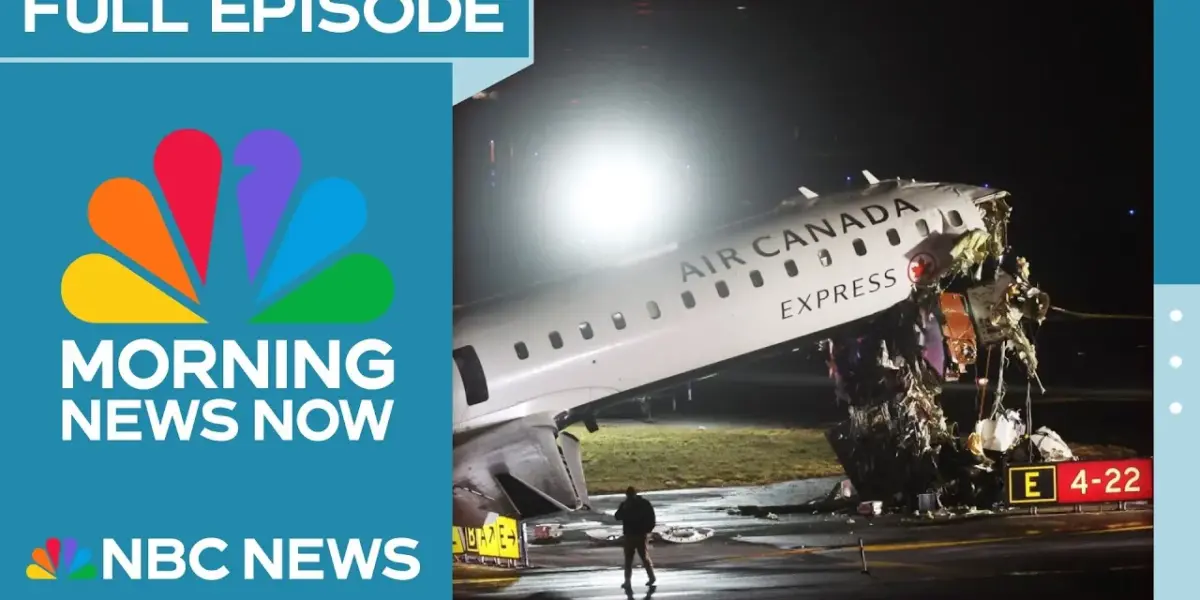
Tragedy at LaGuardia: Plane Collides With Fire Truck
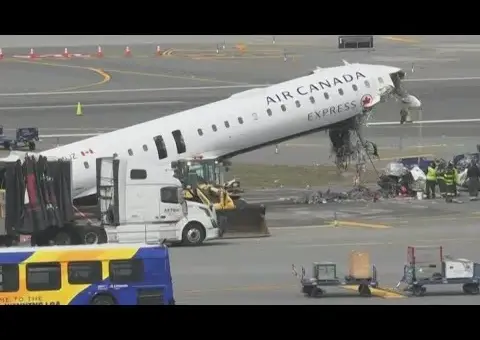
At least two people were killed and several others injured late last night when an Air Canada flight from Montreal collided with a Port Authority rescue vehicle on the tarmac at New York’s LaGuardia Airport. The crash occurred just before midnight, sending shockwaves through the aviation community and shutting down the busy airport.
The victims have been identified as the pilot and co-pilot of the Air Canada flight. The rescue vehicle was responding to a separate incident at the airport when the collision happened. Two Port Authority police officers inside the fire truck were thrown from the vehicle and sustained broken bones, but are reported to be in stable condition.
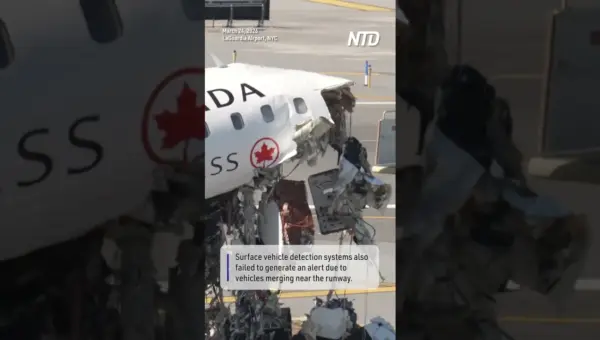
Horrific images from the scene show the front of the Air Canada plane, an Embraer E190 operated by Jazz Aviation, severely damaged, with its cockpit appearing to be sheared off. The fire truck lay on its side amidst the debris. In total, 41 people were transported to the hospital. Of those, 32 have since been released.
Investigation Underway into ‘Unimaginable’ Collision
The National Transportation Safety Board (NTSB) has launched a “go team” to investigate the collision. Early reports suggest a possible lapse in communication between air traffic control and the ground vehicles.
According to audio reviewed by NBC News, the control tower can be heard clearing a fire truck to cross a runway, only to issue a frantic “Stop, stop, stop!” seconds later. Aviation analyst Jeff Guzzetti explained that vehicles on airport movement areas must communicate with air traffic control just like airplanes.
“Anything that moves… if it’s going to cross taxiways and runways, it has to get clearance from air traffic control,” Guzzetti said. “They have radios in their vehicles, just like airplane pilots have radios in their airplanes. And they communicate on the same frequency.”
The speed of the aircraft at the time of impact is also a key focus. Flight radar data indicates the plane was traveling at a relatively slow 24 miles per hour on the runway. While this speed likely prevented a greater catastrophe, it was still enough to cause the fatal damage to the front of the aircraft, where the captain and first officer were seated.
Investigators will be interviewing the air traffic controller on duty, their supervisor, and examining any available security camera footage. They will also look into the staffing and training of the control tower personnel.
Airport Operations Disrupted
LaGuardia Airport was shut down following the crash, with the FAA announcing no flights would operate in or out of the airport until at least 2 p.m. Eastern Time. This disruption comes at a time when many airports nationwide are already struggling with long lines and flight delays due to a federal funding fight impacting TSA staffing.
Over 500 flights were canceled at LaGuardia on the day of the incident, causing a significant ripple effect for travelers along the East Coast. The airport, known for its high volume of daily operations, faced a substantial shutdown, compounding existing travel woes.
Broader Aviation Safety Concerns
The incident at LaGuardia raises broader questions about safety protocols at busy airports, especially during nighttime operations. Guzzetti noted that the sheer number of lights from aircraft, vehicles, and the airport itself can sometimes create a “sea of lights,” making it difficult to discern potential conflicts.
“Nighttime is the big issue here,” Guzzetti stated. “There’s so many lights. There’s other airplanes on the ground with their flashing lights, and there’s airplanes that are airborne. And then you’ve got vehicles, ground vehicles transiting the airport. They have to have lights on top of them also. So, you know, it’s sometimes you get lost in a sea of lights.”
He emphasized the critical reliance on controllers and the need for pilots and vehicle operators to trust the clearances they receive, especially in low-visibility conditions.
TSA Shortage Adds to Travel Woes
Separately, the ongoing federal funding dispute has led to a significant shortage of TSA agents, causing extensive lines at airports across the country. President Trump announced that ICE agents would be deployed to assist TSA officers at some airports, a move aimed at speeding up security checks.
However, there are differing views on the role these ICE agents would play. While former acting ICE Director Tom Homan suggested they could handle tasks like securing exits and checking IDs, Transportation Secretary Sean Duffy indicated that TSA agents, who are law enforcement officers, would continue to perform security screening functions like pat-downs and operating X-ray machines.
DHS reports that over 400 TSA officers have quit since the shutdown began, with thousands more calling out sick or absent due to missed paychecks. This situation is exacerbating travel delays and frustration for passengers.
International Tensions Rise with Iran Deadline
In international news, President Trump has issued a 48-hour deadline to Iran, threatening to “obliterate” its power plants if the critical Strait of Hormuz is not reopened. This threat comes amid ongoing tensions in the Middle East.
Treasury Secretary Scott Bessent, speaking on “Meet the Press,” defended the administration’s actions, stating that the U.S. is working to “soften up the Iranian fortifications” along the strait and has “demolished” Iran’s air and naval capabilities. He asserted that the U.S. is not losing the conflict, despite claims to the contrary.
The situation remains tense, with the administration’s strategy facing scrutiny regarding its goals and effectiveness in de-escalating the conflict while ensuring safe passage through vital shipping lanes.
Looking Ahead
The investigation into the LaGuardia crash will undoubtedly focus on communication protocols and human error. Meanwhile, the TSA staffing crisis and the escalating tensions with Iran are developments that will continue to impact travelers and international relations. All eyes will be on the Strait of Hormuz and the administration’s next steps in the Middle East.
Source: Morning News NOW Full Episode – March 23 (YouTube)

Related Articles
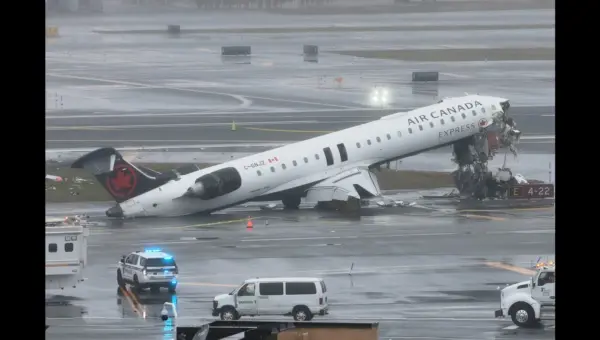
LaGuardia Runway Reopens After Deadly Crash, Safety Lapses Exposed
LaGuardia Airport's main runway has reopened after a fatal crash involving an Air Canada Express jet and a fire truck. The incident, which killed two pilots, exposed critical failures in airport safety systems, including ground surveillance and transponder use.
Air Safety Fears Soar After Deadly Crash
A fatal crash at LaGuardia Airport has triggered a national review of air safety, revealing a pattern of close calls and communication issues at U.S. airports. Investigators are examining technology and staffing, as calls grow for urgent safety upgrades.
Missing Transponder Fueled LaGuardia Near-Disaster
A fire truck lacking a crucial transponder was involved in a near-collision at LaGuardia Airport. The NTSB is investigating this and other issues, highlighting potential gaps in ground vehicle safety protocols. This incident serves as a stark reminder of the importance of technology in preventing airport accidents.