Supreme Court Strikes Down Trump Tariffs, President Lashes Out at Own Appointees and Doubles Down on Trade Policy
The Supreme Court has struck down some of Donald Trump's global tariffs, ruling he overstepped his authority, a decision poised to have significant economic impact. In response, Trump launched a fiery attack on the justices, including two of his own appointees, calling them "embarrassments" to their families, and defiantly announced plans to impose additional tariffs, creating a fresh political dilemma for congressional Republicans.

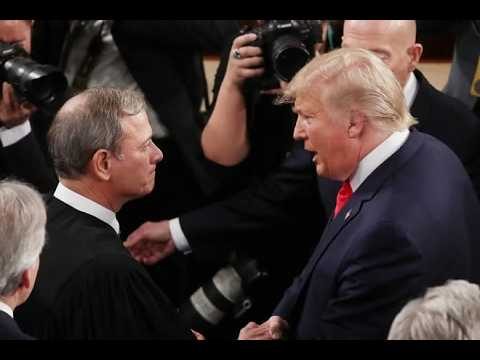
Supreme Court Strikes Down Trump Tariffs, President Lashes Out at Own Appointees and Doubles Down on Trade Policy
In a significant legal blow to former President Donald Trump’s economic agenda, the Supreme Court has ruled that he overstepped his authority in imposing certain sweeping global tariffs. The decision, handed down amidst the traditional Friday news dump, is poised to have considerable economic ramifications both domestically and internationally. However, rather than accepting the high court’s judgment, Trump has launched a fiery attack on the justices, including two of his own appointees, and defiantly announced plans to impose additional tariffs, creating a fresh political dilemma for congressional Republicans.
A Landmark Decision Limiting Presidential Power
The Supreme Court’s ruling marks a crucial reassertion of legislative boundaries on executive power, specifically in the realm of trade policy. The high court determined that Trump, during his presidency, invoked a statute that was not intended to authorize the imposition of tariffs. Legal experts have noted that the particular law cited by the former president had never before been utilized by an executive in such a manner, and, critically, it contained no explicit provisions related to tariffs or taxes.
This decision underscores the judiciary’s role in maintaining the constitutional balance of power, ensuring that the executive branch operates within the confines of laws passed by Congress. The court’s majority effectively stated that a president cannot unilaterally levy taxes or tariffs without clear statutory authorization, preventing an overreach into congressional territory.
The economic implications of this ruling are substantial. Tariffs, essentially taxes on imported goods, are designed to make foreign products more expensive, theoretically encouraging consumers to buy domestically produced goods and protecting local industries. However, economists widely agree that the burden of these tariffs is primarily borne by the end consumer through higher prices. Indeed, studies cited in the original reporting indicate that approximately 92% of the costs associated with these tariffs were ultimately paid by American consumers.
Trump’s Fiery Rejection and Personal Attacks
True to form, Donald Trump did not take the Supreme Court’s decision gracefully. Following the announcement, he expressed profound disappointment, publicly criticizing members of the court for lacking the “courage to do what’s right for our country.” His remarks were particularly striking given that his administration appointed three conservative justices to the Supreme Court – Neil Gorsuch, Brett Kavanaugh, and Amy Coney Barrett – shifting the court’s ideological balance significantly.
When pressed specifically about his appointees, Justices Gorsuch and Barrett, Trump did not hold back. While initially hesitant to explicitly state regret for nominating them, he quickly escalated his rhetoric. “I think their decision was terrible,” he stated, before adding, in a more personal and inflammatory tone, “I think it’s an embarrassment to their families. The two of them.” This direct condemnation of justices he personally selected highlights his expectation of loyalty even from the independent judiciary, and his profound frustration when rulings do not align with his policy preferences.
Trump’s comments also revealed a fundamental misunderstanding, or deliberate misrepresentation, of the legal framework governing presidential authority. He attempted to draw an analogy, suggesting that if he could impose a “foreign country destroying embargo” or “destroy the trade,” he should logically be able to charge a mere dollar in tariffs. This comparison, akin to arguing that if one can drink soda, one should be allowed to drink alcohol, ignores the specific legal distinctions and congressional authorizations required for different executive actions.
Doubling Down: A New Wave of Tariffs?
Despite the unequivocal ruling from the nation’s highest court, Trump immediately signaled his intention to defy the spirit of the decision. Rather than seeking legislative approval from Congress – an approach suggested by legal experts and even some mainstream media outlets – he announced a new course of action. “Today, I will sign an order to impose a 10% global tariff under section 122 over and above our normal tariffs already being charged,” he declared.
This move to invoke a different statutory authority, Section 122, to impose a new 10% global tariff, represents a doubling down on his protectionist trade policies. It underscores his belief that he possesses inherent, broad presidential power to levy tariffs, irrespective of specific congressional mandates or judicial interpretations. This defiance sets the stage for potential future legal challenges and further exacerbates the uncertainty surrounding U.S. trade policy.
The original reporting characterized this as a chaotic economic policy, noting that Trump’s approach to tariffs has consistently been met with public disapproval. Polls from his presidency indicated that a significant majority of Americans, approximately 60%, disapproved of his administration’s substantial increase in tariffs, with 39% strongly disapproving. The public understood that these tariffs translated into higher prices for everyday goods, impacting household budgets.
A Political Quandary for Republicans
The Supreme Court’s ruling initially appeared to offer congressional Republicans a much-needed political reprieve. For years, many within the GOP found themselves in an uncomfortable position, forced to defend Trump’s tariff policies despite their unpopularity and economic drawbacks. To openly criticize the tariffs would have been seen as an act of disloyalty to the then-president, a political risk few were willing to take.
The Supreme Court decision could have provided a convenient “out.” Republicans could have argued that while they supported the president’s goals, the court’s ruling simply affirmed the constitutional limits of executive power, allowing them to gracefully abandon an unpopular policy without directly confronting Trump. However, Trump’s immediate and defiant response, announcing new tariffs, has effectively snatched this lifeline away.
Now, Republicans are once again caught between a rock and a hard place. They face the prospect of defending not only the former president’s controversial rhetoric and past actions but also a renewed push for tariffs that polling consistently shows are unpopular with American voters. As they head back to their districts, they will likely be pressed to explain and justify economic policies that demonstrably take more money out of their constituents’ pockets through increased consumer prices.
The situation highlights the continued, formidable influence Donald Trump wields over the Republican Party. His personal authority often trumps traditional party platforms or even perceived political self-interest, forcing elected officials to align with his positions, even those that prove electorally challenging.
Broader Implications and the Future of Trade Policy
This Supreme Court decision, coupled with Trump’s reaction, carries broader implications for American governance and trade policy. It reinforces the importance of the separation of powers and the judiciary’s role as a check on executive overreach. While presidents are granted significant authority in foreign policy and national security, this ruling clarifies that such powers do not automatically extend to unilateral economic measures like tariffs without specific congressional delegation.
For future administrations, this case sets a precedent that will likely encourage greater legislative engagement when formulating significant trade policy shifts. Rather than relying on potentially ambiguous interpretations of existing statutes, presidents will be more inclined to seek explicit authorization from Congress, fostering a more collaborative and constitutionally sound approach to international trade.
The ongoing saga also underscores the deep divisions within the Republican Party regarding trade. While a segment of the party traditionally champions free trade principles, Trump’s populist, protectionist stance has gained significant traction. The Supreme Court’s ruling and Trump’s subsequent defiance will likely intensify this internal debate, particularly as the party navigates upcoming election cycles.
Ultimately, the Supreme Court’s decision on tariffs represents a significant legal defeat for a key component of Donald Trump’s economic philosophy. Yet, his immediate and aggressive response, characterized by personal attacks on justices and a defiant pledge to impose new tariffs, ensures that the debate over presidential power, trade policy, and the political future of the Republican Party will continue unabated.
Source: Trump SCREWS Republicans after Supreme Court bombshell | Another Day (YouTube)

Related Articles
Iran War Disliked, But Public Outrage Muted: Analysts Weigh In
Despite widespread disapproval of the Iran war, public protests remain muted in the US. Analysts cite fear of reprisal, the prolonged nature of anti-war movements, and America's energy independence as key factors. The conflict's economic impact and the lack of clear objectives continue to fuel public skepticism, though widespread suffering is not yet felt domestically.
Trump’s Blockade Fails, Allies Shun Mission: A Pattern?
A reported failure of Donald Trump's blockade of the Strait of Hormuz, with ships passing through unimpeded, raises questions about policy effectiveness. This incident, coupled with allies' reluctance to join the mission, suggests a pattern of unintended consequences and strained international relations.
Trump’s Wild Claims Fuel GOP Chaos and Public Doubt
Donald Trump's recent erratic statements and Republican figures' defense strategies are causing political turmoil. Concerns over economic misrepresentation and the handling of the Jeffrey Epstein case are mounting, leading to a public demanding more accountability and truth.