Trump Halts Iran Strikes Amid Talks, But Uncertainty Lingers
President Trump has announced a five-day pause on U.S. strikes against Iranian energy infrastructure, citing "constructive conversations" aimed at ending the conflict. Experts express cautious optimism but warn of the situation's volatility, while economic markets react positively to the de-escalation efforts.

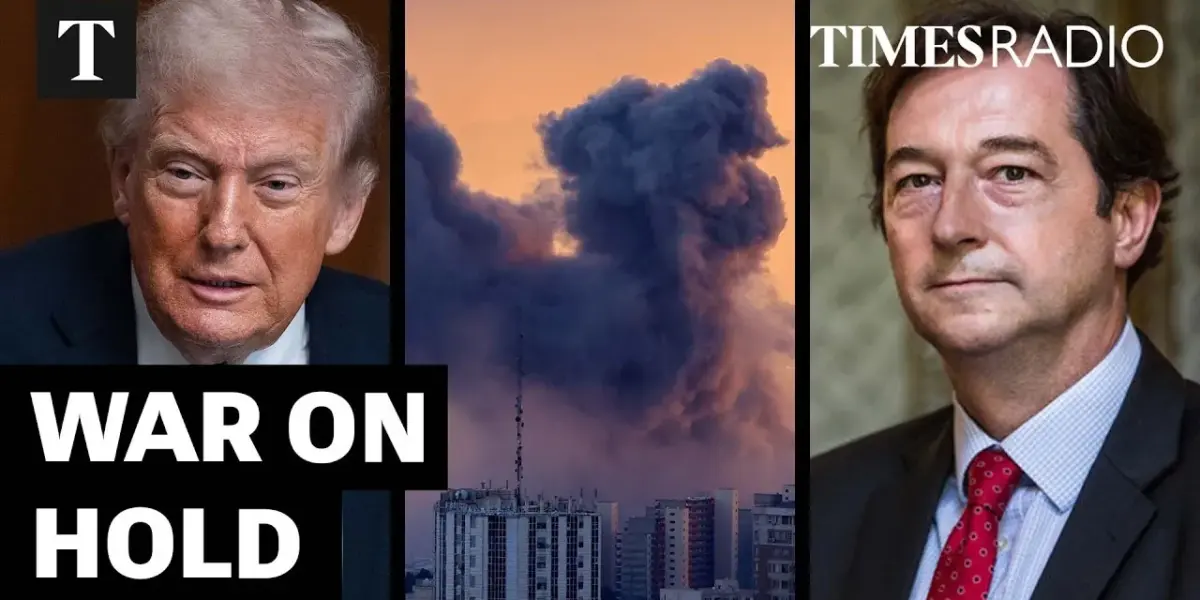
Trump Pauses Iran Strikes, Cites ‘Constructive Conversations’
President Donald Trump announced a temporary halt to U.S. military strikes against Iran’s power and energy infrastructure. The decision, revealed on his Truth Social platform, follows what Trump described as “productive conversations” aimed at ending the ongoing conflict. The pause is set for five days and is contingent on the success of continuing talks.
“Based on the tenor and tone of these in-depth, detailed, and constructive conversations, which will continue through the week, I’ve instructed the Department of War to postpone any and all military strikes against Iranian power plants and energy infrastructure for a 5-day period subject to the success of the ongoing meetings and discussions,” the President wrote.
Expert Views: Cautious Optimism Amidst Volatility
Nicholas Hopton, former British Ambassador to Iran and other Gulf nations, called the willingness to engage in negotiations a positive step. “It’s certainly to be welcome that the president has said that talks are taking place,” Hopton stated. He noted that if the Iranian regime remains in power, negotiations are inevitable. However, he expressed caution about the situation’s stability.
Hopton explained that the core of Trump’s announcement appears to be an extension of a 48-hour deadline previously set for Iran to capitulate to U.S. demands or face strikes on its oil infrastructure. “I think that is essentially the core of the tweet,” he said. “At the same time, the fact that he’s revealing that talks are taking place suggests that the US is looking for an offramp.”
Economic Ripples: Markets React to Potential De-escalation
The potential for an end to hostilities has already impacted global markets. Economist Paul Johnson noted that the oil price has fallen by several dollars a barrel, and the FTSE 100 index saw an uptick after initially being down. “The markets are reacting positively to it,” Johnson observed. “If it does result in drawing this whole thing to a close, it doesn’t mean that there’ll be no economic damage, but it does mean that prices won’t stay as high for as long as we might otherwise have expected.”
Johnson cautioned that some economic damage is already done. “A fair bit of the actual gas and oil infrastructure has been destroyed. Supply chains have been disrupted,” he explained. While the world economy might grow slightly less than anticipated, a swift resolution would prevent much graver consequences. The duration of the conflict, he stressed, is the key factor determining its economic impact.
Government Response to Cost of Living Crisis
The conflict’s impact on the cost of living has prompted government action. A senior official confirmed that the government is exploring all available options to address the looming crisis. “With the Iran war, most people are very concerned now, not only what they’re seeing on their screens in relation to the conflict itself, but also that question of how’s it going to affect me and my family,” the official stated. Discussions have focused on the economic impact, with calls for every available government lever to be used.
Economist Paul Johnson offered a more critical view of potential government interventions. He suggested that while supporting low-income households with energy bills is appropriate, broad subsidies for everyone might not be the best approach. He also advised against assuming widespread profiteering, urging instead for proper investigation if such issues arise. Johnson emphasized that the fundamental problem is the increased cost of energy itself.
Central Bank’s Inflation Dilemma
The Bank of England faces a complex decision regarding inflation. While some price increases are already baked in due to the conflict, the bank must decide whether to “look through” temporary shocks or adjust policy. “I think they’re a bit nervous about that because, of course, these temporary effects can have knock-on effects elsewhere,” Johnson explained. He noted that past hesitations to act during crises led to criticism, suggesting the bank might adopt a more hawkish stance to prevent inflation from becoming entrenched.
Iran’s Stance and Future Strait of Hormuz Threats
Despite Trump’s announcement, reports from Iran’s Fars news agency, citing a source, indicated no direct communications with the U.S. This discrepancy highlights the difficulty in verifying information. Hopton commented on the situation, stating, “I think what we’ve seen from this second Trump presidency has… this is consistent with that one is not sure what the truth is.” He suggested Iran might perceive the postponement of strikes as a victory or a sign of the White House backing down.
The threat of closing the Strait of Hormuz remains a significant concern. Hopton noted that while Iran has threatened this before, its recent actions have demonstrated the devastating impact on the global economy. “I can expect that if this war is ends inconclusively… then Iran will remain able to threaten the closure of the Straits of Hormuz in future,” he warned. A clear resolution to the conflict is seen as essential to prevent future disruptions.
Source: Why Donald Trump's Iran Pause May Still Give Way To Escalation | Nicholas Hopton (YouTube)

Related Articles

Stocks Ignore War Risks, Focus on “Taco Moments”
Stock markets appear to be overlooking the severe supply chain risks stemming from the Iran conflict, focusing instead on potential diplomatic de-escalations. While the S&P 500 shows resilience, bond and commodity markets signal deep concern over disruptions to critical resources like LNG, helium, and fertilizers.

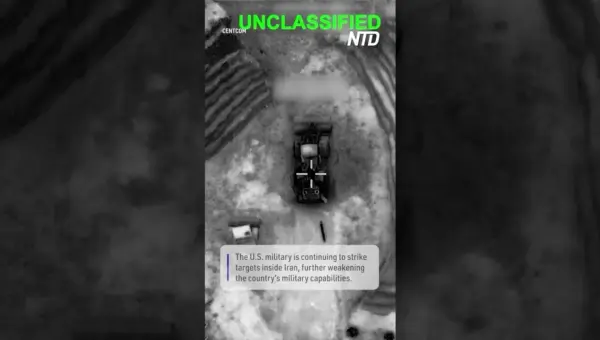
US Strikes Cripple Iran’s Military Might, CENTCOM Reports
U.S. Central Command reports ongoing strikes inside Iran are significantly weakening its military power. This direct action aims to reshape regional security dynamics, but carries risks of escalation. The long-term impact depends on Iran's response and ability to adapt.
U.S. Iran Tensions Rise Amid Shifting Alliances
Rising tensions between the U.S. and Iran are creating a volatile geopolitical situation. With conflicting signals on de-escalation and potential shifts in alliances like NATO and U.S.-Israel relations, the path forward remains uncertain. The global economy and regional stability hang in the balance.