Iran’s Missile Power Surges: US Warns on Hidden Arsenal
Iran's missile capabilities are reportedly far more advanced than U.S. intelligence previously assessed, raising alarms about its potential to strike targets across Europe and even the U.S. China's role in supplying Iran with weapons, particularly drones, adds another layer of complexity to the geopolitical landscape.

Iran’s Hidden Missile Arsenal Raises U.S. Alarm
The United States has issued a stern warning to Iran, demanding the immediate opening of the Strait of Hormuz. President Trump set a 48-hour ultimatum, threatening to “obliterate” Iran’s power plants if its demands are not met. This ultimatum follows Iran’s recent aggressive actions, including launching two ballistic missiles toward a joint U.S. and U.K. military base on Diego Garcia island, located 2,500 miles from Iran.
Iran’s Missile Capabilities Underestimated
Intelligence suggests Iran possesses more advanced missile capabilities than previously assessed. Observers were surprised by Iran’s ability to strike the distant Diego Garcia base. Experts believe Iran has access to North Korean missile technology, which boasts a range of 12,000 kilometers. Such a missile, launched from Iran, could potentially reach the United States.
“The point is the Iranians have a much larger, or at least a much more capable inventory of missiles than everybody has assessed them to have,” noted senior fellow Gordon Chang.
China’s Role in Iran’s Military Build-Up
A significant concern is China’s support for Iran’s military. Evidence indicates that Iran is using Chinese weapons and components, particularly for its drone program. “One of the drones that you just showed, actually, the shells are made in China and almost certainly the components inside were Chinese, especially the microchips,” Chang stated.
This reliance on Chinese technology is deadly. A Chinese-made Iranian drone is believed to have killed six Americans recently. China has reportedly boasted about its drone sales to Iran, raising questions about President Trump’s planned trip to Beijing.
The Drone Warfare Asymmetry
The conflict highlights a stark imbalance in drone warfare costs. Iran is deploying kamikaze drones costing thousands of dollars, while the U.S. is forced to use missiles costing millions. In the initial days of recent conflict, Iran launched over 2,000 kamikaze drones targeting U.S. bases and allied nations.
“The problem is the asymmetry in cost and resources because the Iranians are launching drones that cost thousands or tens of thousands of dollars and we’re launching missiles that cost millions of dollars,” explained an executive from a U.S. drone company.
To counter this threat, the U.S. is increasing its focus on drone protection and mass production. The defense supplemental package aims to bolster drone capabilities and develop layered defense mechanisms to defeat incoming drones economically and effectively.
China’s Economic Leverage and U.S. Independence Efforts
China’s economic power, particularly its dominance in rare earth minerals, provides it with significant leverage. China reported a record $1.2 trillion trade surplus in 2025, with rare earth exports surging 8.2% in the first two months of 2026 compared to the previous year.
However, the U.S. is actively working to reduce its dependence on China. Efforts are underway to boost domestic manufacturing of critical minerals and magnets. “We are beginning to make magnets now. We are producing metals now,” said Barbara Humpton, CEO of U.S. Rare Earth. “By 2028, we’ll bring on the Round Top deposit.”
Beyond rare earths, the U.S. faces a similar vulnerability in pharmaceuticals, relying on China for approximately 800 essential drugs. Reducing this dependency is expected to take longer.
Taiwan and the China Threat
Tensions also remain high concerning Taiwan. Taiwan is set to receive new U.S. F-16 fighter jets this year, following an $8 billion sale approved in 2019. This move aims to bolster Taiwan’s defenses against potential Chinese aggression.
While some intelligence suggests China may not invade Taiwan in 2027, as previously estimated, Beijing continues to develop its capabilities to potentially absorb Taiwan by force. An intelligence report indicates China views absorbing Taiwan as a requirement by 2049.
However, current assessments suggest China may not be ready for an attack. “Xi Jinping has decimated the top of the Chinese military. There are no warfighters left,” Chang commented. “Also, we know that Chinese weapons don’t work very well.”
Defense Spending and Geopolitical Strategy
In light of these geopolitical challenges, President Trump has proposed a $1.5 trillion defense budget for 2027. This significant increase reflects the administration’s strategy to strengthen U.S. military readiness and counter growing threats from nations like Iran and China.
The U.S.’s increased role as an oil exporter, partly due to actions in Venezuela and Iran, also strengthens its hand in global energy markets, which are crucial for China’s needs.
Market Impact
The escalating tensions with Iran and the ongoing strategic competition with China create a volatile environment for global markets. Investors should monitor developments in the Middle East and the Asia-Pacific region closely.
Key factors to watch:
- The Strait of Hormuz and its impact on oil prices.
- U.S. defense spending and the performance of defense contractors.
- The supply chain for critical minerals and semiconductors, with a focus on reducing reliance on China.
- Technological advancements in drone warfare and defense systems.
- Geopolitical stability in East Asia, particularly concerning Taiwan.
The current situation underscores the importance of diversifying supply chains and investing in domestic production capabilities. Companies involved in defense, cybersecurity, rare earth minerals, and advanced manufacturing may see increased opportunities.
Conversely, companies heavily reliant on Chinese manufacturing or facing direct competition from Chinese state-backed enterprises may experience increased risks. The ongoing trade disputes and geopolitical uncertainties necessitate a cautious approach for investors.
Source: 'MUCH MORE CAPABLE': Iran’s hidden arsenal raises URGENT warning (YouTube)

Related Articles

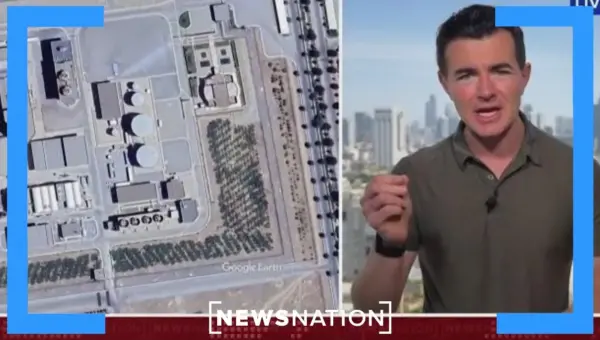
Iran War Escalates, Allies Join Fight for Strait of Hormuz
The conflict in the Middle East intensifies as Iran faces expanded strikes from Israel and retaliatory attacks across the region. The U.S. deploys thousands more troops and offers a 15-point deal, while the Houthis of Yemen join the fray with a missile attack on Israel. Allies are preparing to help secure the vital Strait of Hormuz.

Trump’s ‘Loser’ Comments Reveal Deep Insecurity, Risky Foreign Policy
Donald Trump's controversial "loser" comment reveals a deep insecurity driving his foreign policy, leading to poorly planned actions like the escalating Iran crisis. This pattern of surrounding himself with less capable individuals, rather than challenging experts, poses significant risks for international stability and suggests a dangerous approach to critical global decisions.

Iran Escalates Global Conflict, Threatens World Economy
Yemen's Houthi rebels have officially joined the conflict, launching ballistic missiles at Israel and escalating regional tensions. This move threatens vital shipping lanes like the Red Sea's Bab al-Mandab strait, potentially causing catastrophic economic consequences. Meanwhile, US soldiers have been injured in Iranian missile strikes, adding to the mounting human and financial costs of the escalating war.