US Miscalculates Iran War, Ex-Diplomat Urges Immediate Halt
A former U.S. diplomat argues the current war with Iran was a critical miscalculation and urges an immediate halt. Allan Heir believes the conflict, driven by unclear objectives and Israeli influence, has led to significant global economic pain and regional instability. He stresses the need to "do no harm" and stop escalating the situation.

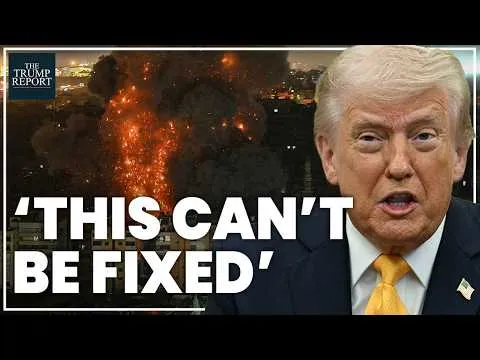
US Miscalculates Iran War, Ex-Diplomat Urges Immediate Halt
A former U.S. diplomat with deep expertise on Iran is calling for an immediate end to the ongoing conflict, arguing that the war was a critical miscalculation from the start. Allan Heir, who served on the nuclear negotiating team and is fluent in Farsi, believes the United States and its allies have entered a conflict with no clear path to victory and significant negative consequences.
A War of Miscalculation and Escalation
Heir states that the reasons given for starting the war have been unclear and constantly changing, much like the metrics for deciding when it should end. “There was no reason for this war,” he asserts. While theoretically there’s always a way forward, Heir sees the realistic options leaning towards continued escalation rather than de-escalation.
President Trump has suggested the war is winding down, but Heir points out that Iran has effectively closed the Strait of Hormuz. This action is causing widespread economic pain, not just in the region but globally. Iran understands this is a major pressure point and will likely maintain it until its demands are met.
Is Anyone Winning?
The idea of Iran winning this war is a sensitive one. Heir avoids saying anyone is winning, as both sides seem unable to achieve their strategic goals. However, he suggests the U.S. is losing because the administration likely expected a quick victory through decapitating leadership and a massive military strike. This approach has not led to Iran’s collapse or forced them to the negotiating table.
Anyone who follows Iran with any degree of attention realizes that because they see themselves in an existential battle, they were going to escalate disproportionately. That’s what they’re doing.
Iran is taking a massive economic hit, but the U.S. has, in Heir’s view, “bungled this whole war, which it never should have gone into in the first place.” He emphasizes that the war was entirely preventable and will have long-lasting economic and geopolitical consequences, comparing it to the Iraq war as a serious blunder.
The Roots of the Conflict
Heir believes the war’s origins are complex, involving Israel’s view of Iran as an existential enemy. Following the Hamas attack on October 7th, Israel sees an opportunity to reshape the region. With a sympathetic U.S. administration under President Trump, Israel is pushing for actions on the ground in Gaza, the West Bank, Lebanon, and most importantly, Iran. Their goal is to collapse the Islamic Republic of Iran, making it a failed state incapable of projecting power.
The U.S. involvement seems to stem from President Trump accepting arguments similar to those made by Israeli Prime Minister Netanyahu over decades. Heir speculates Trump might have envisioned a scenario where removing Iran’s leadership would allow for a quick deal. He concludes that wars are often the result of miscalculation, focusing on potential upsides while ignoring probable downsides.
A Blow to Diplomacy
As a former member of the nuclear negotiating team, Heir expresses deep disappointment. He was part of efforts focused on reaching a negotiated solution, contrasting sharply with the current administration’s approach. He notes the absence of true experts in the Trump administration’s foreign policy decisions, with key roles filled by individuals based on personal loyalty rather than relevant expertise.
The collapse of the Joint Comprehensive Plan of Action (JCPOA) and the subsequent chaos leading to this war are deeply concerning to him. “Yeah, I feel horrible,” he admits, viewing the war as another consequence of a lack of expertise and a failure to prioritize U.S. national interests.
Understanding the Iranian People
Heir cautions against broad generalizations about the Iranian people. He explains that many Westerners only see a small, affluent part of Tehran, leading to a skewed perspective. With 93 million people, Iran has a full spectrum of views.
He also corrects the perception of Iran as a young country. Due to a successful birth control program, the median age is now around 35, making it an older population than at the time of the revolution. While many Iranians may be dissatisfied with their government’s performance, Heir believes it’s uncertain how many are willing to risk anarchy or a failed state to achieve change, especially given the lack of organized opposition.
The Hardliners’ Grip
When asked about potential negotiators within Iran, Heir states that figures like President Rouhani and former Foreign Minister Javad Zarif are now irrelevant. The war has marginalized moderates, strengthening the grip of the Islamic Revolutionary Guard Corps (IRGC) and the administrative bodies around the Supreme Leader. These are the only institutions that truly matter.
Heir believes President Trump’s actions may have inadvertently boosted the standing of hardliners within the IRGC. Those driving policy in Iran are hardliners focused on survival and establishing a new status quo to prevent future attacks. He sees the regime as more militaristic and IRGC-focused than in the past, making its collapse unlikely.
Suppression Amidst Conflict
Despite the ongoing conflict, the Iranian regime is actively suppressing its own population. The IRGC and Basij forces are mobilized to prevent street protests. Arrests are increasing, and executions are reportedly up. The regime is aware of the risk of popular unrest due to its inability to provide for citizens, even before the war.
The current internet shutdown is the longest in Iran’s history, exceeding that during previous protests. By controlling information and deploying troops, the regime is working to prevent large-scale demonstrations. Heir notes that while popular protests might occur after the war ends, the regime is well-equipped to suppress them, unlike the Shah in 1979, as they are willing to use lethal force.
Radicalized Ranks
Contrary to some beliefs that the IRGC might be less ideological or more focused on business interests, Heir states they remain radicalized. Younger IRGC members, in particular, are described as being completely products of the system, raised within the Islamic Republic and trained by its members, making them more hardline.
While some Iranians might see current destruction as a necessary price for a better future after decades of repression, Heir stresses that anger is insufficient without organization. The Iranian regime is highly effective at neutralizing internal opposition. Unlike the 1979 revolution, there are no strong unions, mosque networks, or mobilized merchant classes to challenge the current leadership. As Suzanne Maloney of the Brookings Institute put it, “You cannot bomb Iran into a democracy.”
Washington’s Blind Spot
Heir observes that the State Department has been sidelined in the lead-up to and execution of this war. This mirrors a broader trend in the Trump administration of sidelining expertise. Policy decisions are made by a small group based on gut feelings and personal loyalty, rather than thorough analysis and a structured policy process.
The Path Forward: Do No Harm
When asked what the U.S. owes the Iranian people and how he would resolve the situation, Heir suggests a peculiar American misconception is that every problem has a solution. He believes the U.S. has caused so much damage in the Middle East, particularly with Iran, that a quick fix is impossible.
My policy recommendation would be it’s like the physician’s oath. First do no harm. I would first do no more harm, which means just stop. Stop bombing.
Heir argues that the U.S. cannot keep the Strait of Hormuz open without occupying Iran’s coast, risking further escalation and damage to regional energy infrastructure. The war, started on miscalculation, needs to stop immediately. He also urges forcing Israel to stop, as they were a primary driver of the conflict.
Even if the U.S. stops, Iran may continue its actions to prove that attacking Iran cannot be done with impunity. They lost their strategic deterrence and are desperate to re-establish it. Heir concludes there is no good solution, but the essential first step is to stop making things worse. He suggests minimizing focus on the Middle East, as per President Trump’s past statements on national security strategy, and allowing Iran and its Gulf neighbors to find their own path forward.
Source: Trump miscalculated on Iran & ‘needs to stop’ right now | Former US diplomat (YouTube)

Related Articles


Americans Rally for Democracy Amidst War and Economic Woes
Thousands of Americans are participating in "No Kings" rallies nationwide, demanding accountability from leaders and drawing parallels to historical movements that spurred significant change. The protests occur amidst a controversial war with Iran, economic uncertainty, and a partial government shutdown. Organizers emphasize solidarity, joy, and the power of collective action in defending democracy.
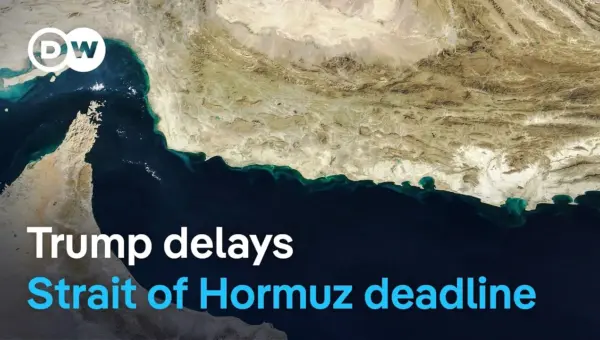
Trump Delays Iran Strike Deadline Amidst Shifting Diplomacy
President Donald Trump has extended his deadline for potential strikes on Iranian energy plants to April 6th, amid reports of U.S.-Iran diplomatic talks mediated by Pakistan. This move comes as Israel continues its strikes on Iran and the U.S. deploys additional military assets to the region. Analysts point to mixed signals, economic pressures, and strategic miscalculations as key factors shaping the evolving situation.
US Official Claims Iran War Could End Soon; Expert Skeptical
Despite US envoy Steve Woff's optimism about imminent talks and a swift end to the conflict with Iran, expert Aaron David Miller expresses significant doubt. Miller argues that a lack of shared urgency and fundamental miscalculations by the US administration make a quick resolution unlikely.