Trump’s Iran War Boosts Support, Exposes Right-Wing Influencers
President Trump's firm stance on Iran has solidified Republican support, exposing the limited influence of right-wing media critics. Meanwhile, working-class voters are shifting, and Democrats face challenges unifying their party amidst primary defeats.

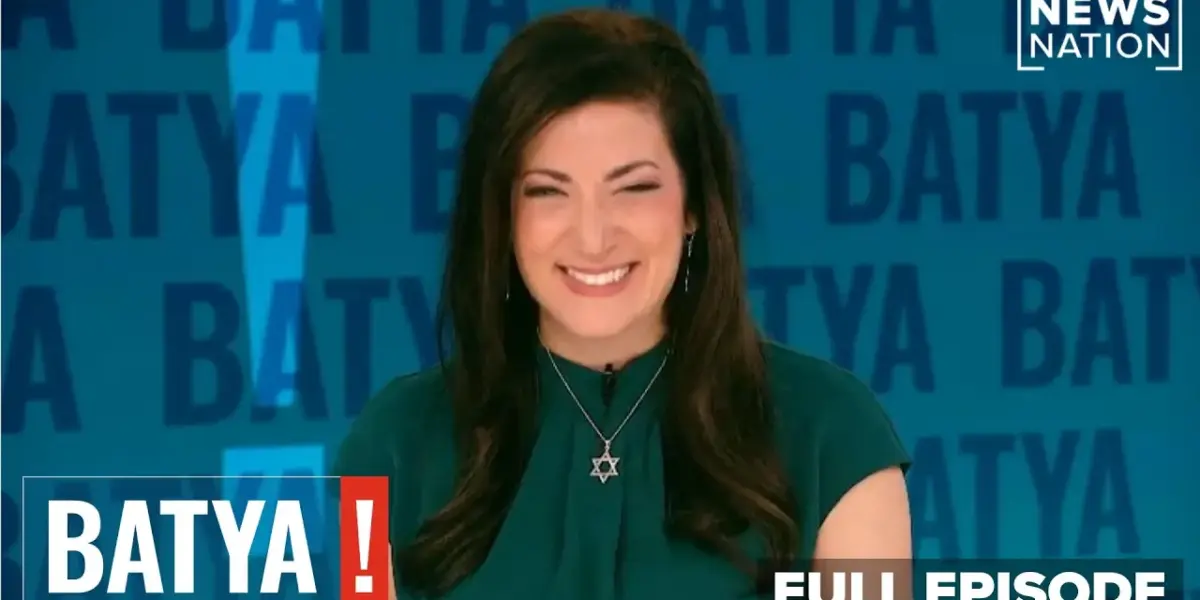
MAGA Base Unites Behind President Amidst Iran Conflict
Contrary to claims circulating on social media and some conservative news outlets, the Republican base remains strongly behind President Trump’s actions regarding Iran. Despite a narrative suggesting widespread dissent, particularly among younger voters, polls indicate overwhelming support for the military operations, dubbed ‘Operation Epic Fury.’ This operation aims to prevent Iran from developing nuclear weapons.
Figures like Tucker Carlson, Marjorie Taylor Greene, and Megan Kelly have voiced opposition, with some suggesting Trump has betrayed his MAGA principles. A former counterterrorism official, Joe Kent, even resigned, citing concerns and reportedly leaking information to Carlson. These critics argue that the younger generations, including Millennials and Gen Z, are against the war, viewing it as a betrayal of Trump’s core promises.
However, this portrayal of a divided MAGA movement appears to be fiction. Multiple polls show that Republican voters overwhelmingly support the president’s stance on Iran. An NBC poll found that 90% of voters who backed Trump in 2024 supported the actions against Iran, with a 100% approval rating for the president. When asked whom they trusted more – Carlson and Kelly or the president – 84% chose Trump, while only 6% favored Carlson. This decisively shows that the so-called ‘influencers’ on the right lack the widespread influence they claim.
The ‘Podcast Wars’ Reveal a Disconnect
The conflict over Iran policy has highlighted a significant gap between online personalities and the actual sentiment of Republican voters. The media, including liberal outlets, have amplified voices critical of Trump’s Iran policy, creating a false impression of division within the MAGA movement. These critics, often described as ‘influencers with no influence,’ are seen as more interested in growing their online audiences than representing the true views of Trump supporters.
Ben Shapiro, a prominent figure in the conservative media landscape and host of ‘The Ben Shapiro Show,’ addressed this phenomenon. He noted that some figures prioritize ratings and clicks over principles. Shapiro stated that their positions are often ‘fringe’ and that they are attempting an ‘ideological coup’ against Trump. He distinguished his own approach, emphasizing that truth should not be judged by ratings.
Shapiro also pointed out that while some critics, like Marjorie Taylor Greene, directly oppose Trump, others, like Tucker Carlson and Megan Kelly, avoid direct confrontation. Instead, they suggest Trump is being manipulated by Israeli interests or media figures. Shapiro argues that these critics dislike Trump’s actions but are unwilling to challenge his leadership of the movement he created.
Divergent Goals, Aligned Interests with Israel
While there is strong Republican support for President Trump’s actions against Iran, the discussion also touched upon the nuances of U.S. and Israeli objectives. DNI Tulsi Gabbard raised questions about differing goals, with Israel focusing on disabling Iranian leadership and the U.S. aiming to destroy Iran’s ballistic missile capabilities.
Ben Shapiro agreed with this assessment, explaining that the U.S. objective is to dismantle Iran’s ballistic missile program, its nuclear ambitions, and its military capacity. He noted that Israel’s goal appears to be regime change in Iran, a timeline difference that could lead to friction. However, he also suggested that a weakened Iranian regime, even if it doesn’t fall immediately, could serve U.S. interests. Shapiro believes that the U.S. would welcome a change in Iranian leadership towards a more friendly government or one that alters its behavior significantly.
The conversation also highlighted the crucial role of moderate Gulf Arab states, like Saudi Arabia, in supporting the U.S. operation. These nations, along with Israel, pushed for the action behind the scenes. This behind-the-scenes cooperation contrasts sharply with media coverage that has focused heavily on the debate over whether the threat from Iran was imminent.
Economic Leverage and European Hesitation
A key point of discussion was Iran’s leverage through the Strait of Hormuz, a vital route for global oil supply. While the U.S. is largely energy independent, Europe relies heavily on this oil. The transcript noted European reluctance to fully support the U.S. operation, drawing parallels to Democratic Party criticisms that involve opposing actions while benefiting from their outcomes.
President Trump has expressed frustration with NATO allies for what he perceives as ‘freeloading.’ Shapiro criticized European nations for issuing strongly worded letters against Iran’s actions without taking concrete steps to stop them. He suggested that the U.S. should consider taking control of Kharg Island, Iran’s primary oil export terminal, and managing its oil exports. This would allow the U.S. to throttle Iran’s funding and ensure the Strait of Hormuz remains open.
Shapiro emphasized that Europe faces a genuine supply problem, while the U.S. primarily faces a price problem. He argued that allies unwilling to actively support U.S. efforts are not reliable partners. The discussion also touched upon the potential for deploying special operators to secure key locations, a move Shapiro deemed acceptable if casualties are low, distinguishing it from a large-scale troop deployment.
Teamsters’ Political Realignment and Working-Class Appeal
The transcript also delved into a significant political shift among working-class Americans, particularly within labor unions. For decades, unions were closely aligned with the Democratic Party. However, this has changed, with a majority of working-class voters supporting Donald Trump in 2024.
Sean O’Brien, president of the Teamsters union, which represents 1.3 million truckers, exemplified this shift. He refused to endorse a Democratic presidential candidate, recognizing that a significant portion of his union members intended to vote for Trump. O’Brien’s decision stemmed from Trump’s focus on tariffs and mass deportations, policies aimed at reshoring manufacturing and tightening labor markets, which resonate with working-class concerns about job security and wages.
O’Brien’s pragmatic approach led to him securing a seat at the table with the Trump administration. He has engaged with the administration on labor policies, advocating for his members. O’Brien highlighted achievements such as implementing policies to protect jobs in the rail industry and enhance safety measures for 100,000 members. He also mentioned working with the Department of Labor and OSHA on worker protections and supporting the return of manufacturing to the U.S.
Bridging Divides: The Case of Senator Mullen
The interview with Sean O’Brien also highlighted a remarkable personal and political reconciliation. O’Brien had a very public and heated confrontation with Republican Senator Markwayne Mullin a few years prior. Despite this past animosity, O’Brien was present at Mullin’s confirmation hearing for Secretary of Homeland Security, signaling his support.
O’Brien explained that both he and Mullin realized they were ‘better together for this country.’ He emphasized the importance of finding solutions despite disagreements. O’Brien described Mullin as a friend and stated his desire to demonstrate that differences can be set aside for productive collaboration. He believes this approach is vital for the country.
Regarding border security, O’Brien stressed the paramount importance of safety and secure borders, advocating for legal immigration processes. He believes Mullin is the right person for the job, citing Mullin’s commitment to hard work and problem-solving, even if he doesn’t claim to be the smartest person.
Progressive Setbacks in Democratic Primaries
The discussion also turned to recent Democratic congressional primaries in Illinois, where progressive candidates faced significant defeats. In four districts, progressive contenders backed by groups like Justice Democrats and the Sunrise Movement lost to more moderate candidates.
Notable upsets included the loss of pro-Palestine influencer Kat Abu Gazala to moderate Mayor Daniel Biss in the 9th district, and the defeat of Juned Ahmed by former Representative Melissa Bean in the 8th district, who was supported by the pro-Israel lobby AIPAC. Progressives also lagged behind moderates in the 2nd and 7th districts.
Corbin Trent, a former communications director for Alexandria Ocasio-Cortez, suggested that funding played a role, with moderate candidates often being better funded. However, he also noted a general lack of vision within the Democratic Party, arguing for a clearer plan to address national problems. He believes the party needs new leadership and greater unity on specific policy goals, such as potentially withholding support for figures like Hakeem Jeffries.
Jose Ristamuno, a former DNC official, offered a different perspective. He stated that only about 15% of the Democratic Party identifies as progressive, with the majority being moderates who prioritize economic stability, lower costs for rent and healthcare, and supporting Israel, albeit without giving a ‘blank check.’ He believes the economy is the top concern for most Americans.
Future Scenarios and the Shifting Political Landscape
The analysis suggests a complex geopolitical and domestic political environment. In foreign policy, the U.S. appears to be taking a more assertive stance against Iran, with strong backing from its base but facing hesitations from some key allies. The effectiveness of this strategy will depend on Iran’s response and the willingness of international partners to cooperate.
Domestically, the Republican Party seems to have consolidated its base around President Trump, effectively countering challenges from within the conservative media sphere. The shift of working-class voters towards the Republican Party, as exemplified by the Teamsters’ stance, indicates a significant realignment of traditional voting blocs. This could reshape electoral outcomes in future elections.
The Democratic Party, meanwhile, faces internal divisions. The setbacks in Illinois primaries suggest that progressive messaging, while influential in some circles, may not be sufficient to win broader electoral victories. The party may need to find a more unified vision that addresses the economic concerns of a wider range of voters, including the working class and moderate Democrats, to regain political momentum.
Source: Ben Shapiro talks Trump critics; Sean O’Brien on Teamsters | BATYA! (YouTube)

Related Articles

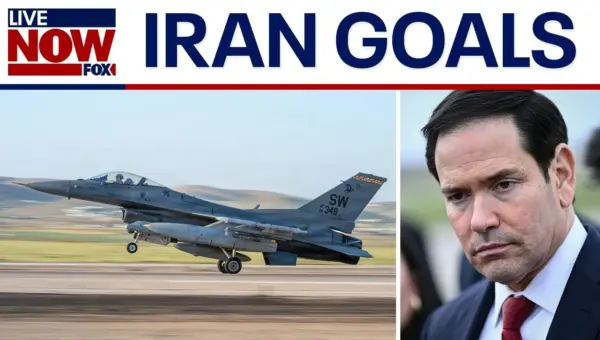
Rubio: US Can Achieve Iran War Goals Without Troops
Senator Marco Rubio outlined a strategy to counter Iran without deploying U.S. ground troops, focusing on weakening the regime and enhancing maritime security. He also criticized Cuba's economic system and expressed concerns about West Bank violence.


Israel Escalates Iran Strikes, Warns of Wider War
Israel has launched significant strikes inside Iran following continued missile fire, warning of further escalation. The conflict risks wider regional instability and economic disruption, especially concerning the Strait of Hormuz.

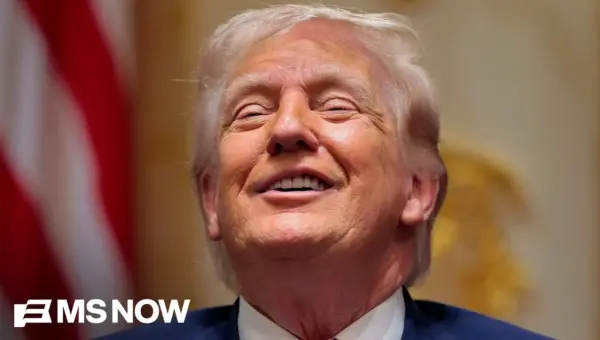
Trump’s Name Everywhere: A ‘Stain’ on GOP Legacy?
Former President Donald Trump's efforts to brand national symbols, including a proposed signature on dollar bills, spark debate. Critics view this as an authoritarian attempt to embed his legacy, potentially staining the Republican Party's history and contrasting with democratic ideals of public ownership.