Middle East Crisis Threatens Global Economy
A 48-hour ultimatum from Donald Trump to Iran over shipping in the Strait of Hormuz has put the global economy on edge. Potential U.S. strikes on Iranian power infrastructure could trigger retaliatory attacks on regional energy and water supplies, risking stagflation and a global recession.

Middle East Crisis Threatens Global Economy
A 48-hour ultimatum issued by former President Donald Trump to Iran has brought the global economy to a critical juncture. The situation, centered on threats to shipping in the Strait of Hormuz, could escalate dramatically, impacting energy infrastructure and potentially triggering a worldwide economic downturn.
Trump’s Ultimatum and Iran’s Response
On Saturday, Donald Trump presented Iran with a stark demand: immediately cease threatening and attacking ships in the Strait of Hormuz. Iran must also guarantee safe passage for all vessels. The ultimatum carries a severe consequence: if Iran fails to comply, the United States has threatened to target Iran’s power infrastructure, starting with its largest power plants.
This threat marks a significant escalation. Until now, conflicts have largely focused on energy production, shipping routes, and military targets. Directly attacking civilian infrastructure like the electricity grid would strike at the heart of Iran’s economy.
Iran’s response has amplified the danger. Tehran has stated that if the U.S. attacks its power grid, it will retaliate by targeting energy and water infrastructure in nations supporting the United States. This includes countries in the Gulf region that host U.S. military bases or are closely allied with Washington. Potential targets include Qatar, Saudi Arabia, Kuwait, Bahrain, the United Arab Emirates, Oman, and parts of Iraq.
The Critical Role of Electricity and Water
The prospect of widespread attacks on energy infrastructure across multiple Middle Eastern countries is extremely serious. While many think of oil and gas when hearing “energy infrastructure,” electricity is perhaps the most vital element in the region.
Electricity powers nearly everything. Losing power doesn’t just mean dark homes; it means shutting down entire economies. Businesses halt operations, factories stop production, and transportation systems collapse. Hospitals rely on backup generators, and financial systems, communications, and logistics become severely disrupted. This can lead to rapid economic contraction, with companies losing revenue and workers unable to earn wages.
In the Middle East, electricity is also crucial for survival due to the region’s arid climate. Many nations depend heavily on desalination plants to produce clean drinking water from seawater. These plants are highly energy-intensive, requiring a constant electricity supply. Without power, desalination stops, leading to severe water shortages. This could create a humanitarian crisis affecting millions of people.
Global Energy Markets on the Brink
The Middle East is a critical hub for the global energy supply. The region produces a significant portion of the world’s oil and gas, much of which travels through the Strait of Hormuz. Approximately 20% of global oil supplies pass through this narrow waterway daily.
If shipping is restricted or blocked, power infrastructure is attacked, and oil and gas facilities are disrupted, the global energy market could face a perfect storm. Oil production could plummet, gas exports could be severely curtailed, and energy prices could surge to unprecedented levels. Gas prices might even surpass the peaks seen during the European energy crisis following the war in Ukraine.
Such a scenario would likely lead to global shortages. Supply chains would struggle to adapt quickly enough to the sudden drop in energy availability.
The Specter of Stagflation and Recession
A sharp rise in energy prices has far-reaching economic consequences. Energy is fundamental to almost all economic activity. Higher energy costs increase expenses for businesses in every sector, from manufacturing and transportation to food production. These increased costs are often passed on to consumers, driving up inflation.
Simultaneously, economic activity tends to slow down. Businesses may cut back on operations, consumers reduce spending, and investment declines. This combination of rising inflation and falling economic growth is known as stagflation.
If the conflict escalates into a full-blown infrastructure war across the Middle East, a global recession in 2026 becomes a distinct possibility.
What Investors Should Know
The immediate question is whether Iran will comply with Trump’s ultimatum. Based on its past statements, Iran seems unlikely to provide unconditional guarantees for passage through the Strait of Hormuz. It has indicated that only nations friendly to Iran will be allowed safe passage, while countries aligned with the U.S. may face restrictions.
This suggests that the U.S. threat to target Iranian power infrastructure may be triggered. If the United States begins attacking these facilities, widespread retaliation targeting regional energy and water infrastructure is almost certain. Such a conflict could quickly spiral out of control, becoming difficult to contain.
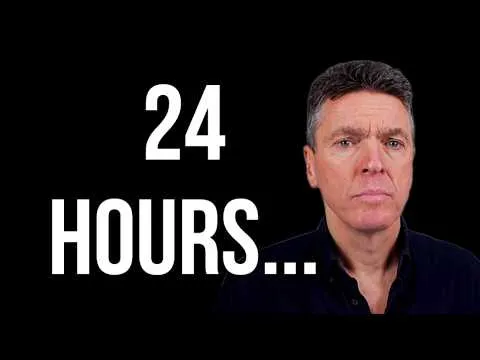
The next 24 hours are crucial. A de-escalation could lead to a more stable outlook, but a failure to de-escalate could push the world into a new phase of conflict. This phase would directly impact the foundations of modern economies: electricity, water, oil, and gas. The consequences would extend far beyond the Middle East, manifesting as higher energy prices, supply shortages, increased inflation, and slower global economic growth.
Investors should monitor this situation closely. The decisions made in the coming days could shape the direction of the global economy for the remainder of the year and beyond.
Source: 24 Hours… (YouTube)

Related Articles


US Cardinal’s Papal Upset Redraws Vatican Influence
Pope Francis's election defied expectations, including his own, as an American cardinal believed an "American" Pope was unthinkable. The swift conclave surprised many, highlighting the unpredictable nature of papal selections and signaling a potential shift in the Church's global direction.


Mexico Navigates US-China Rivalry
Mexico is caught in a geopolitical tug-of-war between the United States and China. The nation must carefully balance its economic needs and strategic interests with both superpowers. This situation highlights Mexico's growing importance in global affairs.
Iran-Backed Houthis Strike Israel, Escalating Regional Tensions
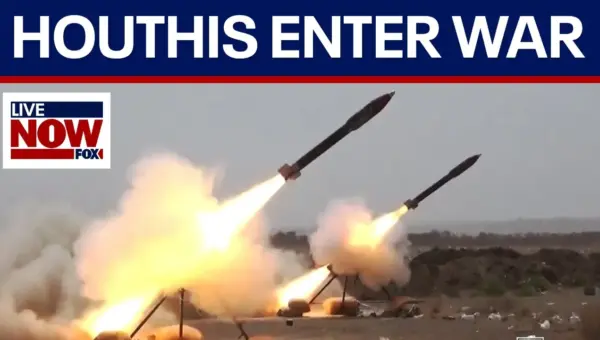
Iran-backed Houthi rebels have launched a missile attack targeting Israel, marking their first such strike since the current Middle East conflict began. The Israeli military confirmed the interception of the projectile. Analysts view this action as part of Iran's broader regional strategy, highlighting the regime's reliance on proxy forces amid internal weaknesses.