US Strikes on Iran Threaten Wider Conflict, Energy Crisis
A potential U.S. strike on Iran's power grid could trigger a major escalation, humanitarian crisis, and global economic shock, warns former NATO Commander General Wes Clark. The move risks retaliation and further destabilization in the vital Strait of Hormuz.


US Strikes on Iran Spark Fears of Escalation and Humanitarian Crisis
A potential U.S. military strike on Iran’s power grid would be a massive escalation, according to former NATO Commander General Wes Clark. Such an attack could lead to a humanitarian disaster in Gulf states if Iran retaliates by targeting their desalination and power plants. The opening hours of such an operation could involve cruise missiles from submarines, carrier strike groups, and stealth aircraft like the F-35. Cyber warfare could also play a role, potentially crippling power plants without dropping bombs.
War Crimes and Retaliation Concerns
General Clark raised serious questions about whether attacking civilian infrastructure like power plants would constitute a war crime. Military law generally prohibits destroying assets vital to a civilian population, especially if the aim is to pressure the government by harming its people. Iran has demonstrated its ability to retaliate, posing further hardship for U.S. allies in the Gulf. A key concern is Iran’s potential to block the Strait of Hormuz, a vital global oil shipping route.
Escalate to De-escalate? A Risky Strategy
The U.S. Treasury Secretary suggested a strategy of “escalate to de-escalate,” aiming to force Iran to negotiations. However, General Clark cautioned that this approach might not work with the current Iranian leadership. Unlike Slobodan Milošević, the former Yugoslav leader Clark faced and understood, Iran’s current leaders are not Western-oriented and their motivations are less clear. They might perceive U.S. actions, like sanctions or political infighting, as signs of American weakness, potentially leading to more reckless behavior.
Understanding the Adversary
Clark highlighted the difficulty in predicting Iran’s reactions because the U.S. may not fully understand its adversaries. The Iranian Revolutionary Guard Corps (IRGC) appears to maintain command and control and has the ability to retaliate. They might view prolonged conflict with the U.S. as a strategic goal, and current U.S. pressures could be interpreted as opportunities rather than weaknesses. This lack of clear understanding makes the situation unpredictable.
Economic Leverage: The Strait of Hormuz and Oil Prices
Oil prices have already risen since the conflict began. Iran understands that controlling the Strait of Hormuz gives it significant leverage over the global economy and the U.S. wallet. If the U.S. strikes Iran’s power plants, gas prices could remain high for the foreseeable future. While the U.S. has domestic energy resources, closing the Strait of Hormuz indefinitely is unacceptable and would require a plan to reopen it, possibly involving ground troops.
Long-Term Conflict and Nuclear Ambitions
General Clark warned that if the Iranian regime is not removed, it could become a nuclear power. Iran has also shown military surprises, such as the apparent ability to strike targets thousands of miles away, demonstrated by the missile launch that was reportedly intercepted. This capability redraws the military map and presents new challenges.
The Unknowns of a Prolonged Conflict
Despite extensive intelligence and military operations, including strikes on critical defense targets, there are still many unknowns. The U.S. may not be fully prepared for a conflict lasting potentially 47 years, as suggested by the early stages of the current engagement. Panic driven by gas prices or threats is unhelpful. The U.S. must have a clear plan to maintain freedom of navigation in the Strait of Hormuz.
Future Scenarios
One future scenario involves continued escalation, potentially leading to direct conflict and further economic disruption. Another sees Iran using its perceived leverage to negotiate from a stronger position. A third, more optimistic, scenario involves diplomatic resolution, though this seems less likely given the current rhetoric. The U.S. faces a difficult choice between de-escalation, which might be seen as weakness, and further escalation, which risks wider war and humanitarian catastrophe.
Global Impact
The potential U.S. strike on Iran’s power grid and the subsequent risk of retaliation have profound global implications. The Strait of Hormuz is crucial for global energy supplies, and any disruption could send oil prices soaring, impacting economies worldwide. A wider conflict in the Middle East would destabilize the region further, creating a refugee crisis and potentially drawing in other global powers. The possibility of Iran developing nuclear weapons adds another layer of extreme danger to the international security landscape.
Historical Context
The current tensions echo historical patterns of proxy conflicts and the use of economic pressure in the Middle East. U.S. involvement in the region has a long history, including the Iran-Iraq War and interventions following the 1979 revolution. The use of sanctions as a primary tool of foreign policy has been a consistent theme. However, the specific threat of targeting civilian infrastructure like power grids marks a dangerous new phase, raising questions about international norms and the laws of war.
Source: Attacking power plants in Iran would be enormous escalation: Gen. Wes Clark | NewsNation Prime (YouTube)

Related Articles

G7 Allies Clash Over Iran War Strategy, Urge Focus on Russia
G7 foreign ministers met in Paris, revealing deep divisions over the U.S. war with Iran. European allies urged the U.S. to pressure Russia, linking its actions to the conflict and fearing support for Ukraine will wane.
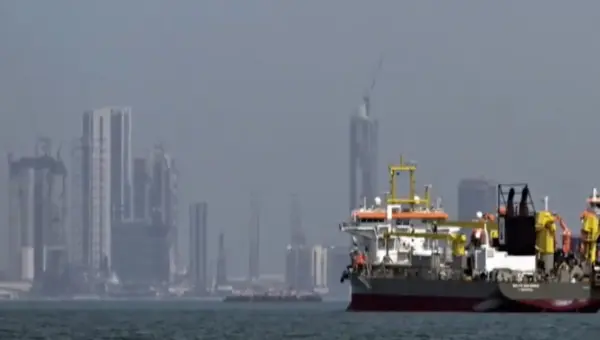
Iran Blocks China Ships, Exposing Beijing’s Weak Grip
Iran's recent decision to block Chinese ships at the Strait of Hormuz is exposing the limits of Beijing's influence in the Middle East. This action is causing delays and cancellations for Chinese manufacturers, turning a perceived geopolitical win into an economic strain.
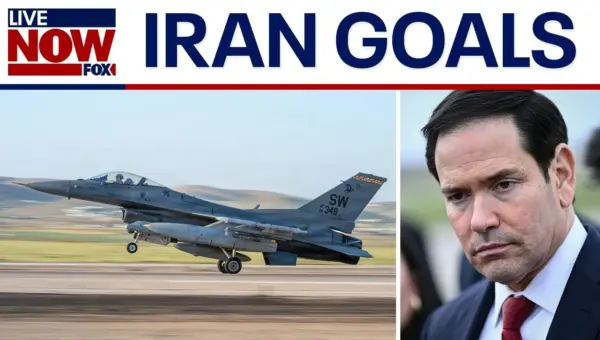
Rubio: US Can Achieve Iran War Goals Without Troops
Senator Marco Rubio outlined a strategy to counter Iran without deploying U.S. ground troops, focusing on weakening the regime and enhancing maritime security. He also criticized Cuba's economic system and expressed concerns about West Bank violence.