Ukraine War Focus Shifts Amid Mideast Conflict
The ongoing war in Ukraine faces geopolitical challenges as the Middle East conflict diverts attention and resources. Russia's perceived strategic gains are linked to Western hesitations and production shortfalls, while Ukraine's battlefield innovations, especially in drone warfare, are crucial. Internal EU divisions, particularly Hungary's actions, and the potential for U.S. political shifts further complicate the path to peace.


Ukraine War Focus Shifts Amid Mideast Conflict
The ongoing conflict in Ukraine faces a complex geopolitical backdrop, with attention and resources increasingly drawn to the Middle East. This shift, analysts suggest, plays into Russia’s strategic calculations, potentially bolstering Kremlin confidence in its long-term war aims.
Kremlin Optimism Fueled by Global Distractions
Recent assessments from U.S. intelligence reportedly indicate that Russia feels confident about its prospects in Ukraine, believing it can achieve victory on its own terms. This perceived optimism in Moscow appears to stem less from battlefield successes and more from broader geopolitical developments. The outbreak of the war in the Middle East is seen as a significant factor, diverting international attention and critical military assets away from Ukraine.
Specifically, air defense systems and other weaponry originally intended for Ukraine are now being redirected to bolster U.S. arsenals in the Middle East. This reallocation of resources, coupled with increasing political divisions in the West, creates a more favorable environment for Russia’s strategic objectives. While Ukraine has reported successes on the battlefield, particularly in countering Russia’s spring offensive, the larger political picture offers Moscow reasons for strategic patience.
Western Hesitation and Production Shortfalls
A key factor contributing to Russia’s perceived advantage is what some observers describe as a history of self-imposed restraint in Western military support for Ukraine. While acknowledging crucial early unity and support, experts point to delays and hesitations in providing advanced weaponry. Systems like the German Taurus missiles, for instance, remain un-delivered. This cautious approach has extended to various critical weapon systems, including artillery, heavy air defense, long-range missiles, tanks, and aircraft.
Furthermore, Western nations have been criticized for not sufficiently ramping up their own production of these vital systems. This has led to depleted stockpiles, not only impacting Ukraine’s needs but also affecting the readiness of Western forces. The current situation in the Middle East, with reports of drawing down ammunition stocks, highlights the consequences of this underproduction. This Western reluctance, experts argue, has directly contributed to the evident optimism in the Kremlin.
The Evolving Battlefield: Drones Take Center Stage
The nature of warfare on the ground in Ukraine is also undergoing a significant transformation. While tanks were once paramount, their importance has diminished. Today, drones of all types—reconnaissance, kamikaze, and anti-drone interceptors—dominate the battlefield. Ukraine has demonstrated exceptional creativity and capability in drone production and deployment, placing it ahead of many global actors in this domain.
Russia, while adept at centrally implementing innovation, has been challenged by Ukraine’s decentralized and adaptable approach to drone warfare. European assistance has consequently shifted, now focusing more on financing drone production and supplying components for Ukrainian manufacturing. While this marks a significant adaptation, the need for traditional heavy weaponry, including tanks and aircraft, along with crucial intelligence like satellite imagery from the U.S., persists.
European Strategy and Internal Divisions
European capitals, including Brussels, Berlin, and Paris, appear to be adopting a strategy of maintaining U.S. engagement in Ukraine while simultaneously preparing for potential future disengagement. The ongoing U.S. focus on the Middle East reinforces this approach. While there is awareness in the EU and the UK of the need for greater support to Ukraine, internal challenges, particularly those stemming from Hungary’s actions, hinder progress.
Hungary, under Prime Minister Viktor Orbán, has repeatedly created obstacles, most notably blocking a crucial 90 billion euro loan package for Ukraine. Although politically agreed upon, Hungary’s formal veto at the council level has stalled the disbursement. Legally, Orbán’s actions are possible within EU rules, allowing him to leverage the situation for domestic political gain ahead of upcoming elections. While this creates immediate financial pressure on Ukraine, alternative bridging solutions are being explored.
Orbán’s stance is seen as increasingly aligned with Russian and Chinese interests, a position some attribute to his own strategic miscalculations and cultivation of dependency on Russian energy. His current actions are viewed as an attempt to mobilize his base by escalating conflicts with Brussels and Kyiv, rather than addressing genuine policy concerns. The hope among many EU members is that a potential change in Hungarian government following elections could lead to a more constructive approach.
Peace Talks and the Shadow of U.S. Politics
Peace negotiations between Russia and Ukraine have reached a deadlock, with Moscow stating talks are on pause. The resumption of these discussions is heavily dependent on the evolving situation in the Middle East and, crucially, on U.S. political dynamics. There is concern that a potential U.S. administration might exert significant pressure on Ukraine to accept unfavorable terms, such as ceding territory or accepting weak security guarantees. This pressure could be amplified by threats to withdraw intelligence or weapon deliveries.
The U.S. decision to temporarily and partially lift sanctions on Russia, even for specific humanitarian reasons or related to the Middle East crisis, is viewed as playing into Russia’s hands. The diversion of attention and resources to the Middle East is seen as a significant strategic victory for the Kremlin, impacting not only military aid to Ukraine but also creating political divisions within the West. This includes new strains within NATO, as the U.S. reportedly seeks European support in the Strait of Hormuz, a move that could draw European navies into direct confrontation with Iran.
Broader Geopolitical Implications
The interconnectedness of these global events highlights a challenging period for transatlantic relations and European security. The potential for a U.S. pivot away from European security commitments, coupled with internal EU divisions, underscores the need for greater European self-reliance. Building independent defense industries and capabilities is a long-term endeavor, but one that is becoming increasingly critical in the face of evolving global threats.
While issues like the potential U.S. interest in Greenland have receded from immediate headlines, they serve as reminders of potential future flashpoints. The immediate crisis within NATO revolves around burden-sharing and the willingness of European allies to support U.S. military actions, even those initiated without prior consultation. This situation forces European nations to confront the necessity of strengthening their own defense structures, independent of sole reliance on the United States.
Source: ⚡️Putin’s army is under fire! Kremlin is losing its positions. Urgent war update (YouTube)

Related Articles
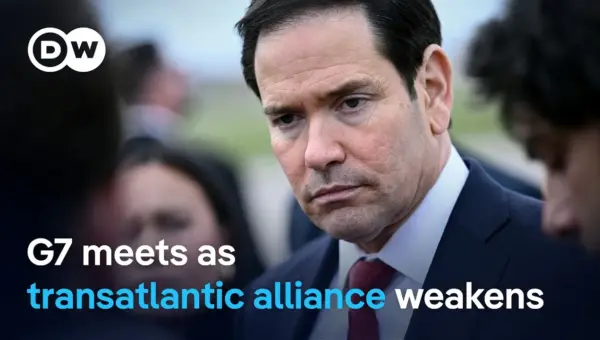
G7 Allies Clash Over Iran War Strategy, Urge Focus on Russia
G7 foreign ministers met in Paris, revealing deep divisions over the U.S. war with Iran. European allies urged the U.S. to pressure Russia, linking its actions to the conflict and fearing support for Ukraine will wane.

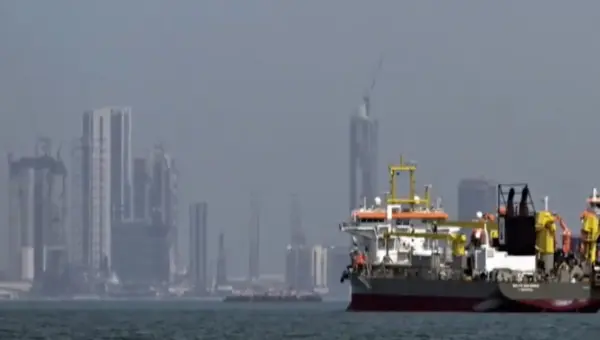
Iran Blocks China Ships, Exposing Beijing’s Weak Grip
Iran's recent decision to block Chinese ships at the Strait of Hormuz is exposing the limits of Beijing's influence in the Middle East. This action is causing delays and cancellations for Chinese manufacturers, turning a perceived geopolitical win into an economic strain.
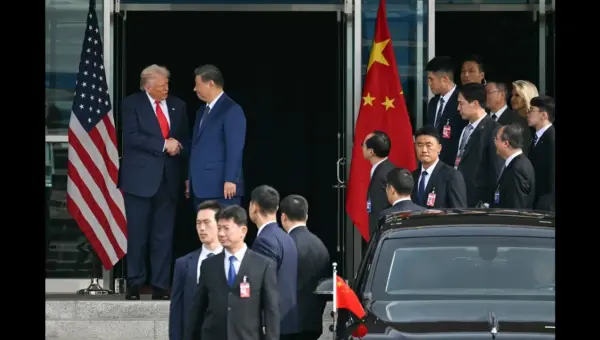
Trump’s “Walk Away” Tactic Signals Tougher Stance on China
Retired Air Force Brigadier General David Stillwell believes President Trump's strategy of being willing to walk away from negotiations puts pressure on China. This tactic, combined with US global actions and strengthened alliances, signals a more assertive American foreign policy.