Iran’s Missile Threat: A Decaying Arsenal Faces Uncertain Future
Iran's missile capabilities are diminishing, but a long-prepared underground network allows for continued, albeit reduced, attacks. The strategist explains why Iran can still strike and discusses the uncertain future of its government and the roles of Russia and China.


Iran’s Missile Threat: A Decaying Arsenal Faces Uncertain Future
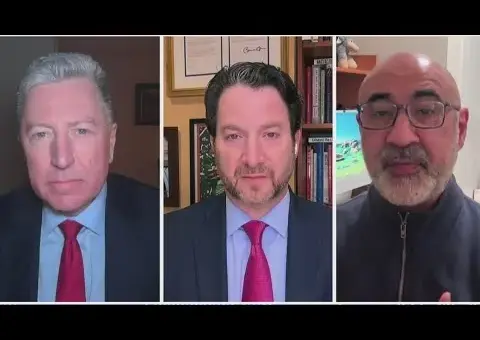
Iran has warned that it will target and destroy energy and oil infrastructure in the region if its own power plants are attacked. This warning comes after President Trump threatened to obliterate Iranian power plants if the country did not fully reopen the Strait of Hormuz by a specific deadline. Retired Lieutenant Colonel Darren Gob, a geopolitical strategist, shared his insights on the situation.
Targeting Infrastructure: A Risky Strategy
Colonel Gob expressed a preference for avoiding military action. He noted that attacking Iran’s energy infrastructure would ultimately harm the Iranian people rather than the government. He suggested that any targeted strikes should focus on systems that specifically weaken the ruling powers, not the general population. This approach aims to differentiate between the regime and its citizens.
Iran’s threats against the United States, whether targeting overseas bases or the homeland, are expected to continue regardless of U.S. actions. The key question is their effectiveness. So far, these threats have largely involved rhetoric and the motivation of a few individuals acting alone. There hasn’t been evidence of widespread, coordinated attacks across multiple locations.
Why Iran Can Still Strike
Despite claims that the U.S. has destroyed over 90% of Iran’s missile capabilities, Iran can still launch attacks. Colonel Gob explained this is partly because the overall volume of drone and missile activity has significantly decreased since the conflict began. Even with reduced numbers, the attacks continue.
The primary reason Iran can still pose a threat is its preparation over four decades. The country has transformed into a vast network of underground bunkers. These deep, buried facilities house missile and drone launch sites, making them difficult to access and destroy. Iran’s nuclear facilities are reportedly buried even deeper.
This means that either the U.S. must wait for Iran to physically exhaust its remaining assets, or continue targeting them as they become visible. Iran has had a long time to prepare for potential conflict, anticipating that such a situation might arise.
The Slow Depletion of Iran’s Arsenal
Colonel Gob believes that Iran’s ability to launch missiles is indeed diminishing, but he cautioned that this process will take time. He doesn’t expect Iran to run out of missiles within weeks. Instead, Iran is likely to use its remaining weapons gradually. This strategy aims to sustain pressure and affect the broader Gulf region, particularly Israel, rather than launching massive, one-time attacks.
Iran’s current approach involves smaller, continuous strikes. This is a shift from earlier, larger-scale attacks. The eventual depletion of their arsenal is certain, but the timeline remains uncertain. Factors like Iran’s stockpiling efforts and any unforeseen capabilities, such as the surprise attack on Diego Garcia, add to the unpredictability.
U.S. Objectives and Iran’s Future
When asked about the U.S. achieving its objectives in Iran, Colonel Gob separated military goals from broader political ones. If military objectives are limited to Iran’s nuclear program, missile and drone capabilities, and regional influence, then the U.S. is close to success. However, the challenge lies in defining what comes *after* a potential military victory.
Questions about future governance in Iran, the aspirations of the Iranian people, and the stability of the region are far more complex. These are not easily defined military end-states.
Paths for Iran’s Government
Colonel Gob outlined several potential futures for Iran’s government. One undesirable path is a continuation of the current ideology with new leadership, allowing Iran to rebuild its strength over time. A more hopeful scenario involves the Iranian people deciding they have had enough and seizing the opportunity presented by weakened internal security forces, like the IRGC.
This could lead to the people taking control and fixing the country, potentially moving towards democracy or simply establishing a more functional government. Other possibilities include hybrid models or regional groups, like the Kurds in the northwest, carving out autonomous areas. Predicting the outcome is difficult due to the numerous players and unknowns involved.
The Roles of Russia and China
Russia has been providing Iran with intelligence to aid in targeting. However, this relationship has also had drawbacks for Russia, as Iran supplied drones used in Ukraine. Therefore, there is a mutual exchange where Russia assists Iran, but Iran’s losses also impact Russia’s war efforts.
China’s role has been surprisingly subdued. With the potential loss of Iran as a source of cheap oil, similar to Venezuela, China’s oil supply could be reduced. The critical question is how much China will try to influence a future Iranian government to ensure open shipping lanes and maintain vital oil supplies for its economy. Despite the risks, China has remained relatively quiet.
Why This Matters
The ongoing tensions and threats between Iran and the U.S. highlight the complex geopolitical dynamics in the Middle East. Iran’s ability to continue launching attacks, even with a degraded arsenal, demonstrates its strategic use of underground facilities and its determination to project power. The potential impact on regional energy infrastructure carries global economic consequences.
Furthermore, the discussion about Iran’s future governance is crucial. The aspirations of the Iranian people and the potential for internal change are significant factors that could reshape the region. The involvement and interests of global powers like Russia and China add further layers of complexity to any potential resolution or shift in the status quo.
Implications and Future Outlook
The situation suggests a prolonged period of tension rather than an immediate large-scale conflict. Iran’s strategy appears to be one of attrition, aiming to wear down adversaries over time. The U.S. objective of dismantling Iran’s WMD capabilities and regional influence is nearing completion militarily, but the political and social outcomes remain highly uncertain.
The involvement of Russia and China indicates a broader international dimension to the conflict. Their actions and influence could significantly shape Iran’s future and regional stability. For China, securing energy supplies is paramount, suggesting a potential interest in influencing Iran’s future government to maintain economic stability.
Historical Context
Iran’s strategic focus on developing underground military infrastructure dates back decades, driven by a desire for self-preservation and deterrence against perceived external threats. This approach intensified following the Iran-Iraq War and subsequent international sanctions. The development of ballistic missile and drone programs has been a cornerstone of its defense strategy, allowing it to project power despite conventional military limitations.
The current standoff reflects a long history of adversarial relations between Iran and the United States, marked by periods of direct confrontation, proxy conflicts, and diplomatic maneuvering. The threat to energy infrastructure is a tactic Iran has employed before, recognizing its potential to disrupt global markets and exert pressure.
Source: Iran to Run Out of Missiles Soon: Strategist (YouTube)

Related Articles

U.S. Iran Tensions Rise Amid Shifting Alliances
Rising tensions between the U.S. and Iran are creating a volatile geopolitical situation. With conflicting signals on de-escalation and potential shifts in alliances like NATO and U.S.-Israel relations, the path forward remains uncertain. The global economy and regional stability hang in the balance.


Iran Targets US With Cyberattacks, Escalating Digital Warfare
Iran is increasingly using cyberattacks to challenge the U.S., as seen in a recent hack of the FBI director's account. Experts say this is a strategic shift due to Iran's limitations in conventional warfare. The U.S. needs to strengthen its digital defenses, focusing on encryption and cloud computing, rather than solely relying on traditional security measures.


Iran Hacks FBI Chief, Exposing U.S. Cyber Vulnerabilities
A recent hack of FBI Director Kash Patel's personal email by an Iran-linked group highlights Iran's growing cyber threat to the U.S. Experts explain how simple security oversights are exploited, emphasizing the need for basic defenses like two-factor authentication to protect against propaganda and potential infrastructure attacks.